
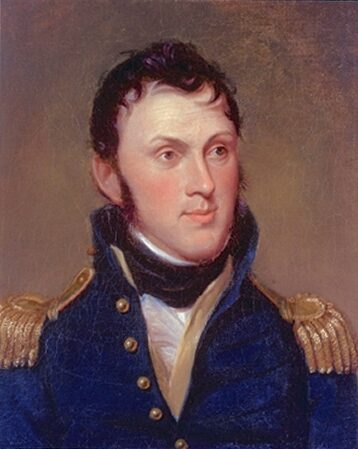
Stephen Harriman Long
Stephen Harriman Long was an American explorer. Born December 30, 1784, in Hopkinton. Died September 4, 1864, in Alton. Educated at Dartmouth College.
Facts
14 facts · 2 confirmed by two sources · 5 cited · 7 from one source
Where this comes from
Papalocal keeps its own record. It started from these sources; what each one said is kept here as it was copied, so a change on their side never changes this page by itself. Tap one to read its version.
What Wikidata says · copied November 18, 2026 · revision 2551904625
- Described as
- American explorer
- Other names
- S. H. Long, Stephen H. Long
- Born
- December 30, 1784 · 4 references
- Died
- September 4, 1864 · 4 references
- Born in
- Hopkinton
- Died in
- Alton
- Buried in
- Alton Cemetery · 1 reference
- Citizen of
- United States
- Occupation
- explorer · 1 reference; civil engineer · 1 reference; military engineer · 1 reference; engineer · 1 reference; railway engineer
- Education
- Dartmouth College
- Member of
- American Philosophical Society (1823–)
- Military rank
- Colonel
- Wikipedias with a page
- 16
Wikidata item Q2712366 (wikidata.org/wiki/Q2712366), public domain (CC0). Copied November 18, 2026.
What Wikipedia says · copied November 18, 2026 · revision 1385446804
Stephen Harriman Long (December 30, 1784 – September 4, 1864) was a United States Army officer, topographical engineer, civil engineer, and inventor whose career spanned military engineering, scientific exploration, federally sponsored internal improvements, and the early development of American railroads and bridge engineering.
He is best known for leading federal exploratory expeditions in the trans-Mississippi West between 1817 and 1823, including the 1820 reconnaissance of the Great Plains that contributed to the contemporary characterization of portions of the region as the “Great Desert.”
From the mid-1820s onward, Long played a significant role in federally authorized surveys under the General Survey Act and in early railroad development, including work associated with the Baltimore and Ohio Railroad and the Western & Atlantic Railroad. His railroad work formed part of a broader pattern in which Army engineers applied military engineering and administrative practices to early transportation systems.
In 1830, he patented the Long truss, a timber bridge system subsequently refined through additional patents in 1836 and 1839; the resulting sequence of designs combined adjustable compression bracing with early analytical proportioning of members and is treated by historians as an early American application of analytical methods in structural engineering.
Long also pursued early locomotive design during the 1830s, obtaining patents and collaborating with the Norris locomotive enterprise in Philadelphia; although his designs were not widely adopted, they contributed to early American experimentation in steam railroad technology.
- Born, in its opening lines
- December 30, 1784
- Died, in its opening lines
- September 4, 1864
From the Wikipedia article “Stephen Harriman Long” (en.wikipedia.org/wiki/Stephen_Harriman_Long), by its contributors, under CC BY-SA 4.0 (creativecommons.org/licenses/by-sa/4.0/). Copied November 18, 2026; not changed.
Confirmed Two sources agree. Cited One source, and it names where it got it. One source One source, without a reference of its own. Sources disagree The sources disagree. We show the best-supported value and keep theirs below.
