
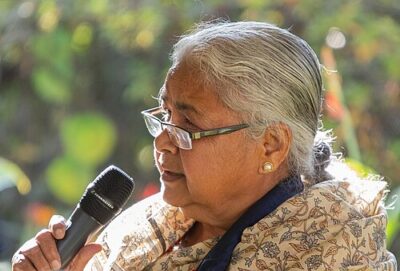
Sushila Karki
Sushila Karki is an interim prime minister of Nepal since 2025. Born June 7, 1952, in Biratnagar. Positions held include chief justice (2016–2017) and Prime Minister of Nepal (2025–2026). Educated at Tribhuvan University and Mahendra Morang Adarsh Multiple Campus.
Facts
12 facts · 1 confirmed by two sources · 2 cited · 9 from one source
Where this comes from
Papalocal keeps its own record. It started from these sources; what each one said is kept here as it was copied, so a change on their side never changes this page by itself. Tap one to read its version.
What Wikidata says · copied November 16, 2026 · revision 2569121259
- Described as
- interim prime minister of Nepal since 2025
- Other names
- Suśīlā Kārkī
- Born
- June 7, 1952 · 1 reference
- Born in
- Biratnagar
- Citizen of
- Nepal
- Occupation
- judge · 1 reference; politician; jurist
- Positions held
- chief justice (2016–2017); Prime Minister of Nepal (2025–2026) · 1 reference
- Political party
- independent politician
- Education
- Tribhuvan University; Mahendra Morang Adarsh Multiple Campus; Banaras Hindu University
- Wikipedias with a page
- 57
Wikidata item Q23842116 (wikidata.org/wiki/Q23842116), public domain (CC0). Copied November 16, 2026.
What Wikipedia says · copied November 16, 2026 · revision 1382925679
Sushila Karki (born 7 June 1952) is a Nepalese lawyer and stateswoman who served as chief justice of Nepal from 2016 to 2017 and as interim prime minister of Nepal from 2025 to 2026. She became prime minister following the youth protests of September 2025 that led to her predecessor's resignation. Karki is the first female prime minister and female chief justice in Nepalese history.
- Born, in its opening lines
- June 7, 1952
From the Wikipedia article “Sushila Karki” (en.wikipedia.org/wiki/Sushila_Karki), by its contributors, under CC BY-SA 4.0 (creativecommons.org/licenses/by-sa/4.0/). Copied November 16, 2026; not changed.
Confirmed Two sources agree. Cited One source, and it names where it got it. One source One source, without a reference of its own. Sources disagree The sources disagree. We show the best-supported value and keep theirs below.
