
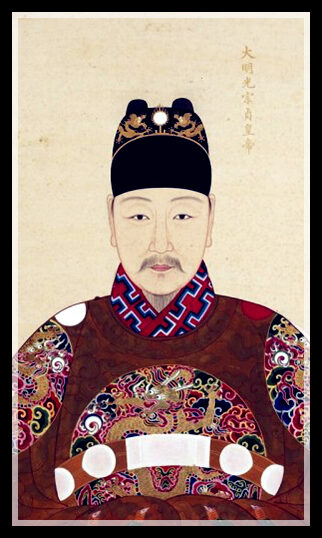
Taichang Emperor
Taichang Emperor was the 15th Emperor of the Ming dynasty. Born August 28, 1582, in Beijing. Died September 26, 1620, in Beijing. Positions held include Emperor of China (1620) and crown prince (1601–1620).
Facts
37 facts · 2 confirmed by two sources · 2 cited · 33 from one source
Where this comes from
Papalocal keeps its own record. It started from these sources; what each one said is kept here as it was copied, so a change on their side never changes this page by itself. Tap one to read its version.
What Wikidata says · copied November 16, 2026 · revision 2569074385
- Described as
- 15th Emperor of the Ming dynasty
- Other names
- Taichang, Guang Zong, Zhu Changluo, Chongtianqidaoyingruigongchunxianwenjingwuyuanrenyixiaozhenhuangdi, Zhen Di, The Taichang Emperor
- Born
- August 28, 1582
- Died
- September 26, 1620
- Born in
- Beijing
- Died in
- Beijing
- Buried in
- Qingling Mausoleum (Ming dynasty)
- Cause of death
- poison
- Citizen of
- Ming dynasty · 1 reference
- Occupation
- ruler
- Positions held
- Emperor of China (1620); crown prince (1601–1620)
- Spouse
- Hyo Motosada; Empress Dowager Xiaohe; Empress Dowager Xiaochun
- Children
- Chongzhen Emperor; Tianqi Emperor; Zhu Youxu; Zhu You; Zhu Youji, Prince Qisi; Zhu Youmo, Prince Huaihui; Princess Le An; Zhu Huitai; Princess Ningde; Princess Suiping; Zhu Youjian; Princess Daowen
- Father
- Wanli · 1 reference
- Mother
- Empress Dowager Xiaojing
- Siblings
- Princess Rongchang; Princess Taishun; Princess Yunhe; Princess Xianju; Princess Jingle; Princess Shouning; Princess Lingqiu; Princess Xiangshan; Princess Tiantai; Princess Yunmeng
- Wikipedias with a page
- 38
Wikidata item Q10065 (wikidata.org/wiki/Q10065), public domain (CC0). Copied November 16, 2026.
What Wikipedia says · copied November 16, 2026 · revision 1383203104
The Taichang Emperor (28 August 1582 – 26 September 1620), personal name Zhu Changluo, was the 15th emperor of the Ming dynasty of China. He was the eldest son of the Wanli Emperor and succeeded his father as emperor in 1620. His reign came to an abrupt end less than one month after his enthronement when he was found dead one morning in the palace following a bout of diarrhea. His reign was the shortest in Ming history.
Zhu Changluo was born during the tenth year of the Wanli Emperor's reign. His mother, Lady Wang, was a servant of the Emperor's mother. Lady Wang was promoted, but did not gain the favor of the Wanli Emperor, and the Emperor ignored their son. Instead, he favored another concubine, Lady Zheng, and her son, Zhu Changxun. The Emperor intended to appoint Zhu Changxun as heir to the throne, but this choice faced strong opposition from the ministers. Due to the stubbornness of both sides, the matter remained at a standstill for many years. Under pressure from his mother and officials, the Emperor formally appointed the nineteen-year-old Zhu Changluo as heir in 1601, but schemes against the heir persisted at court. This tension culminated in a serious incident in 1615 that threatened the heir's safety and raised suspicions about the involvement of figures close to Lady Zheng.
The Wanli Emperor died on 18 August 1620, and Zhu Changluo officially ascended the throne as the Taichang Emperor on 28 August. However, just a few days after his coronation, he fell ill and died on 26 September, despite attempts at treatment. The Taichang Emperor's eldest son, Zhu Youjiao, was then enthroned as the Tianqi Emperor. The death of the relatively young emperor sparked suspicion, speculation, and recrimination among different court factions.
- Born, in its opening lines
- August 28, 1582
- Died, in its opening lines
- September 26, 1620
From the Wikipedia article “Taichang Emperor” (en.wikipedia.org/wiki/Taichang_Emperor), by its contributors, under CC BY-SA 4.0 (creativecommons.org/licenses/by-sa/4.0/). Copied November 16, 2026; not changed.
Confirmed Two sources agree. Cited One source, and it names where it got it. One source One source, without a reference of its own. Sources disagree The sources disagree. We show the best-supported value and keep theirs below.
