
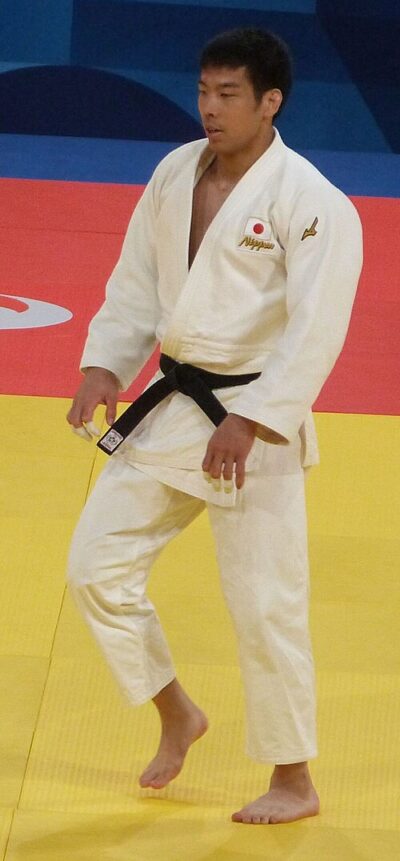
Takanori Nagase is a Japanese judoka. Born October 14, 1993, in Nagasaki. Educated at University of Tsukuba. Awards include Medal with Purple Ribbon.
Facts
8 facts · 1 confirmed by two sources · 1 cited · 6 from one source
Where this comes from
Papalocal keeps its own record. It started from these sources; what each one said is kept here as it was copied, so a change on their side never changes this page by itself. Tap one to read its version.
What Wikidata says · copied November 16, 2026 · revision 2535781689
- Described as
- Japanese judoka
- Born
- October 14, 1993 · 1 reference
- Born in
- Nagasaki
- Citizen of
- Japan
- Occupation
- judoka
- Education
- University of Tsukuba
- Sport
- judo · 1 reference
- Awards
- Medal with Purple Ribbon
- Height
- 1.81 m (5 ft 11 in)
- Wikipedias with a page
- 33
Wikidata item Q17226182 (wikidata.org/wiki/Q17226182), public domain (CC0). Copied November 16, 2026.
What Wikipedia says · copied November 16, 2026 · revision 1386005893
Takanori Nagase (Japanese: 永瀬貴規; born 14 October 1993) is a Japanese judoka.
Nagase is a double Olympic champion at under 81 kg, winning gold in both 2020 (2021) and 2024. He won bronze in 2016. His other achievements include the Universiade in Kazan in 2013, the Grand Slam in Tokyo in 2013 and 2014, the All Japan Championships, the IJF Masters in Rabat and the World Judo Championships in 2015.
Nagase's favourite technique is uchi mata and is known for his newaza. He is the first and only Japanese judoka to become world champion in the -81 kg weight class. Nagase won the gold medal in the Men's 81 kg event at the 2020 Summer Olympics held in Tokyo, Japan and at the 2024 Summer Olympics held in Paris, France.
- Born, in its opening lines
- October 14, 1993
From the Wikipedia article “Takanori Nagase” (en.wikipedia.org/wiki/Takanori_Nagase), by its contributors, under CC BY-SA 4.0 (creativecommons.org/licenses/by-sa/4.0/). Copied November 16, 2026; not changed.
Confirmed Two sources agree. Cited One source, and it names where it got it. One source One source, without a reference of its own. Sources disagree The sources disagree. We show the best-supported value and keep theirs below.
