
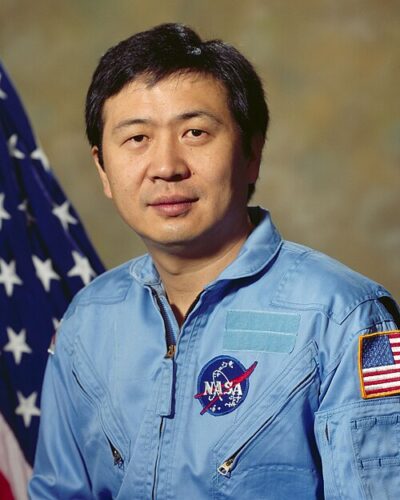
Taylor G. Wang
Taylor G. Wang is an American materials engineer and astronaut. Born June 16, 1940, in Ganxian District. Educated at University of California, Los Angeles and Affiliated Senior High School of National Taiwan Normal University. Awards include NASA Space Flight Medal.
Facts
11 facts · 1 confirmed by two sources · 2 cited · 8 from one source
Where this comes from
Papalocal keeps its own record. It started from these sources; what each one said is kept here as it was copied, so a change on their side never changes this page by itself. Tap one to read its version.
What Wikidata says · copied November 16, 2026 · revision 2515879170
- Described as
- American materials engineer and astronaut
- Other names
- Taylor Wang, Taylor Gun-Jin Wang
- Born
- June 16, 1940
- Born in
- Ganxian District · 1 reference
- Citizen of
- United States
- Occupation
- astronaut; physicist; university teacher
- Worked for
- Vanderbilt University · 1 reference; National Aeronautics and Space Administration
- Education
- University of California, Los Angeles; Affiliated Senior High School of National Taiwan Normal University
- Awards
- NASA Space Flight Medal · 1 reference
- Wikipedias with a page
- 21
Wikidata item Q707736 (wikidata.org/wiki/Q707736), public domain (CC0). Copied November 16, 2026.
What Wikipedia says · copied November 16, 2026 · revision 1378506652
Taylor Gun-Jin Wang (simplified Chinese: 王赣骏; traditional Chinese: 王贛駿; pinyin: Wáng Gànjùn; born June 16, 1940) is a Chinese-born Taiwanese-American scientist who in 1985 became the first person of Chinese origin to go into space. While an employee of the Jet Propulsion Laboratory, Wang was a payload specialist on the Space Shuttle Challenger mission STS-51-B.
- Born, in its opening lines
- June 16, 1940
From the Wikipedia article “Taylor Wang” (en.wikipedia.org/wiki/Taylor_Wang), by its contributors, under CC BY-SA 4.0 (creativecommons.org/licenses/by-sa/4.0/). Copied November 16, 2026; not changed.
Confirmed Two sources agree. Cited One source, and it names where it got it. One source One source, without a reference of its own. Sources disagree The sources disagree. We show the best-supported value and keep theirs below.
