
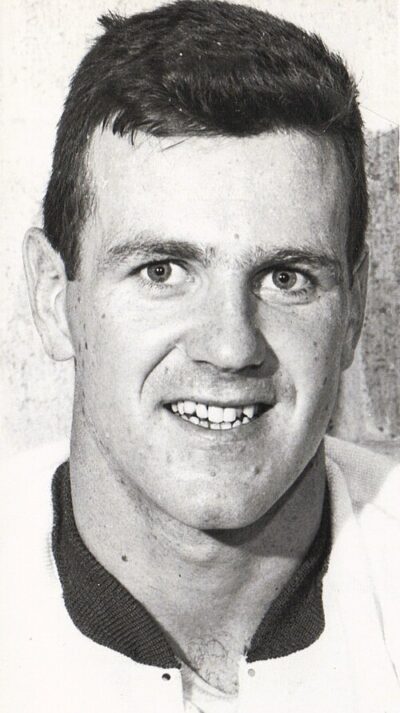
Terry O'Malley is a Canadian ice hockey defenceman. Born October 21, 1940, in Toronto. Teams include Seibu Prince Rabbits. Educated at Harvard University and University of Manitoba.
Facts
9 facts · 1 confirmed by two sources · 2 cited · 6 from one source
Where this comes from
Papalocal keeps its own record. It started from these sources; what each one said is kept here as it was copied, so a change on their side never changes this page by itself. Tap one to read its version.
What Wikidata says · copied November 19, 2026 · revision 2554183415
- Described as
- Canadian ice hockey defenceman
- Born
- October 21, 1940
- Born in
- Toronto
- Citizen of
- Canada
- Occupation
- ice hockey player · 1 reference; Citizenship judge
- Education
- Harvard University; University of Manitoba · 1 reference
- Teams
- Seibu Prince Rabbits
- Sport
- ice hockey · 1 reference
- Wikipedias with a page
- 13
Wikidata item Q3075795 (wikidata.org/wiki/Q3075795), public domain (CC0). Copied November 19, 2026.
What Wikipedia says · copied November 19, 2026 · revision 1381844438
Terrence M. "Terry" O'Malley (born October 21, 1940, in Toronto, Ontario) is a Canadian retired ice hockey player, currently serving as an assistant coach to the Regina Cougars women's ice hockey team of the University of Regina, a position he has held since 2006. He is an Olympian who represented Canada at three Winter Olympics (1964, 1968 and 1980), winning a bronze medal in 1968. A long-time coach for a variety of Notre Dame Hounds' bantam and midget hockey teams at the Athol Murray College of Notre Dame in Wilcox, Saskatchewan, he was inducted into the International Ice Hockey Federation Hall of Fame in 1998.
- Born, in its opening lines
- October 21, 1940
From the Wikipedia article “Terry O'Malley” (en.wikipedia.org/wiki/Terry_O'Malley), by its contributors, under CC BY-SA 4.0 (creativecommons.org/licenses/by-sa/4.0/). Copied November 19, 2026; not changed.
Confirmed Two sources agree. Cited One source, and it names where it got it. One source One source, without a reference of its own. Sources disagree The sources disagree. We show the best-supported value and keep theirs below.
