
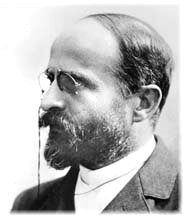
Theodor Lipps
Theodor Lipps was a German philosopher. Born July 28, 1851, in Wallhalben. Died October 17, 1914, in Munich. Educated at University of Bonn.
Facts
16 facts · 2 confirmed by two sources · 6 cited · 8 from one source
Where this comes from
Papalocal keeps its own record. It started from these sources; what each one said is kept here as it was copied, so a change on their side never changes this page by itself. Tap one to read its version.
What Wikidata says · copied November 17, 2026 · revision 2569208433
- Described as
- German philosopher (1851-1914)
- Born
- July 28, 1851 · 9 references
- Died
- October 17, 1914 · 4 references
- Born in
- Wallhalben · 3 references
- Died in
- Munich · 3 references
- Citizen of
- German Reich
- Occupation
- philosopher · 1 reference; psychologist · 1 reference; university teacher · 1 reference; translator · 1 reference
- Worked for
- LMU Munich; University of Bonn
- Education
- University of Bonn · 1 reference
- Member of
- Bavarian Academy of Sciences and Humanities; Schwarzburgbund
- Field
- philosopher
- Spouse
- Eva Lipps
- Wikipedias with a page
- 26
Wikidata item Q61970 (wikidata.org/wiki/Q61970), public domain (CC0). Copied November 17, 2026.
What Wikipedia says · copied November 17, 2026 · revision 1383254203
Theodor Lipps (German: [lɪps]; 28 July 1851 – 17 October 1914) was a German philosopher, known for his theory regarding aesthetics, creating the framework for the concept of Einfühlung (empathy), defined as, "projecting oneself onto the object of perception." This has then led onto opening up a new branch of interdisciplinary research in the overlap between psychology and philosophy.
- Born, in its opening lines
- July 28, 1851
- Died, in its opening lines
- October 17, 1914
From the Wikipedia article “Theodor Lipps” (en.wikipedia.org/wiki/Theodor_Lipps), by its contributors, under CC BY-SA 4.0 (creativecommons.org/licenses/by-sa/4.0/). Copied November 17, 2026; not changed.
Confirmed Two sources agree. Cited One source, and it names where it got it. One source One source, without a reference of its own. Sources disagree The sources disagree. We show the best-supported value and keep theirs below.
