
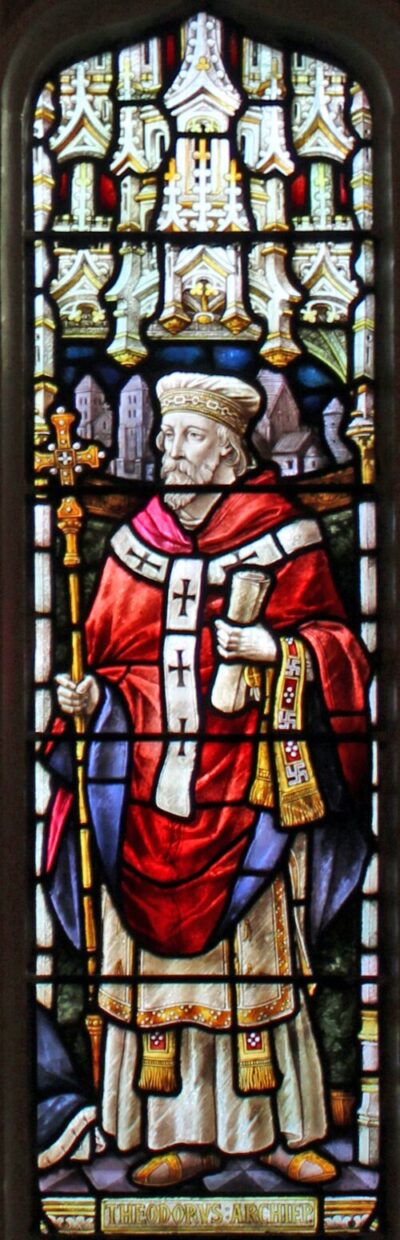
Theodore of Tarsus
Theodore of Tarsus was an Archbishop of Canterbury. Born 602, in Tarsus. Died September 19, 690, in Canterbury. Positions held include Roman Catholic Archbishop of Canterbury (668–690).
Facts
11 facts · 2 confirmed by two sources · 3 cited · 6 from one source
Where this comes from
Papalocal keeps its own record. It started from these sources; what each one said is kept here as it was copied, so a change on their side never changes this page by itself. Tap one to read its version.
What Wikidata says · copied November 17, 2026 · revision 2568765115
- Described as
- Archbishop of Canterbury
- Other names
- Theodore of Canterbury, St. Theodore of Tarsus
- Born
- 602 · 5 references
- Died
- September 19, 690 · 1 reference
- Born in
- Tarsus · 1 reference
- Died in
- Canterbury
- Buried in
- St Augustine's Abbey
- Citizen of
- Byzantine Empire; Kingdom of Kent
- Occupation
- Catholic priest; archbishop · 1 reference
- Positions held
- Roman Catholic Archbishop of Canterbury (668–690) · 3 references
- Religion
- Catholic Church · 1 reference
- Wikipedias with a page
- 26
Wikidata item Q504529 (wikidata.org/wiki/Q504529), public domain (CC0). Copied November 17, 2026.
What Wikipedia says · copied November 17, 2026 · revision 1385558339
Theodore of Tarsus (Greek: Θεόδωρος Ταρσοῦ; 602 – 19 September 690) was Archbishop of Canterbury from 668 to 690. Theodore grew up in Tarsus, but fled to Constantinople after the Muslims conquered Tarsus. After studying there, he relocated to Rome and was later installed as the Archbishop of Canterbury on the orders of Pope Vitalian. Accounts of his life appear in two 8th-century texts. Theodore is best known for his reform of the English Church and establishment of a school in Canterbury.
- Born, in its opening lines
- 602
- Died, in its opening lines
- September 19, 690
From the Wikipedia article “Theodore of Tarsus” (en.wikipedia.org/wiki/Theodore_of_Tarsus), by its contributors, under CC BY-SA 4.0 (creativecommons.org/licenses/by-sa/4.0/). Copied November 17, 2026; not changed.
Confirmed Two sources agree. Cited One source, and it names where it got it. One source One source, without a reference of its own. Sources disagree The sources disagree. We show the best-supported value and keep theirs below.
