
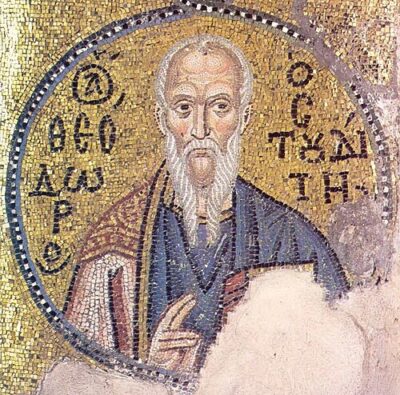
Theodore the Studite
Theodore the Studite was a Byzantine saint. Born 759, in Constantinople. Died November 11, 826, in Bithynia. Positions held include hegumen.
Facts
13 facts · 2 confirmed by two sources · 1 cited · 10 from one source
Where this comes from
Papalocal keeps its own record. It started from these sources; what each one said is kept here as it was copied, so a change on their side never changes this page by itself. Tap one to read its version.
What Wikidata says · copied November 16, 2026 · revision 2568759277
- Described as
- Byzantine saint
- Born
- 759
- Died
- November 11, 826
- Born in
- Constantinople
- Died in
- Bithynia
- Citizen of
- Byzantine Empire
- Occupation
- monk; writer; composer · 1 reference; theologian · 1 reference
- Positions held
- hegumen
- Mother
- Theoctista
- Siblings
- Joseph of Thessalonica
- Religion
- Eastern Orthodoxy
- Wikipedias with a page
- 38
Wikidata item Q361405 (wikidata.org/wiki/Q361405), public domain (CC0). Copied November 16, 2026.
What Wikipedia says · copied November 16, 2026 · revision 1371769514
Theodore the Studite (Greek: Θεόδωρος ὁ Στουδίτης, romanized: Theodōros ho Stoudítes; 759–826), also known as Theodorus Studita and Saint Theodore of Stoudios/Studium, was a Byzantine Greek monk and abbot of the Stoudios Monastery in Constantinople. He played a major role in the revivals both of Byzantine monasticism and of classical literary genres in Byzantium. He is known as a zealous opponent of iconoclasm, one of several conflicts that set him at odds with both emperor and patriarch. Throughout his life he maintained letter correspondences with many important political and cultural figures of the Byzantine empire; this included many women, such as the composer and nun Kassia, who was much influenced by his teachings.
- Born, in its opening lines
- 759
- Died, in its opening lines
- 826
From the Wikipedia article “Theodore the Studite” (en.wikipedia.org/wiki/Theodore_the_Studite), by its contributors, under CC BY-SA 4.0 (creativecommons.org/licenses/by-sa/4.0/). Copied November 16, 2026; not changed.
Confirmed Two sources agree. Cited One source, and it names where it got it. One source One source, without a reference of its own. Sources disagree The sources disagree. We show the best-supported value and keep theirs below.
