
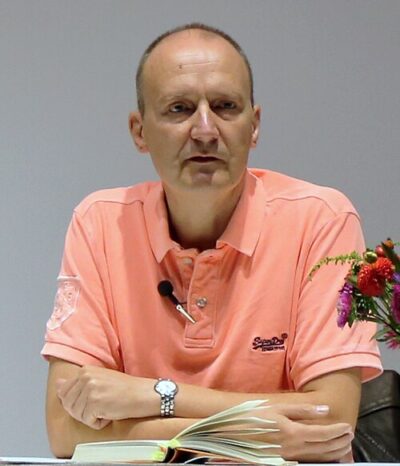
Thomas Brussig is a German writer. Born December 19, 1964, in East Berlin. Known for Am kürzeren Ende der Sonnenallee, Heroes Like Us and Wie es leuchtet. Educated at Konrad Wolf Film University of Babelsberg. Awards include Hans Fallada Prize, Carl Zuckmayer Medal and Berliner Bär.
Facts
21 facts · 0 confirmed by two sources · 9 cited · 11 from one source · 1 where the sources disagree
What’s different
- Born in: we show East Berlin (Sources disagree). Wikidata also lists Berlin
Where this comes from
Papalocal keeps its own record. It started from these sources; what each one said is kept here as it was copied, so a change on their side never changes this page by itself. Tap one to read its version.
What Wikidata says · copied November 18, 2026 · revision 2569383436
- Described as
- German writer
- Born
- December 19, 1964 · 2 references
- Born in
- East Berlin · 2 references; Berlin · 2 references
- Citizen of
- Germany
- Occupation
- screenwriter · 1 reference; writer · 1 reference; playwright · 2 references; publisher · 1 reference
- Education
- Konrad Wolf Film University of Babelsberg
- Member of
- Deutsche Filmakademie
- Genre
- prose
- Known for
- Am kürzeren Ende der Sonnenallee; Heroes Like Us; Wie es leuchtet
- Awards
- Hans Fallada Prize (2000); Carl Zuckmayer Medal (2005); Berliner Bär (2000)
- Field
- creative and professional writing · 1 reference; prose · 1 reference; drama · 1 reference; publishing · 1 reference
- Website
- http://www.thomasbrussig.de/
- Wikipedias with a page
- 20
Wikidata item Q75831 (wikidata.org/wiki/Q75831), public domain (CC0). Copied November 18, 2026.
What Wikipedia says · copied November 18, 2026 · revision 1370637061
Thomas Brussig (; born 1964) is a German writer best known for his satirical novels that deal with the German Democratic Republic.
From the Wikipedia article “Thomas Brussig” (en.wikipedia.org/wiki/Thomas_Brussig), by its contributors, under CC BY-SA 4.0 (creativecommons.org/licenses/by-sa/4.0/). Copied November 18, 2026; not changed.
Confirmed Two sources agree. Cited One source, and it names where it got it. One source One source, without a reference of its own. Sources disagree The sources disagree. We show the best-supported value and keep theirs below.
