
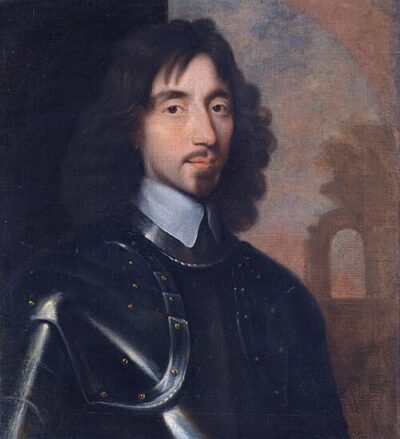
Thomas Fairfax, 3rd Lord Fairfax of Cameron
Thomas Fairfax, 3rd Lord Fairfax of Cameron was a Parliamentary commander-in-chief during the English Civil War. Born January 17, 1612, in Denton Hall, Wharfedale. Died November 12, 1671, in Nun Appleton Priory. Positions held include Member of Parliament in the Parliament of England, Member of the Third Protectorate Parliament and Member of the First Protectorate Parliament. Educated at St John's College and Tadcaster Grammar School.
Facts
26 facts · 2 confirmed by two sources · 8 cited · 16 from one source
What’s different
- Born: we show January 17, 1612 (Confirmed). Wikidata also lists January 12, 1612
- Died: we show November 12, 1671 (Confirmed). Wikidata also lists November 21, 1671
Where this comes from
Papalocal keeps its own record. It started from these sources; what each one said is kept here as it was copied, so a change on their side never changes this page by itself. Tap one to read its version.
What Wikidata says · copied November 16, 2026 · revision 2559150079
- Described as
- Parliamentary commander-in-chief during the English Civil War (1612-1671)
- Other names
- Thomas Fairfax, Black Tom
- Born
- January 17, 1612 · 1 reference; January 12, 1612
- Died
- November 12, 1671 · 1 reference; November 21, 1671 · 1 reference
- Born in
- Denton Hall, Wharfedale
- Died in
- Nun Appleton Priory
- Buried in
- North Yorkshire
- Citizen of
- Kingdom of England
- Occupation
- military officer; politician; poet · 1 reference; soldier · 1 reference
- Positions held
- Member of Parliament in the Parliament of England; Member of the Third Protectorate Parliament; Member of the First Protectorate Parliament; Member of the April 1660 Parliament; Member of the 1648-53 Parliament
- Education
- St John's College · 1 reference; Tadcaster Grammar School
- Spouse
- Anne Fairfax (1637–) · 2 references
- Children
- Mary Villiers, Duchess of Buckingham · 1 reference; Elizabeth Fairfax · 1 reference
- Father
- Ferdinando Fairfax, 2nd Baron Fairfax of Cameron · 1 reference
- Mother
- Lady Mary Sheffield · 2 references
- Siblings
- Charles Fairfax · 1 reference
- Military rank
- general
- Nickname
- Black Tom · 1 reference; Rider of the White Horse
- Wikipedias with a page
- 36
Wikidata item Q550612 (wikidata.org/wiki/Q550612), public domain (CC0). Copied November 16, 2026.
What Wikipedia says · copied November 16, 2026 · revision 1383820501
Thomas Fairfax, 3rd Lord Fairfax of Cameron (17 January 1612 – 12 November 1671) was an English army officer and politician who commanded the New Model Army from 1645 to 1650 during the English Civil War. Because of his dark hair, he was known as "Black Tom" to his loyal troops. He was the eldest son and heir of Ferdinando Fairfax, 2nd Lord Fairfax of Cameron, and succeeded to the title of Lord Fairfax in 1648 on the death of his father, although he was generally known as Sir Thomas Fairfax to distinguish them. He adopted the profession of arms as a young man, when he served under Horace Vere in the Netherlands. In 1637, he married Vere's daughter Anne.
Fairfax was recalled to English service in 1639, for the first of King Charles' disastrous Bishops' Wars against Scotland. When these defeats led to the outbreak of the Civil War in 1642, Lord Fairfax declared for Parliament and was named general of Parliament's forces in the north, with Sir Thomas his second-in command. Sir Thomas later moved to join Parliament's stronger Eastern Association army, with which he achieved several significant victories, notably the decisive Battle of Marston Moor. In January 1645, when Parliament "new modelled" its armies, he was named commander-in-chief, and under his leadership the Army forced the surrender of the king in 1646.
When Royalist uprisings broke out in 1648, Fairfax first subdued the insurgents in Kent, then laid siege to Colchester in Essex. After the radicals in the Army and their supporters in Parliament proposed in 1649 to try the king, Fairfax refused to participate in the trial and attempted to prevent the execution. In 1650, he resigned his commission and retired to his estate. By 1660, seeing England fallen into disputes for power among rival factions, he backed General George Monck in his campaign that led to the restoration of the monarchy under King Charles II. Not long afterward, he retired again from public life until his death in 1671.
- Born, in its opening lines
- January 17, 1612
- Died, in its opening lines
- November 12, 1671
From the Wikipedia article “Thomas Fairfax” (en.wikipedia.org/wiki/Thomas_Fairfax), by its contributors, under CC BY-SA 4.0 (creativecommons.org/licenses/by-sa/4.0/). Copied November 16, 2026; not changed.
Confirmed Two sources agree. Cited One source, and it names where it got it. One source One source, without a reference of its own. Sources disagree The sources disagree. We show the best-supported value and keep theirs below.
