
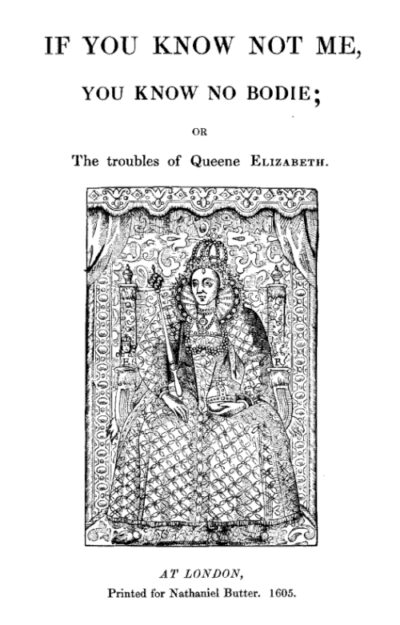
Thomas Heywood
Thomas Heywood was the 16th/17th-century English playwright, actor, and author. Born 1574, in Lincolnshire. Died August 16, 1641, in Clerkenwell. Educated at University of Cambridge.
Facts
11 facts · 0 confirmed by two sources · 6 cited · 5 from one source
Where this comes from
Papalocal keeps its own record. It started from these sources; what each one said is kept here as it was copied, so a change on their side never changes this page by itself. Tap one to read its version.
What Wikidata says · copied November 18, 2026 · revision 2561121985
- Described as
- 16th/17th-century English playwright, actor, and author (1574–1641)
- Born
- 1574 · 4 references
- Died
- August 16, 1641 · 5 references
- Born in
- Lincolnshire
- Died in
- Clerkenwell
- Buried in
- St James's Church, Clerkenwell · 1 reference
- Citizen of
- Kingdom of England
- Occupation
- playwright · 1 reference; writer · 1 reference; stage actor; actor · 1 reference
- Education
- University of Cambridge
- Wikipedias with a page
- 23
Wikidata item Q2073027 (wikidata.org/wiki/Q2073027), public domain (CC0). Copied November 18, 2026.
What Wikipedia says · copied November 18, 2026 · revision 1380635955
Thomas Heywood (early 1570s – 16 August 1641) was an English playwright, actor, and author. His main contributions were to late Elizabethan and early Jacobean theatre. He is best known for his masterpiece A Woman Killed with Kindness, a domestic tragedy, which was first performed in 1603 at the Rose Theatre by the Worcester's Men company. He was a prolific writer, claiming to have had "an entire hand or at least a maine finger in two hundred and twenty plays", although only a fraction of his work has survived.
From the Wikipedia article “Thomas Heywood” (en.wikipedia.org/wiki/Thomas_Heywood), by its contributors, under CC BY-SA 4.0 (creativecommons.org/licenses/by-sa/4.0/). Copied November 18, 2026; not changed.
Confirmed Two sources agree. Cited One source, and it names where it got it. One source One source, without a reference of its own. Sources disagree The sources disagree. We show the best-supported value and keep theirs below.
