
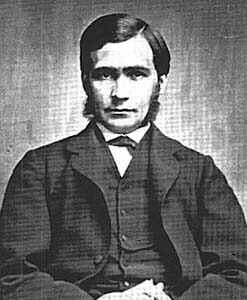
Thomas Hill Green
Thomas Hill Green was a British philosopher. Born April 7, 1836, in West Yorkshire. Died March 26, 1882, in Oxford. Educated at Balliol College.
Facts
14 facts · 2 confirmed by two sources · 7 cited · 5 from one source
Where this comes from
Papalocal keeps its own record. It started from these sources; what each one said is kept here as it was copied, so a change on their side never changes this page by itself. Tap one to read its version.
What Wikidata says · copied November 16, 2026 · revision 2567355918
- Described as
- British philosopher (1836-1882)
- Other names
- T. H. Green
- Born
- April 7, 1836 · 7 references
- Died
- March 26, 1882 · 6 references
- Born in
- West Yorkshire
- Died in
- Oxford · 2 references
- Buried in
- St Sepulchre's Cemetery · 1 reference
- Cause of death
- sepsis
- Citizen of
- United Kingdom of Great Britain and Ireland
- Occupation
- philosopher · 1 reference; writer · 1 reference
- Worked for
- University of Oxford
- Education
- Balliol College
- Spouse
- Charlotte Green · 2 references
- Father
- Valentine Green · 1 reference
- Mother
- Anna Barbara Vaughan · 1 reference
- Wikipedias with a page
- 39
Wikidata item Q369621 (wikidata.org/wiki/Q369621), public domain (CC0). Copied November 16, 2026.
What Wikipedia says · copied November 16, 2026 · revision 1379908235
Thomas Hill Green (7 April 1836 – 26 March 1882), known as T. H. Green, was an English philosopher, political radical and temperance reformer, and a member of the British idealism movement. Like all the British idealists, Green was influenced by the metaphysical historicism of G. W. F. Hegel. He was one of the thinkers behind the philosophy of social liberalism.
- Born, in its opening lines
- April 7, 1836
- Died, in its opening lines
- March 26, 1882
From the Wikipedia article “T. H. Green” (en.wikipedia.org/wiki/T._H._Green), by its contributors, under CC BY-SA 4.0 (creativecommons.org/licenses/by-sa/4.0/). Copied November 16, 2026; not changed.
Confirmed Two sources agree. Cited One source, and it names where it got it. One source One source, without a reference of its own. Sources disagree The sources disagree. We show the best-supported value and keep theirs below.
