
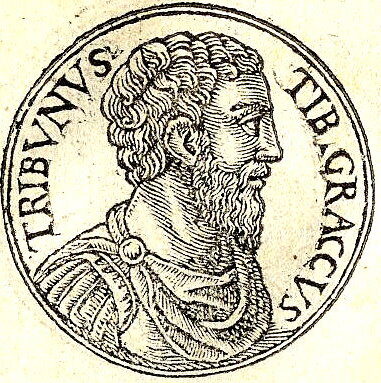
Tiberius Gracchus
Tiberius Gracchus was an ancient Rome politician. Born 162 BC, in Rome. Died 133 BC, in Rome. Positions held include ancient Roman senator (–-133), quaestor (-137) and triumvir agris dandis assignandis (-133).
Facts
26 facts · 0 confirmed by two sources · 11 cited · 13 from one source · 2 where the sources disagree
What’s different
- Born: we show 162 BC (Sources disagree). Wikipedia says 163
- Died: we show 133 BC (Sources disagree). Wikipedia says 133
Where this comes from
Papalocal keeps its own record. It started from these sources; what each one said is kept here as it was copied, so a change on their side never changes this page by itself. Tap one to read its version.
What Wikidata says · copied November 16, 2026 · revision 2564846629
- Described as
- ancient Rome politician
- Other names
- Tiberius Sempronius Gracchus
- Born
- 162 BC · 3 references
- Died
- 133 BC · 7 references
- Born in
- Rome · 1 reference
- Died in
- Rome · 4 references
- Citizen of
- Ancient Rome
- Occupation
- ancient Roman priest; politician; military personnel; social reformer · 1 reference
- Positions held
- ancient Roman senator (–-133); quaestor (-137); triumvir agris dandis assignandis (-133); tribune of the plebs (-133); legatus (2 times) (-147–-137); augur (-142–-133)
- Political party
- populares
- Member of
- Gracchi
- Spouse
- Claudia · 2 references
- Children
- Sempronius Gracchus · 2 references; Sempronius Gracchus · 2 references; Tiberius Sempronius Gracchus · 2 references; Lucius Equitius
- Father
- Tiberius Sempronius Gracchus · 2 references
- Mother
- Cornelia · 2 references
- Siblings
- Gaius Gracchus · 2 references; Sempronia · 2 references
- Wikipedias with a page
- 56
Wikidata item Q212109 (wikidata.org/wiki/Q212109), public domain (CC0). Copied November 16, 2026.
What Wikipedia says · copied November 16, 2026 · revision 1379009988
Tiberius Sempronius Gracchus (; c. 163 – 133 BC) was a Roman politician best known for his agrarian reform law entailing the transfer of land from the Roman state and wealthy landowners to poorer citizens. He had also served in the Roman army, fighting in Africa during the Third Punic War and in Spain during the Numantine War.
His political future was imperilled during his quaestorship when he was forced to negotiate a humiliating treaty with the Numantines after they had surrounded the army he was part of in Spain. Seeking to rebuild that future and reacting to a supposed decline in the Roman population which he blamed on rich families buying up Italian land, he carried a land reform bill against strong opposition by another tribune during his term as tribune of the plebs in 133 BC. To pass and protect his reforms, Tiberius unprecedentedly had the tribune who opposed his programme deposed from office, usurped the senate's prerogatives over foreign policy, and attempted to stand for a consecutive tribunate. Fears of Tiberius' popularity and his willingness to break political norms led to his death, along with many supporters, in a riot instigated by his enemies.
His land reforms survived his death; family allies, including his younger brother Gaius, took places on the land commission set up by the law and distributed over 3,000 square kilometres (1,200 sq mi) of land over the next few years. A decade later, Gaius too was plebeian tribune and proposed in his year much more wide-ranging reforms that also led to his death. Tiberius and his brother Gaius are known collectively as the Gracchi brothers. The date of Tiberius' death marks the traditional start of the Roman Republic's decline and eventual collapse.
- Born, in its opening lines
- 163
- Died, in its opening lines
- 133
From the Wikipedia article “Tiberius Gracchus” (en.wikipedia.org/wiki/Tiberius_Gracchus), by its contributors, under CC BY-SA 4.0 (creativecommons.org/licenses/by-sa/4.0/). Copied November 16, 2026; not changed.
Confirmed Two sources agree. Cited One source, and it names where it got it. One source One source, without a reference of its own. Sources disagree The sources disagree. We show the best-supported value and keep theirs below.
