
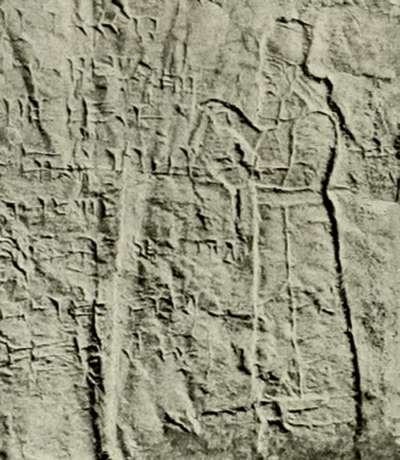
Tiglath-Pileser I
Tiglath-Pileser I was a King of Assyria during the Middle Assyrian period. Born 12th century BC. Died 1076 BC. Positions held include King of Assyria (-1114–-1076).
Facts
10 facts · 0 confirmed by two sources · 1 cited · 7 from one source · 2 where the sources disagree
What’s different
- Born: we show 12th century BC (Sources disagree). Wikipedia says 1114
- Died: we show 1076 BC (Sources disagree). Wikipedia says 1076
Where this comes from
Papalocal keeps its own record. It started from these sources; what each one said is kept here as it was copied, so a change on their side never changes this page by itself. Tap one to read its version.
What Wikidata says · copied November 16, 2026 · revision 2553934728
- Described as
- King of Assyria during the Middle Assyrian period
- Other names
- Tiglath Pileser
- Born
- 12th century BC
- Died
- 1076 BC
- Citizen of
- Assyrian Empire
- Occupation
- king · 1 reference; sovereign
- Positions held
- King of Assyria (-1114–-1076)
- Children
- Ashur-bel-kala; Shamshi-Adad IV; Asharid-apal-Ekur
- Father
- Ashur-resh-ishi I
- Wikipedias with a page
- 49
Wikidata item Q296295 (wikidata.org/wiki/Q296295), public domain (CC0). Copied November 16, 2026.
What Wikipedia says · copied November 16, 2026 · revision 1376823798
Tiglath-Pileser I (; from the Hebraic form of Middle Assyrian Akkadian: 𒆪𒋾𒀀𒂍𒈗𒊏, romanized: Tukultī-apil-Ešarra, "my trust is in the son of Ešarra") was a king of Assyria during the Middle Assyrian Empire (1114–1076 BC). According to Georges Roux, Tiglath-Pileser was "one of the two or three great Assyrian monarchs since the days of Shamshi-Adad I". He was known for his "wide-ranging military campaigns, his enthusiasm for building projects, and his academic interest in cuneiform tablet collections". Under him, Assyria confirmed its position as the leading power of the Ancient Near East, a position the kingdom largely maintained for the next five hundred years. He further expanded Assyrian control deeper into Anatolia, Levant and Ancient Iran, and to the shores of the Mediterranean Sea. From his surviving inscriptions, he seems to have carefully cultivated a fear of himself in his subjects and in his enemies alike.
The beginning of Tiglath-Pileser's I reign had heavy involvement in military campaigns, as suggested from translated texts from the Middle Assyrian Empire period. The texts were believed to be "justification of war." Although little literary text is available from the time of Tiglath-Pileser I, there is evidence to show that the reign of Tiglath-Pileser I inspired the act of recording information, including that of his military campaigns. Toward the end of Tiglath-Pileser's reign literary texts took the form of "summary texts" which served as a vessel for as much information about his reign as possible, with the intent to be handed down to his successor.
- Born, in its opening lines
- 1114
- Died, in its opening lines
- 1076
From the Wikipedia article “Tiglath-Pileser I” (en.wikipedia.org/wiki/Tiglath-Pileser_I), by its contributors, under CC BY-SA 4.0 (creativecommons.org/licenses/by-sa/4.0/). Copied November 16, 2026; not changed.
Confirmed Two sources agree. Cited One source, and it names where it got it. One source One source, without a reference of its own. Sources disagree The sources disagree. We show the best-supported value and keep theirs below.
