Assyrian Empire
The Assyrian Empire is a major Mesopotamian East Semitic kingdom. It was founded in -2025.
- Founded
- 2025 BC
- What it is
- historical country (-612–)
All 4 facts, and where they come from
Facts
4 facts · 0 confirmed by two sources · 0 cited · 4 from one source
Where this comes from
Papalocal keeps its own record. It started from these sources; what each one said is kept here as it was copied, so a change on their side never changes this page by itself. Tap one to read its version.
What Wikidata says · copied November 17, 2026 · revision 2566535228
- Described as
- major Mesopotamian East Semitic kingdom
- Other names
- Early Period, Assyria
- What it is
- historical country (-612–); empire (–-612)
- Founded
- 2025 BC
- Ended
- 609 BC
- Wikipedias with a page
- 116
Wikidata item Q41137 (wikidata.org/wiki/Q41137), public domain (CC0). Copied 2026-11-17.
What Wikipedia says · copied November 17, 2026 · revision 1382416081
Assyria was a major ancient Mesopotamian civilization that existed from the 21st to the 7th century BC which conquered and administered most of West Asia from the Assyrian heartland in Upper Mesopotamia. Assyria is called the first true military superpower in human history, and pioneered major inventions and advances in the first libraries and large-scale preservation and accumulation of knowledge, as well as in statecraft, centralised government, bureaucracy, warfare, military organisation, propaganda, art, and architecture.
Assyrian imperial history spans the early Bronze Age to the late Iron Age, from its beginning as small Akkadian settlements in northern Mesopotamia to its zenith and collapse as the largest empire at the time, and is typically divided into the Early Assyrian (c. 2600–2025 BC), Old Assyrian (c. 2025–1364 BC), Middle Assyrian (c. 1363–912 BC), Neo-Assyrian (911–609 BC), and post-imperial (609 BC–c. 240 AD) periods. The Assyrian people survive to this day and continue to live and practice their culture in their ancient heartland and in the diaspora.
Assur, the first Assyrian capital, was founded c. 2600 BC, but there is no evidence that the city was independent until the collapse of the Third Dynasty of Ur, in the 21st century BC, when a line of independent kings starting with Puzur-Ashur I began ruling the city. Centered in the Assyrian heartland in northern Mesopotamia, Assyrian power fluctuated over time. The city underwent several periods of foreign rule or domination before Assyria rose under Ashur-uballit I in the early 14th century BC as the Middle Assyrian Empire. In the Middle and Neo-Assyrian periods, Assyria was one of the two major Mesopotamian kingdoms, alongside Babylonia in the south, and at times became the dominant power in the ancient Near East. Assyria was at its strongest in the Neo-Assyrian period, when the Assyrian army was the strongest military power in the world and the Assyrians ruled the largest empire then yet assembled in world history, spanning from parts of modern-day Iran in the east to Egypt in the west.
In the late 7th century BC the Neo-Assyrian Empire, weakened by a period of civil war, fell, conquered by a coalition of the ethno-linguistically similar Babylonians, who for some three centuries had lived under Assyrian rule or domination, and of Assyria's erstwhile vassals, the Medes and Scythians. Despite the Medo-Babylonian conquest of the Assyrian Empire ravaging much of Assyria's core urban areas, and the subsequent Neo-Babylonian Empire devoting minimal resources to reconstruction until the Assyrian-born Nabonidus took the throne, ancient Assyrian culture and traditions endured for centuries into the post-imperial era. Assyria revived during the Seleucid and Parthian periods, with several Assyrian kingdoms emerging under Parthian dominion from the 2nd century BC to the mid-3rd century AD. A later decline set in under the Sasanian Empire, which devastated many cities and semi-independent Assyrian territories in the region, among them Assur.
The remaining Assyrian people, who had survived and preserved their native culture in northern Mesopotamia, were among the first people to accept Christianity in the 1st century AD, traditionally having been evangelized by St. Thomas the Apostle, one of the Twelve Disciples of Jesus Christ, and by the disciples St. Addai and St. Mari, went on to develop a unique East Syriac rite and establish the Church of the East (which would go on to spread Christianity throughout large parts of Asia). The ancient Mesopotamian religion persisted at Assur until Assur's final sack in the 3rd century AD, and at certain other holdouts for centuries thereafter. A number of religious and cultural symbols, practices, customs, artistic styles, and genres from the ancient Mesopotamian religion and culture continue to be used and repurposed in Syriac Christianity to this day, such as the star of Shamash and the Easter Monday 'gayasa' (a play in the Sumerian disputation genre).
The triumph of ancient Assyria can be attributed not only to its vigorous warrior-monarchs but also to its adeptness in efficiently assimilating and governing conquered territories, using inventive and advanced administrative mechanisms. The developments in warfare and governance introduced by ancient Assyria continued to be employed by subsequent empires and states for centuries. Ancient Assyria also left a legacy of great cultural significance, particularly through the Neo-Assyrian Empire, making a prominent impression in later Assyrian, Greco-Roman, and Hebrew literary and religious traditions.
From the Wikipedia article “Assyria” (en.wikipedia.org/wiki/Assyria), by its contributors, under CC BY-SA 4.0 (creativecommons.org/licenses/by-sa/4.0/). Copied 2026-11-17; not changed.
Confirmed Two sources agree. Cited One source, and it names where it got it. One source One source, without a reference of its own. Sources disagree The sources disagree. We show the best-supported value and keep theirs below.
Picture: Wikimedia Commons: Iraq; Nimrud - Assyria, Lamassu's Guarding Palace Entrance.jpg · See Commons file page
People connected 41
Citizen of 40
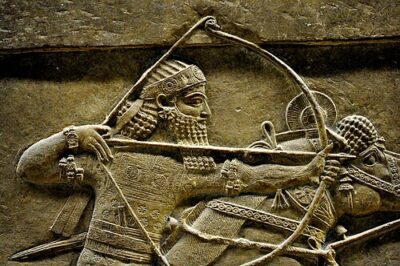 AshurbanipalAssyrian ruler
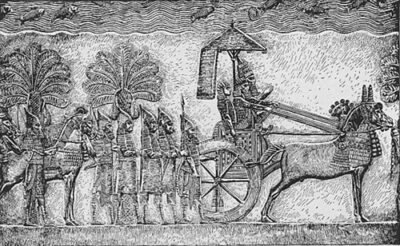 Sennacheribking of Assyria
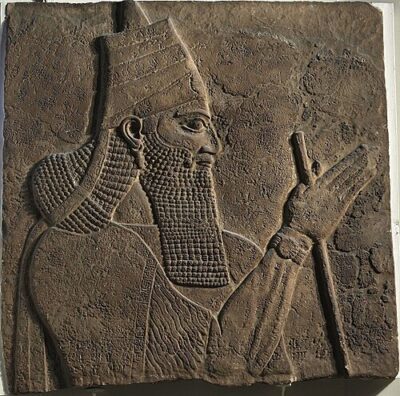 Tiglath-Pileser IIIKing of Assyria who ruled 745-727 BCE
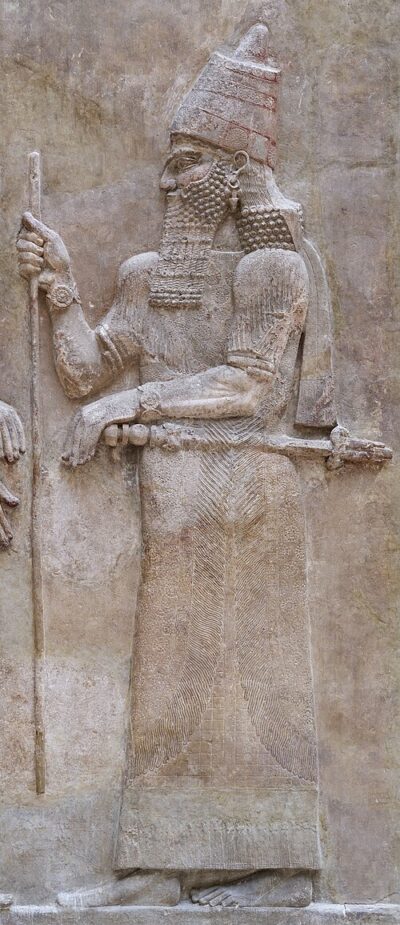 Sargon IIking of Assyria (722-705 B.C)
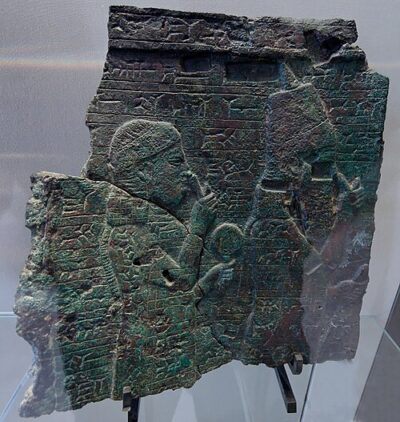 EsarhaddonKing of Assyria (8th cenutury BCE – 669 BCE)
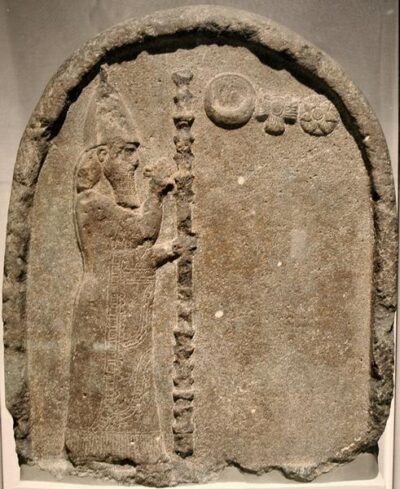 Nabonidusking of Babylon
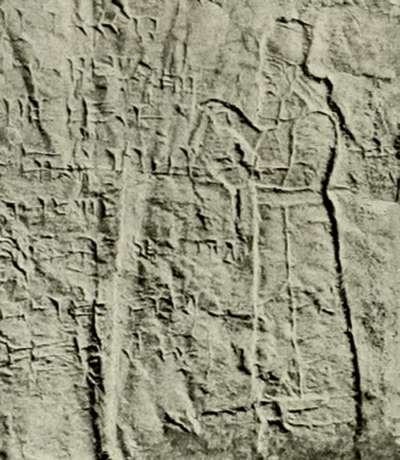 Tiglath-Pileser IKing of Assyria during the Middle Assyrian period
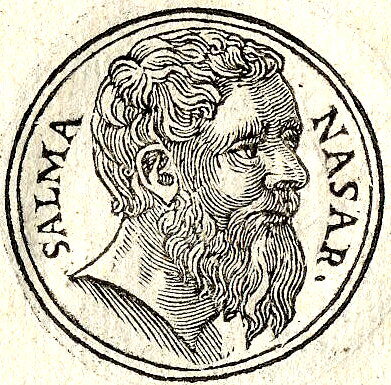 Shalmaneser VAssyrian king
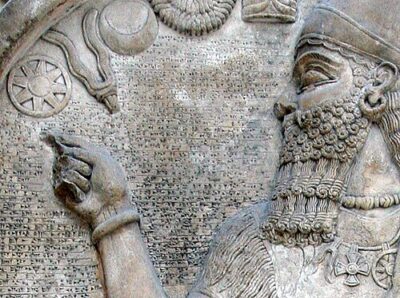 Ashurnasirpal IIAssyrian king
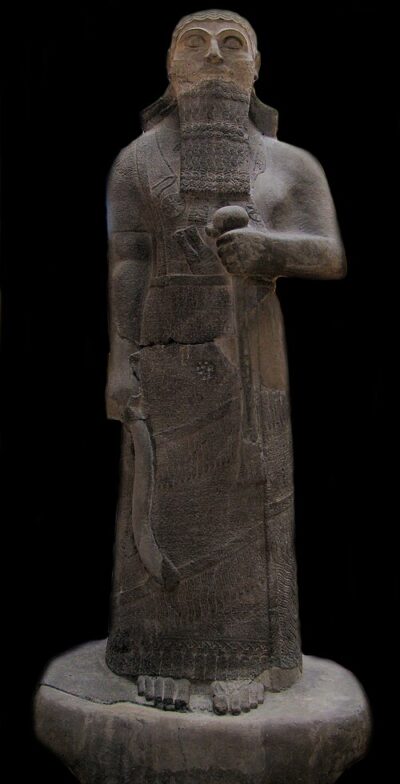 Shalmaneser IIIAssyrian king
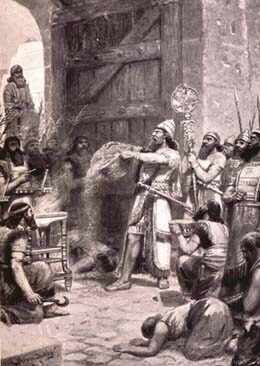 Shalmaneser IAssyrian king
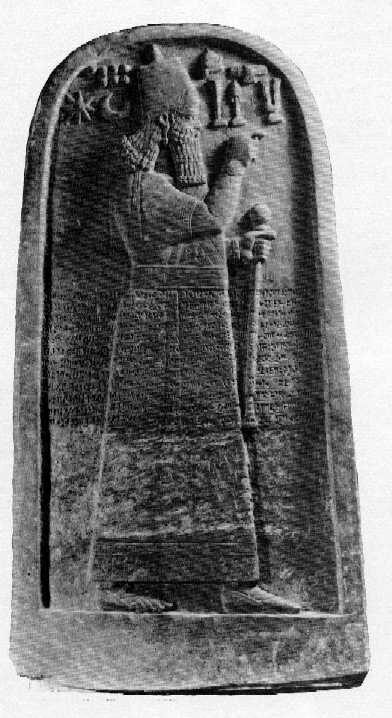 Adad-nirari IAssyrian king
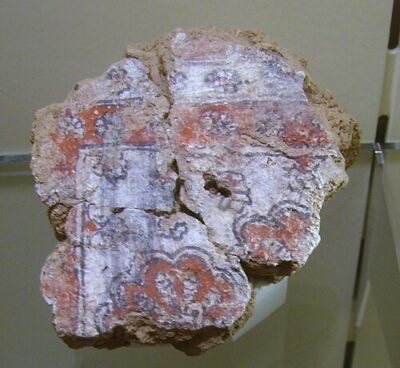 Tukulti-Ninurta IKing of Assyria
- AAshur-uballit IIAssyrian Last King
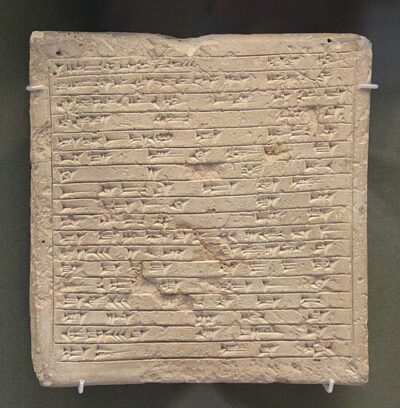 Ashur-uballit IAssyrian king
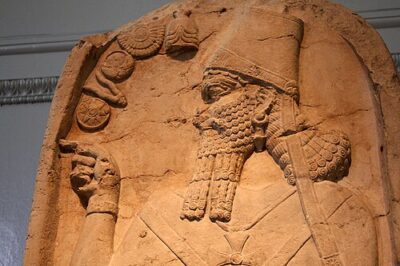 Shamshi-Adad VAssyrian king (824-811 B.C)
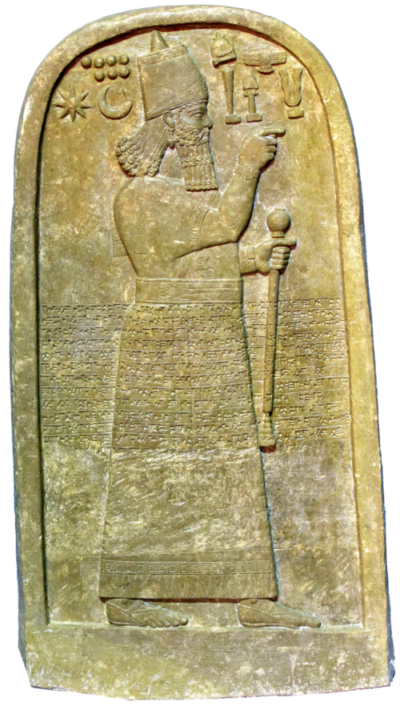 Adad-nirari IIIKing of Assyria
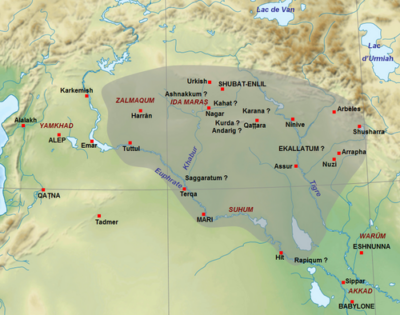 Shamshi-Adad Iking of Mari (ca. 1808–1776 BCE)
- ŠŠarru-kên Iking of Assyria
 Ashur-nirari VAssyrian king
 Aššur-etil-ilāniKing of the Neo-Assyrian Empire (r. 631–627 BC)
- SSinsharishkunAssyrian king
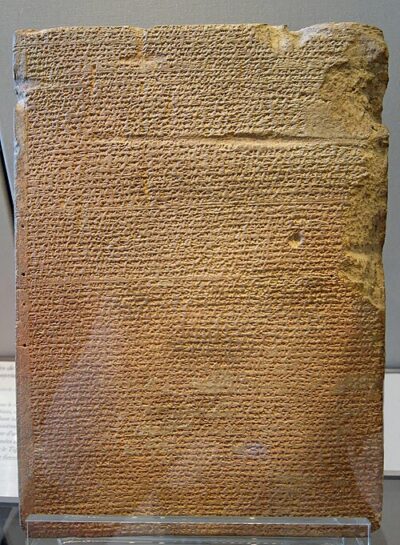 Tukulti-Ninurta IIAssyrian king
- AAshur-dan IIIAssyrian king
and 16 more