
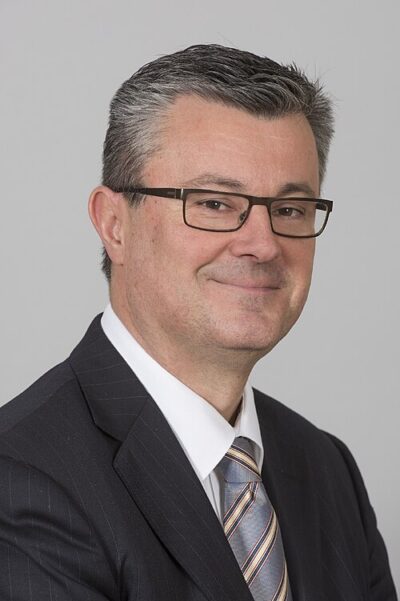
Tihomir Orešković
Tihomir Orešković is a Croatian-Canadian entrepreneur and politician. Born January 1, 1966, in Zagreb. Positions held include Prime Minister of Croatia (2016). Educated at McMaster University.
Facts
9 facts · 1 confirmed by two sources · 1 cited · 7 from one source
Where this comes from
Papalocal keeps its own record. It started from these sources; what each one said is kept here as it was copied, so a change on their side never changes this page by itself. Tap one to read its version.
What Wikidata says · copied November 16, 2026 · revision 2563715961
- Described as
- Croatian-Canadian entrepreneur and politician
- Other names
- Tim Orešković
- Born
- January 1, 1966 · 2 references
- Born in
- Zagreb
- Citizen of
- Croatia
- Occupation
- businessperson; politician; entrepreneur
- Positions held
- Prime Minister of Croatia (2016) · 1 reference
- Political party
- independent politician · 1 reference
- Education
- McMaster University
- Wikipedias with a page
- 37
Wikidata item Q21821359 (wikidata.org/wiki/Q21821359), public domain (CC0). Copied November 16, 2026.
What Wikipedia says · copied November 16, 2026 · revision 1378285209
Tihomir "Tim" Orešković (Croatian pronunciation: [tîxomiːr tîm ǒreːʃkoʋitɕ]; born 1 January 1966) is a Croatian-Canadian businessman who was Prime Minister of Croatia from January to October 2016, before a no-confidence vote filed by one of the two parties in the ruling coalition brought his government down.
Born in Zagreb, Orešković emigrated to Canada at a young age and spent most of his life there. He studied at McMaster University and graduated with a B.Sc. in chemistry in 1989 and an MBA in finance and information systems in 1991. Before taking office as prime minister, Orešković was CEO and Chairman of the Supervisory Board of Croatian pharmaceutical giant Pliva, as head of European financial management for Israeli Teva Pharmaceutical Industries, and as Chief Financial Officer for Teva's division of global generics.
In the aftermath of a parliamentary election held on 8 November 2015 where no party secured enough seats necessary to form government, and the ensuing 76 days of negotiations, Orešković was named as a technocratic non-partisan compromise for the post of prime minister by the Croatian Democratic Union (HDZ) and the coalition Bridge of Independent Lists (Most) on 23 December 2015. He was formally named Prime Minister-designate on the same day by President Kolinda Grabar-Kitarović. Orešković formed the 13th Croatian Government, made up of two deputy prime ministers and 20 ministers on 22 January 2016.
As prime minister, Orešković introduced fiscal controls aimed at reducing public expenditures and lowering the public debt and deficit. However, his government was marked by tense relations between the two governing parties, with political maneuvering behind the scenes resulting in a government crisis in May 2016. Contrary to expectations that he would take direction from HDZ, the new prime minister went against HDZ recommendations on several occasions. With relations growing acrimonious, HDZ in turn rejected several proposals, including an amendment for reducing benefits of MPs, and the adoption of a new waste management plan.
On 16 June 2016, the HDZ introduced a vote of no-confidence. With 125 MPs voting in favour, 15 voting against, and 2 abstaining, the no-confidence succeeded, the government was brought down and early parliamentary elections were called for September. Although Orešković initially considered running for re-election as a candidate of Most, he returned to the private sector. On 19 October 2016, Orešković was succeeded by the new prime minister, Andrej Plenković from the HDZ.
- Born, in its opening lines
- January 1, 1966
From the Wikipedia article “Tihomir Orešković” (en.wikipedia.org/wiki/Tihomir_Orešković), by its contributors, under CC BY-SA 4.0 (creativecommons.org/licenses/by-sa/4.0/). Copied November 16, 2026; not changed.
Confirmed Two sources agree. Cited One source, and it names where it got it. One source One source, without a reference of its own. Sources disagree The sources disagree. We show the best-supported value and keep theirs below.
