
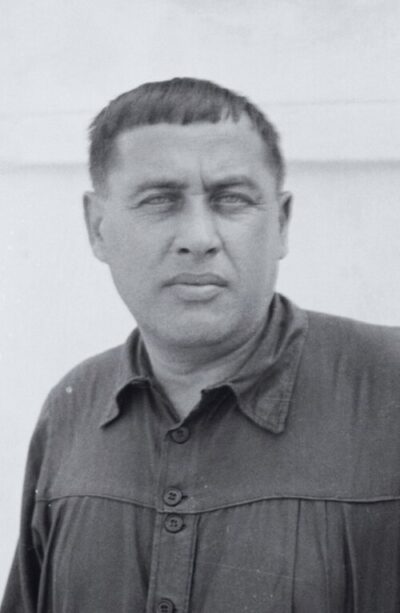
Titsian Tabidze
Titsian Tabidze was a Georgian poet. Born April 2, 1895, in Chkvishi. Died December 16, 1937, in Tbilisi. Educated at Faculty of History and Philology of Moscow University.
Facts
10 facts · 1 confirmed by two sources · 1 cited · 7 from one source · 1 where the sources disagree
What’s different
- Born: we show April 2, 1895 (Sources disagree). Wikidata also lists March 21, 1895
Where this comes from
Papalocal keeps its own record. It started from these sources; what each one said is kept here as it was copied, so a change on their side never changes this page by itself. Tap one to read its version.
What Wikidata says · copied November 18, 2026 · revision 2565610130
- Described as
- Georgian poet
- Born
- March 21, 1895; April 2, 1895 · 1 reference
- Died
- December 16, 1937 · 1 reference
- Born in
- Chkvishi
- Died in
- Tbilisi
- Citizen of
- Russian Empire; Transcaucasian Democratic Federative Republic; Democratic Republic of Georgia; Soviet Union
- Occupation
- poet · 1 reference
- Education
- Faculty of History and Philology of Moscow University
- Wikipedias with a page
- 22
Wikidata item Q144077 (wikidata.org/wiki/Q144077), public domain (CC0). Copied November 18, 2026.
What Wikipedia says · copied November 18, 2026 · revision 1375170069
Titsian Tabidze (Georgian: ტიციან ტაბიძე, simply referred to as Titsiani; Georgian: ტიციანი) (21 March [O.S. 9 March] 1890 – 16 December 1937), was a Georgian poet and one of the leaders of the Georgian symbolist movement. He fell victim to Joseph Stalin's Great Purge, was arrested and executed on trumped-up charges of treason. Tabidze was a close friend of the well-known Russian writer Boris Pasternak, who translated his poetry into Russian.
- Born, in its opening lines
- March 21, 1890
- Died, in its opening lines
- December 16, 1937
From the Wikipedia article “Titsian Tabidze” (en.wikipedia.org/wiki/Titsian_Tabidze), by its contributors, under CC BY-SA 4.0 (creativecommons.org/licenses/by-sa/4.0/). Copied November 18, 2026; not changed.
Confirmed Two sources agree. Cited One source, and it names where it got it. One source One source, without a reference of its own. Sources disagree The sources disagree. We show the best-supported value and keep theirs below.
