
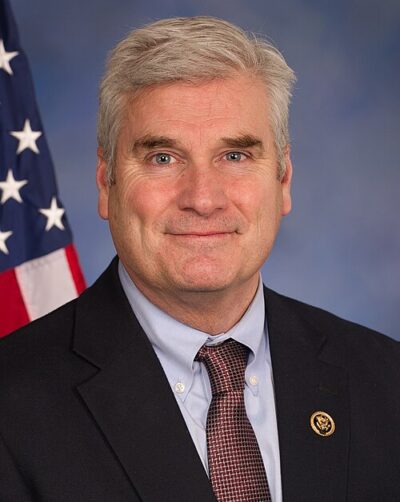
Tom Emmer
Tom Emmer is an U.S. Representative from Minnesota. Born March 3, 1961, in South Bend. Positions held include member of the Minnesota House of Representatives (2005–2011), member (1995–2004) and United States representative (2015–). Educated at University of Alaska Fairbanks and William Mitchell College of Law.
Facts
19 facts · 1 confirmed by two sources · 10 cited · 8 from one source
Where this comes from
Papalocal keeps its own record. It started from these sources; what each one said is kept here as it was copied, so a change on their side never changes this page by itself. Tap one to read its version.
What Wikidata says · copied November 16, 2026 · revision 2568893138
- Described as
- U.S. Representative from Minnesota
- Other names
- Thomas Earl Emmer II, Thomas Earl Emmer, Thomas Emmer II, Thomas Emmer
- Born
- March 3, 1961
- Born in
- South Bend
- Citizen of
- United States
- Occupation
- lawyer; politician · 3 references; radio personality · 1 reference
- Positions held
- member of the Minnesota House of Representatives (2005–2011) · 1 reference; member (1995–2004) · 1 reference; United States representative (2015–) · 2 references
- Political party
- Republican Party of Minnesota; Republican Party · 1 reference
- Education
- University of Alaska Fairbanks (–1984) · 1 reference; William Mitchell College of Law (–1988) · 1 reference; Saint Thomas Academy · 1 reference; Mitchell Hamline School of Law
- Member of
- U.S.-Japan Caucus · 1 reference
- Teams
- Alaska Nanooks men's ice hockey
- Website
- https://emmer.house.gov/ · 1 reference; https://emmerforcongress.com
- Wikipedias with a page
- 21
Wikidata item Q7815723 (wikidata.org/wiki/Q7815723), public domain (CC0). Copied November 16, 2026.
What Wikipedia says · copied November 16, 2026 · revision 1385655777
Thomas Earl Emmer Jr. (born March 3, 1961) is an American attorney, lobbyist, and politician serving since 2023 as majority whip in the United States House of Representatives. A member of the Republican Party, he has represented Minnesota's 6th congressional district since 2015. During his tenure in Congress, he has been known as a strong advocate for the crypto industry.
Before his election to Congress, Emmer served three terms as a member of the Minnesota House of Representatives from 2005 to 2011. He lost the 2010 Minnesota gubernatorial election to Minnesota Democratic–Farmer–Labor Party nominee Mark Dayton by less than half a percentage point. Emmer was elected to Congress in 2014, winning the 6th district seat being vacated by Michele Bachmann. He has been reelected five times. The district includes the far western and northern suburbs of Minneapolis in the Twin Cities metropolitan area, most of the St. Cloud metropolitan area, and a large part of rural Central Minnesota, generally an agricultural region.
Emmer chaired the National Republican Congressional Committee from 2019 to 2023. After Republicans gained a narrow-than-expected majority in the 2022 U.S. House of Representatives elections, he won a contested election for majority whip, 115–106.
Emmer initially cast doubt on the 2020 U.S. presidential election results, saying that certain states used "questionable" practices in administering the vote. After signing an amicus brief in support of Texas v. Pennsylvania, a lawsuit seeking to contest the outcome in key swing states, Emmer ultimately voted to certify the Electoral College vote count.
Emmer was the House Republican Conference's third nominee in the October 2023 Speaker of the House election, after Steve Scalise withdrew and Jim Jordan failed to garner the votes needed in the first three ballots. He withdrew from the race shortly after former president Donald Trump voiced his opposition, calling him "totally out-of-touch with Republican Voters" and a "Globalist RINO".
- Born, in its opening lines
- March 3, 1961
From the Wikipedia article “Tom Emmer” (en.wikipedia.org/wiki/Tom_Emmer), by its contributors, under CC BY-SA 4.0 (creativecommons.org/licenses/by-sa/4.0/). Copied November 16, 2026; not changed.
Confirmed Two sources agree. Cited One source, and it names where it got it. One source One source, without a reference of its own. Sources disagree The sources disagree. We show the best-supported value and keep theirs below.
