
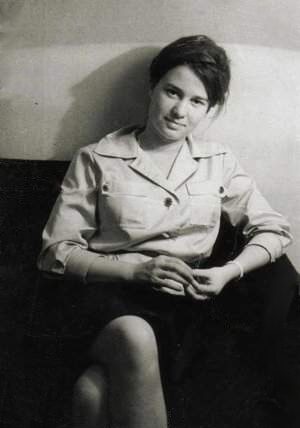
Ulrike Meinhof
Ulrike Meinhof was a German left-wing militant, journalist and author. Born October 7, 1934, in Oldenburg. Died May 9, 1976, in Stammheim. Educated at University of Münster and Cäcilienschule Oldenburg.
Facts
21 facts · 2 confirmed by two sources · 11 cited · 8 from one source
Where this comes from
Papalocal keeps its own record. It started from these sources; what each one said is kept here as it was copied, so a change on their side never changes this page by itself. Tap one to read its version.
What Wikidata says · copied November 16, 2026 · revision 2569063144
- Described as
- German left-wing militant, journalist and author (1934–1976)
- Other names
- Ulrike Marie Meinhof, Meinhof
- Born
- October 7, 1934 · 8 references
- Died
- May 9, 1976 · 6 references
- Born in
- Oldenburg · 1 reference
- Died in
- Stammheim · 1 reference
- Buried in
- Friedhof III der Dreifaltigkeitsgemeinde · 1 reference
- Cause of death
- hanging to death
- Citizen of
- Germany
- Occupation
- journalist · 2 references; writer; sociologist; screenwriter · 1 reference
- Political party
- Communist Party of Germany
- Education
- University of Münster; Cäcilienschule Oldenburg
- Member of
- Sozialistischer Deutscher Studentenbund; Red Army Faction · 1 reference
- Spouse
- Klaus Rainer Röhl (1961–1968) · 1 reference
- Children
- Bettina Röhl · 1 reference; Regine Röhl · 1 reference
- Father
- Werner Meinhof · 1 reference
- Mother
- Ingeborg Meinhof · 1 reference
- Wikipedias with a page
- 62
Wikidata item Q76543 (wikidata.org/wiki/Q76543), public domain (CC0). Copied November 16, 2026.
What Wikipedia says · copied November 16, 2026 · revision 1384080890
Ulrike Marie Meinhof (German pronunciation: [ʊlˈʁiːkə maˈʁiː ˈmaɪnhoːf]; 7 October 1934 – 9 May 1976) was a German left-wing militant, journalist, author and founding member of the Red Army Faction (RAF) in West Germany, commonly referred to in the press as the "Baader-Meinhof gang". She is the reputed author of The Urban Guerilla Concept (1971). The manifesto acknowledges the RAF's "roots in the history of the student movement"; condemns "reformism" as "a brake on the anti-capitalist struggle"; and invokes Mao Zedong to define "armed struggle" as "the highest form of Marxism-Leninism".
Meinhof, who took part in the RAF's "May Offensive" in 1972, was arrested that June and spent the rest of her life in custody, largely isolated from outside contact. In November 1974, she was sentenced to 8 years in prison for complicity in a near-fatal shooting in what had been her first RAF operation, the successful jailbreak of Andreas Baader in 1970.
From 1975, with Baader and two other RAF leaders, Gudrun Ensslin and Jan-Carl Raspe, she stood trial on further charges of murder and attempted murder. Before the end of the trial, she was found hanged in her cell in the Stammheim Prison. The official finding of suicide sparked controversy, with her sister, Wienke Zitzlaff, stating that Meinhof had told her only days before her death: "You can stand up and fight only while you are alive. If they say I committed suicide, be sure that it was murder."
One year later, on 7 April 1977, two members of the RAF assassinated the Federal Attorney-General Siegfried Buback as revenge.
- Born, in its opening lines
- October 7, 1934
- Died, in its opening lines
- May 9, 1976
From the Wikipedia article “Ulrike Meinhof” (en.wikipedia.org/wiki/Ulrike_Meinhof), by its contributors, under CC BY-SA 4.0 (creativecommons.org/licenses/by-sa/4.0/). Copied November 16, 2026; not changed.
Confirmed Two sources agree. Cited One source, and it names where it got it. One source One source, without a reference of its own. Sources disagree The sources disagree. We show the best-supported value and keep theirs below.
