
Communist Party of Germany
Communist Party of Germany is a former Marxist–Leninist political party in Germany. It was founded in 1918 by Karl Liebknecht and Rosa Luxemburg. Its headquarters are in Berlin. It stands for Marxism, Leninism and anti-fascism.
- Country
- Weimar Republic
- Founded
- December 30, 1918
- Ideology
- Marxism
- Chair
- Ernst Thälmann
All 15 facts, and where they come from
Facts
15 facts · 0 confirmed by two sources · 0 cited · 15 from one source
Where this comes from
Papalocal keeps its own record. It started from these sources; what each one said is kept here as it was copied, so a change on their side never changes this page by itself. Tap one to read its version.
What Wikidata says · copied November 16, 2026 · revision 2522570229
- Described as
- former Marxist–Leninist political party in Germany
- Other names
- KPD
- What it is
- communist party
- Comes after
- Spartacus League
- Followed by
- Socialist Unity Party of Germany (1946)
- Founded
- December 30, 1918
- Ended
- August 17, 1956
- Founded by
- Karl Liebknecht · 1 reference; Rosa Luxemburg
- Headquarters
- Berlin
- Country
- Weimar Republic; East Germany
- Chair
- Ernst Thälmann · 1 reference
- Ideology
- Marxism; Leninism (1928–); anti-fascism; communism · 1 reference
- Wikipedias with a page
- 53
Wikidata item Q153401 (wikidata.org/wiki/Q153401), public domain (CC0). Copied 2026-11-16.
What Wikipedia says · copied November 16, 2026 · revision 1379337675
The Communist Party of Germany (German: Kommunistische Partei Deutschlands, pronounced [kɔmuˈnɪstɪʃə paʁˈtaɪ ˈdɔʏtʃlants] , KPD [ˌkaːpeːˈdeː] ) was the major far-left political party in the Weimar Republic during the interwar period, an underground resistance movement in Nazi Germany, and a minor party in Allied-occupied Germany and West Germany during the post-war period until it merged with the SPD in the Soviet occupation zone in 1946 and was banned by the West German Federal Constitutional Court in 1956.
The construction of the KPD began in the aftermath of the First World War by Rosa Luxemburg's and Karl Liebknecht's faction of the Independent Social Democratic Party of Germany (USPD) who had opposed the war and the Majority Social Democratic Party of Germany (MSPD)'s support of it.
The KPD joined the Spartacist uprising of January 1919, which sought to establish a council republic in Germany. After the defeat of the uprising, and the murder of KPD leaders Rosa Luxemburg, Karl Liebknecht and Leo Jogiches, the party temporarily steered a more moderate, loyal-oppositionist course under the leadership of Paul Levi. He was defeated by the Marxist Leninist wing of the party and three months later he was expelled from both the KPD and Comintern because of his public criticism of the role of the party leadership in the March Action of 1921. During the Weimar Republic period, the KPD usually polled between 10 and 15 percent of the vote and was represented in the national Reichstag and in state parliaments. Under the leadership of Ernst Thälmann from 1925 the party became thoroughly Marxist-Leninist and more loyal to the politics of the Soviet Union, and from 1928 it was largely influenced and funded by the Comintern. Under Thälmann's leadership the party directed most of its attacks against the Social Democratic Party of Germany (SPD), which it regarded as its main adversary and referred to as "social fascists"; the KPD adopted what is known as the 'social fascism' thesis under Stalin's direction. This position held that social democracy, particularly the SPD, was objectively a variant of fascism – 'social fascism' – because it supposedly upheld capitalism while providing a façade of workers' representation, considering all other parties in the Weimar Republic to be "fascists".
The KPD was banned in the Weimar Republic one day after the Nazi Party emerged triumphant in the German elections in 1933. It maintained an underground organization in Nazi Germany, and the KPD and groups associated with it led the internal resistance to the Nazi regime, with a focus on distributing anti-Nazi literature. The KPD suffered heavy losses between 1933 and 1939, with 30,000 Communists executed and 150,000 sent to Nazi concentration camps. Many German Communists went to the Soviet Union. However, 60% of German exiles in the Soviet Union were liquidated during the Stalinist terror and a higher proportion of the KPD Politburo membership died in the Soviet Union than in Nazi Germany. Hundreds of German citizens, the majority of whom were Communists, had been handed over to the Gestapo from Stalin's administration.
The party was revived in divided postwar West and East Germany and won seats in the first Bundestag (West German Parliament) elections in 1949. The KPD was banned as extremist in West Germany in 1956 by the Federal Constitutional Court. In 1969, some of its former members founded an even smaller fringe party, the German Communist Party (DKP), which remains legal, and multiple tiny splinter groups claiming to be the successor to the KPD have also subsequently been formed. In East Germany, the party was merged, by Soviet decree, with remnants of the Social Democratic Party to form the Socialist Unity Party (SED) which ruled East Germany from 1949 until 1989–1990; the merger was opposed by many Social Democrats, many of whom fled to the western zones. After the fall of the Berlin Wall, reformists took over the SED and renamed it the Party of Democratic Socialism (PDS); in 2007 the PDS subsequently merged with the SPD splinter faction WASG to form Die Linke.
From the Wikipedia article “Communist Party of Germany” (en.wikipedia.org/wiki/Communist_Party_of_Germany), by its contributors, under CC BY-SA 4.0 (creativecommons.org/licenses/by-sa/4.0/). Copied 2026-11-16; not changed.
Confirmed Two sources agree. Cited One source, and it names where it got it. One source One source, without a reference of its own. Sources disagree The sources disagree. We show the best-supported value and keep theirs below.
People connected 15
Party members
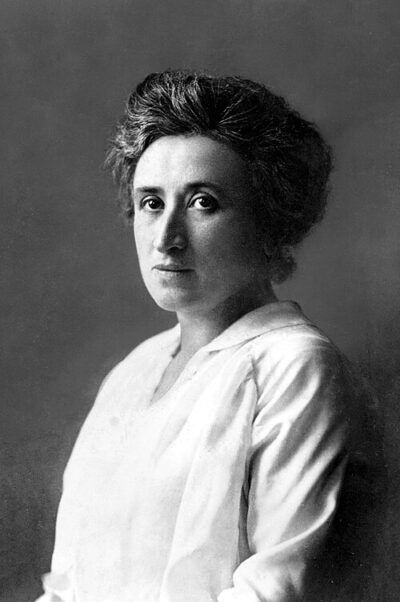 Rosa Luxemburg (1919–)Polish-German Marxist revolutionary (1871–1919)
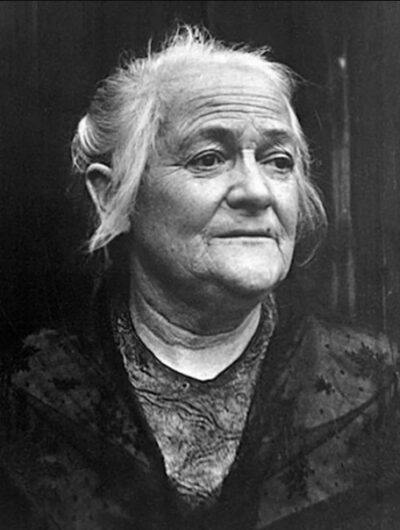 Clara ZetkinCommunist activist, and advocate for women's rights (1857–1933)
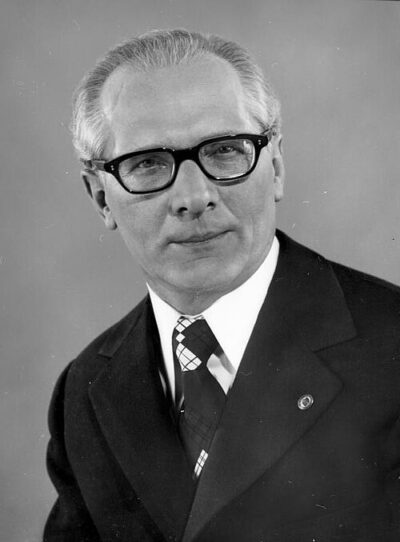 Erich Honecker (1930–)former leader of East Germany, General Secretary of the Socialist Unity Party (1976-1989)
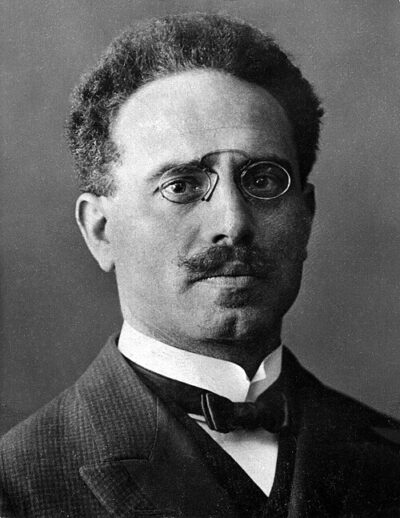 Karl Liebknecht (1918–)German socialist, editor, and co-founder of the Spartacus League (1871-1919)
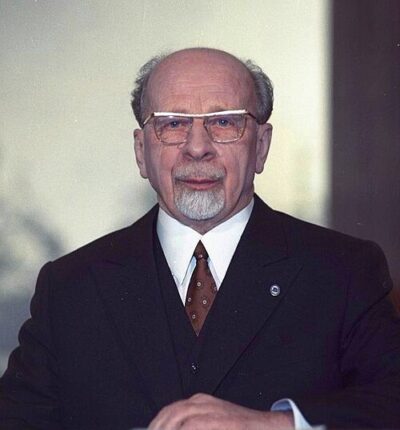 Walter Ulbricht (1920–1946)German communist politician and dictator (1893–1973)
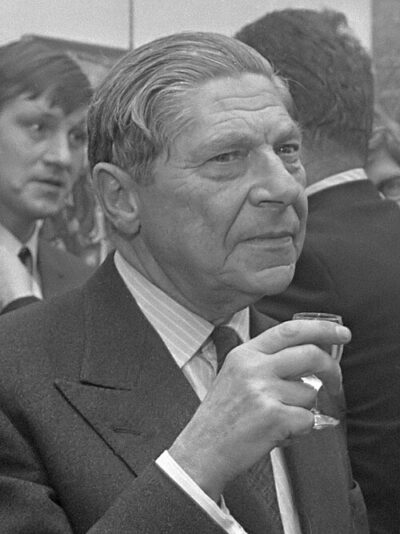 Arthur Koestler (1931–1938)Hungarian-British author and journalist (1905–1983)
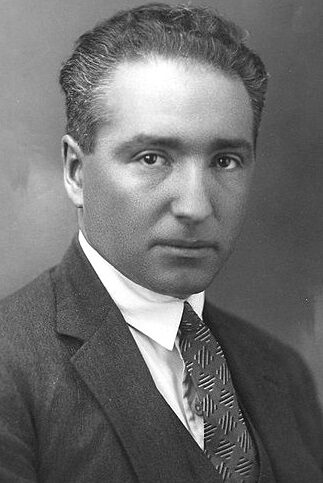 Wilhelm Reich (1930–)Austrian-American psychiatrist, psychoanalyst, sex educator and sociologist (1897–1957)
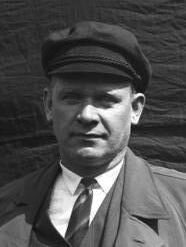 Ernst ThälmannGerman communist politician, leader of Communist Party of Germany (1886–1944)
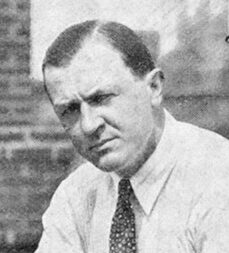 George GroszGerman artist (1893–1959)
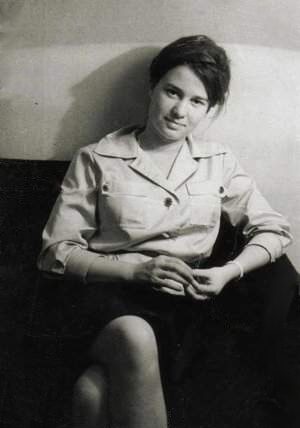 Ulrike MeinhofGerman left-wing militant, journalist and author (1934–1976)
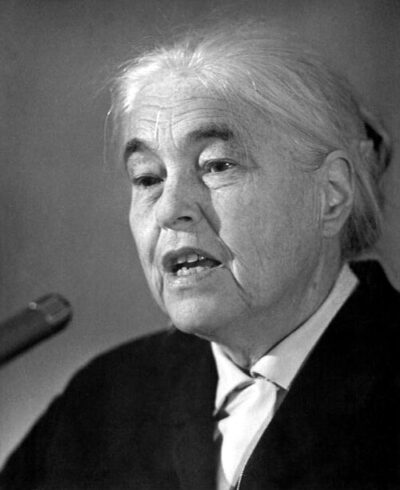 Anna Seghers (1928–)German writer (1900–1983)
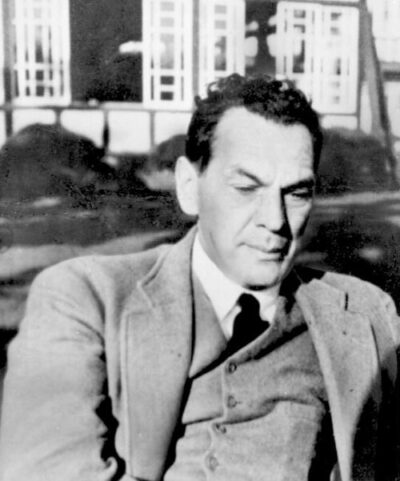 Richard Sorge (1919–)Soviet spy in Germany and Japan (1895-1944)
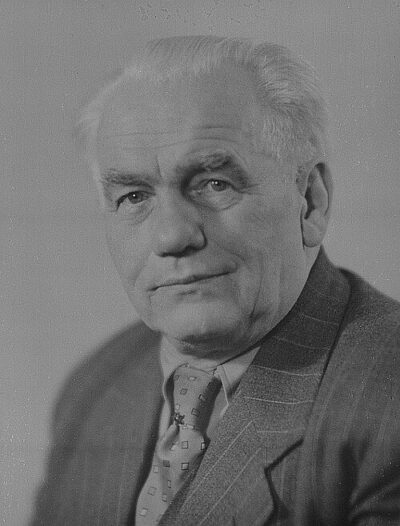 Wilhelm PieckGerman communist politician, president of GDR (1876-1960)
 Johannes R. BecherGerman politician, novelist and poet (1891–1958)
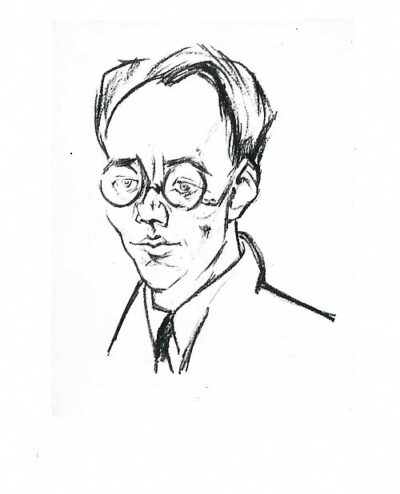 Karl August Wittfogel (1920–)German-American academic (1896–1988)
