
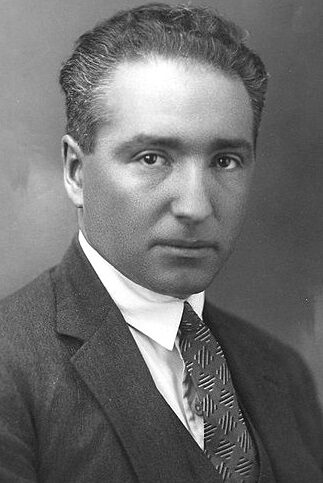
Wilhelm Reich
Wilhelm Reich was an Austrian-American psychiatrist, psychoanalyst, sex educator and sociologist. Born March 24, 1897, in Dobrianychi. Died November 3, 1957, in Lewisburg. Known for Character Analysis, The Mass Psychology of Fascism and Die Sexualität im Kulturkampf. Educated at University of Vienna.
Facts
42 facts · 2 confirmed by two sources · 14 cited · 26 from one source
Where this comes from
Papalocal keeps its own record. It started from these sources; what each one said is kept here as it was copied, so a change on their side never changes this page by itself. Tap one to read its version.
What Wikidata says · copied November 13, 2026 · revision 2563981684
- Described as
- Austrian-American psychiatrist, psychoanalyst, sex educator and sociologist (1897–1957)
- Born
- March 24, 1897 · 10 references
- Died
- November 3, 1957 · 12 references
- Born in
- Dobrianychi · 1 reference
- Died in
- Lewisburg · 1 reference
- Buried in
- Orgonon
- Cause of death
- heart failure
- Citizen of
- Austria–Hungary; Austria · 2 references; United States · 1 reference; Poland · 1 reference
- Occupation
- psychiatrist; philosopher; sex educator; writer · 1 reference; psychoanalyst · 1 reference; physician · 2 references; psychologist · 2 references; university teacher · 2 references
- Political party
- Communist Party of Austria (1928–); Communist Party of Germany (1930–); Social Democratic Party of Austria
- Worked for
- Vienna General Hospital (1922–1924); Eduard Hitschmann (1924–1930); University of Oslo (1934–1939); The New School (1939–1941); Orgonon (1943–)
- Education
- University of Vienna (1918–1922)
- Known for
- Character Analysis; The Mass Psychology of Fascism; Die Sexualität im Kulturkampf; Listen, Little Man!
- Field
- psychoanalysis; body psychotherapy
- Spouse
- Annie Reich (1922–1933) · 1 reference; Elsa Lindenberg (1933–1940); Ilse Ollendorf (1946–1951) · 1 reference
- Children
- Eva Reich · 1 reference; Lore Reich Rubin · 1 reference; Peter Reich · 1 reference
- Father
- Leon Reich · 1 reference
- Religion
- atheism
- Website
- https://www.wilhelmreichtrust.org/
- Wikipedias with a page
- 70
Wikidata item Q84412 (wikidata.org/wiki/Q84412), public domain (CC0). Copied November 13, 2026.
What Wikipedia says · copied November 13, 2026 · revision 1384845090
Wilhelm Reich (; Austrian German: [ˈvɪlhɛlm ˈraɪç]; 24 March 1897 – 3 November 1957) was an Austrian doctor of medicine and a psychoanalyst, a member of the second generation of analysts after Sigmund Freud. The author of several influential books, The Impulsive Character (1925), The Function of the Orgasm (1927), Character Analysis (1933), and The Mass Psychology of Fascism (1933), he became one of the most radical figures in the history of psychiatry.
Reich's work on character contributed to the development of Anna Freud's The Ego and the Mechanisms of Defence (1936), and his idea of muscular armour—the expression of the personality in the way the body moves—shaped innovations such as body psychotherapy, Gestalt therapy, bioenergetic analysis and primal therapy. His writing influenced generations of intellectuals; he coined the phrase "the sexual revolution" and according to one historian acted as its midwife. During the 1968 student uprisings in Paris and Berlin, students scrawled his name on walls and threw copies of The Mass Psychology of Fascism at police.
After graduating in medicine from the public University of Vienna in 1922, Reich became deputy director of Freud's outpatient clinic, the Vienna Ambulatorium. During the 1930s, he was part of a general trend among younger analysts and Frankfurt sociologists that tried to reconcile psychoanalysis with Marxism. He established the first sexual advisory clinics in Vienna, along with Marie Frischauf. He said he wanted to "attack the neurosis by its prevention rather than treatment".
Reich moved to Oslo, Norway in 1934. He then moved on to New York in 1939, after having accepted a position as Assistant Professor at the New School for Social Research. During his five years in Oslo, he had coined the term "orgone energy"—from "orgasm" and "organism"—for the notion of life energy. In 1940 he started building orgone accumulators, modified Faraday cages that he claimed were beneficial for cancer patients. He claimed that his laboratory cancer mice had had remarkable positive effects from being kept in a Faraday cage, so he built human-size versions, where one could sit inside. This led to newspaper stories about "sex boxes" that cured cancer.
Following two critical articles about him in The New Republic and Harper's in 1947, the U.S. Food and Drug Administration obtained an injunction against the interstate shipment of orgone accumulators and associated literature, calling them "fraud of the first magnitude". Charged with contempt in 1956 for having violated the injunction, Reich was sentenced to two years imprisonment, and that summer over six tons of his publications were destroyed by order of the court. He died in prison of heart failure just over a year later.
- Born, in its opening lines
- March 24, 1897
- Died, in its opening lines
- November 3, 1957
From the Wikipedia article “Wilhelm Reich” (en.wikipedia.org/wiki/Wilhelm_Reich), by its contributors, under CC BY-SA 4.0 (creativecommons.org/licenses/by-sa/4.0/). Copied November 13, 2026; not changed.
Confirmed Two sources agree. Cited One source, and it names where it got it. One source One source, without a reference of its own. Sources disagree The sources disagree. We show the best-supported value and keep theirs below.
