
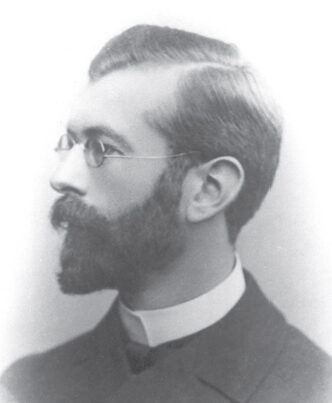
Vagn Walfrid Ekman was a Swedish oceanographer. Born May 3, 1874, in Stockholm. Died March 9, 1954, in Stockaryd. Educated at Uppsala University. Awards include Alexander Agassiz Medal and Vega Medal.
Facts
21 facts · 2 confirmed by two sources · 5 cited · 14 from one source
Where this comes from
Papalocal keeps its own record. It started from these sources; what each one said is kept here as it was copied, so a change on their side never changes this page by itself. Tap one to read its version.
What Wikidata says · copied November 18, 2026 · revision 2566867218
- Described as
- Swedish oceanographer
- Other names
- V. Walfrid Ekman
- Born
- May 3, 1874 · 1 reference
- Died
- March 9, 1954 · 7 references
- Born in
- Stockholm · 2 references
- Died in
- Stockaryd
- Citizen of
- Sweden
- Occupation
- physicist · 1 reference; university teacher
- Worked for
- Lund University (1910–1939)
- Education
- Uppsala University
- Member of
- Royal Swedish Academy of Sciences; Royal Physiographic Society in Lund; Royal Society of Arts and Sciences in Gothenburg
- Awards
- Alexander Agassiz Medal (1928) · 1 reference; Vega Medal (1939)
- Field
- oceanography
- Children
- Sara-Brita Ekman · 1 reference
- Father
- Fredrik Laurentz Ekman · 1 reference
- Mother
- Cecilia Augusta Ekman
- Siblings
- Rolf Ragnar Ekman; Thorsten Ekman · 1 reference; Sven Ekman · 1 reference
- Wikipedias with a page
- 24
Wikidata item Q178916 (wikidata.org/wiki/Q178916), public domain (CC0). Copied November 18, 2026.
What Wikipedia says · copied November 18, 2026 · revision 1383859043
Vagn Walfrid Ekman (3 May 1874 – 9 March 1954) was a Swedish oceanographer.
Born in Stockholm to Fredrik Laurentz Ekman, himself an oceanographer, he became committed to oceanography while studying physics at the University of Uppsala and, in particular, on hearing Vilhelm Bjerknes lecture on fluid dynamics.
During the expedition of the Fram, Fridtjof Nansen had observed that icebergs tend to drift not in the direction of the prevailing wind but at an angle of 20° to 40° to the right. Bjerknes invited Ekman, still a student, to investigate the problem. Later, in 1905, Ekman published his theory of the Ekman spiral which explains the phenomenon in terms of the balance between frictional effects in the ocean and the Coriolis force, which arises from moving objects in a rotating environment, like planetary rotation.
On completing his doctorate in Uppsala in 1902, Ekman joined the International Laboratory for Oceanographic Research, Oslo where he worked for seven years, not only extending his theoretical work but also developing experimental techniques and instruments such as the Ekman current meter and Ekman water bottle.
From 1910 to 1939 he continued his theoretical and experimental work at the University of Lund, where he was professor of mechanics and mathematical physics. He was elected a member of the Royal Swedish Academy of Sciences in 1935.
A gifted amateur bass singer, pianist, and composer, he continued working right up to his death in Gostad, near Stockaryd, Sweden.
- Born, in its opening lines
- May 3, 1874
- Died, in its opening lines
- March 9, 1954
From the Wikipedia article “Vagn Walfrid Ekman” (en.wikipedia.org/wiki/Vagn_Walfrid_Ekman), by its contributors, under CC BY-SA 4.0 (creativecommons.org/licenses/by-sa/4.0/). Copied November 18, 2026; not changed.
Confirmed Two sources agree. Cited One source, and it names where it got it. One source One source, without a reference of its own. Sources disagree The sources disagree. We show the best-supported value and keep theirs below.
