
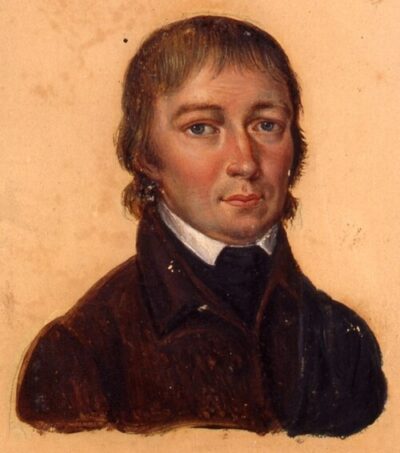
Valentin Vodnik was a Slovenian writer. Born February 3, 1758, in Zgornja Šiška. Died January 8, 1819, in Ljubljana.
Facts
17 facts · 2 confirmed by two sources · 4 cited · 11 from one source
Where this comes from
Papalocal keeps its own record. It started from these sources; what each one said is kept here as it was copied, so a change on their side never changes this page by itself. Tap one to read its version.
What Wikidata says · copied November 17, 2026 · revision 2520317030
- Described as
- Slovenian writer
- Born
- February 3, 1758 · 3 references
- Died
- January 8, 1819 · 3 references
- Born in
- Zgornja Šiška · 1 reference
- Died in
- Ljubljana · 1 reference
- Buried in
- Navje · 1 reference
- Citizen of
- Austrian Empire; Illyrian Provinces; Habsburg monarchy
- Occupation
- poet; journalist; writer · 1 reference; literary critic; linguist; Catholic priest; translator; teacher
- Religion
- Catholicism
- Wikipedias with a page
- 26
Wikidata item Q1083404 (wikidata.org/wiki/Q1083404), public domain (CC0). Copied November 17, 2026.
What Wikipedia says · copied November 17, 2026 · revision 1371707187
Valentin Vodnik (3 February 1758 – 8 January 1819) was a Slovene priest, journalist and poet from Carniola. He was active in the late Enlightenment period. He is well known for his contributions in writing materials that lifted the prestige of the Slovene language creating a standard meant to unify the people of Slovene Lands in a single intelligible tongue. He was also active in geological sciences, where he collaborated with Sigmund Zois in the research of the origin of the Julian Alps. He spent significant time curating his mineral collection consisting of 338 specimens.
- Born, in its opening lines
- February 3, 1758
- Died, in its opening lines
- January 8, 1819
From the Wikipedia article “Valentin Vodnik” (en.wikipedia.org/wiki/Valentin_Vodnik), by its contributors, under CC BY-SA 4.0 (creativecommons.org/licenses/by-sa/4.0/). Copied November 17, 2026; not changed.
Confirmed Two sources agree. Cited One source, and it names where it got it. One source One source, without a reference of its own. Sources disagree The sources disagree. We show the best-supported value and keep theirs below.
