
Habsburg monarchy
Habsburg monarchy is a monarchy in Europe (1282–1918). It was founded in 1526.
- Founded
- August 29, 1526
- Country
- Habsburg monarchy
All 6 facts, and where they come from
Facts
6 facts · 0 confirmed by two sources · 0 cited · 6 from one source
Where this comes from
Papalocal keeps its own record. It started from these sources; what each one said is kept here as it was copied, so a change on their side never changes this page by itself. Tap one to read its version.
What Wikidata says · copied November 18, 2026 · revision 2566991188
- Described as
- monarchy in Europe (1282–1918)
- Other names
- Habsburg Empire, Monarchia Austriaca
- What it is
- composite monarchy; state in the Holy Roman Empire; historical country (1918–)
- Founded
- August 29, 1526
- Ended
- November 12, 1918
- Country
- Habsburg monarchy
- Wikipedias with a page
- 75
Wikidata item Q153136 (wikidata.org/wiki/Q153136), public domain (CC0). Copied 2026-11-18.
What Wikipedia says · copied November 18, 2026 · revision 1382195649
The Habsburg monarchy, also known as the Habsburg Empire, Habsburg Realm, or Danube Monarchy, was the collection of empires, kingdoms, duchies, counties and other polities (composite monarchy) that were ruled by the House of Habsburg. From 1804 onward it was referred to as the Austrian Empire, and from 1867 onward as Austria-Hungary.
The history of the Habsburg monarchy can be traced back to the election of Rudolf I as King of Germany in 1273 and his acquisition of the Duchy of Austria for the Habsburgs in 1282. In 1482, Maximilian I acquired the Netherlands through marriage. Both realms passed to his grandson and successor, Charles V, who also inherited the Spanish throne and its colonial possessions, and thus came to rule the Habsburg empire at its greatest territorial extent. The abdication of Charles V in 1556 led to a division within the dynasty between his son Philip II of Spain and his brother Ferdinand I, who had served as his lieutenant and the elected king of Hungary, Croatia and Bohemia. The Spanish branch (which held all of Iberia, the Netherlands, and lands in Italy) became extinct in the male line in 1700, but continued through the female line through the House of Bourbon. The Austrian branch (which ruled the Holy Roman Empire, Hungary, Bohemia and various other lands) was itself split into different branches in 1564 but reunited 101 years later. It became extinct in the male line in 1740, but continued through the female line as the House of Habsburg-Lorraine.
The Habsburg monarchy was a union of crowns, with only partial shared laws and institutions other than the Habsburg court itself; the provinces were divided in three groups: the Archduchy proper, Inner Austria that included Styria and Carniola, and Further Austria with Tyrol and the Swabian lands. The territorial possessions of the monarchy were thus united only by virtue of a common monarch. The Habsburg realms were unified in 1804 with the formation of the Austrian Empire and later split in two as Austria-Hungary with the Austro-Hungarian Compromise of 1867. The monarchy began to fracture in the face of inevitable defeat during the final years of World War I and ultimately disbanded with proclamation of the State of Slovenes, Croats and Serbs, the Republic of German-Austria and the First Hungarian Republic in late 1918.
In historiography, the terms Austria or Austrians are frequently used as shorthand for the Habsburg monarchy since the 18th century. From 1438 to 1806, the rulers of the House of Habsburg almost continuously reigned as Holy Roman Emperors. However, the realms of the Holy Roman Empire were mostly self-governing and are thus not considered to have been part of the Habsburg monarchy. Hence, the Habsburg monarchy (of the Austrian branch) is often called Austria by metonymy. Around 1700, the Latin term monarchia austriaca came into use as a term of convenience. Within the empire alone, the vast possessions included the original Hereditary Lands, the Erblande, from before 1526; the Lands of the Bohemian Crown; the formerly Spanish Austrian Netherlands from 1714 until 1794; and some fiefs in Imperial Italy. Outside the empire, they encompassed all the Kingdom of Hungary as well as conquests made at the expense of the Ottoman Empire. The dynastic capital was Vienna, except from 1583 to 1611, when it was in Prague.
From the Wikipedia article “Habsburg monarchy” (en.wikipedia.org/wiki/Habsburg_monarchy), by its contributors, under CC BY-SA 4.0 (creativecommons.org/licenses/by-sa/4.0/). Copied 2026-11-18; not changed.
Confirmed Two sources agree. Cited One source, and it names where it got it. One source One source, without a reference of its own. Sources disagree The sources disagree. We show the best-supported value and keep theirs below.
People connected 38
Citizen of 38
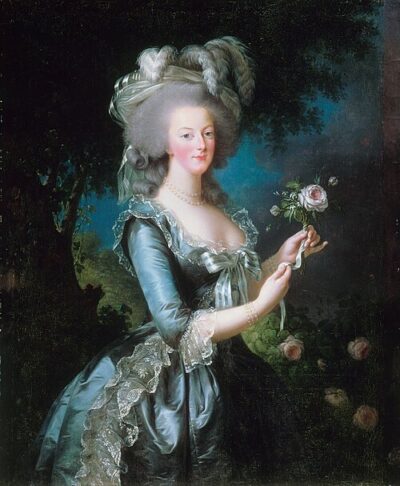 Marie Antoinettelast Queen of France prior to the French Revolution (1755–1793)
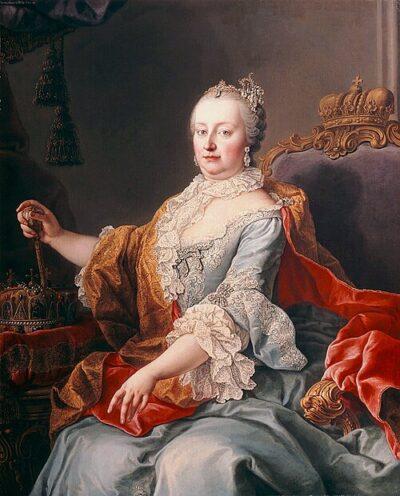 Maria Theresa of Austriaruler of the Habsburg Dominions (1717-1780)
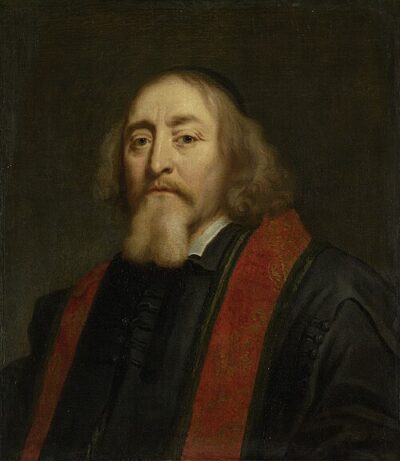 John Amos ComeniusCzech teacher, educator, philosopher and writer (1592-1670)
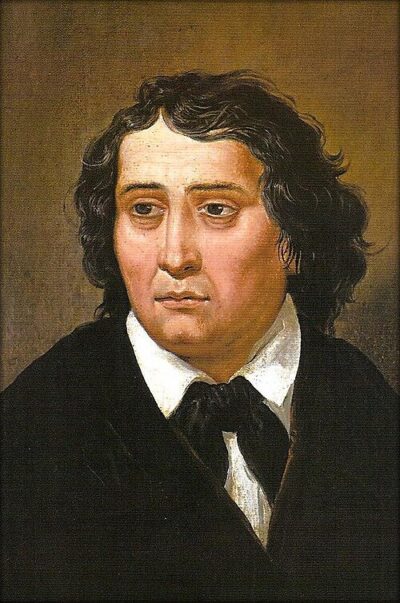 France PrešerenSlovene national poet, a Carniolan Romantic poet of Slovene descent (1800–1849)
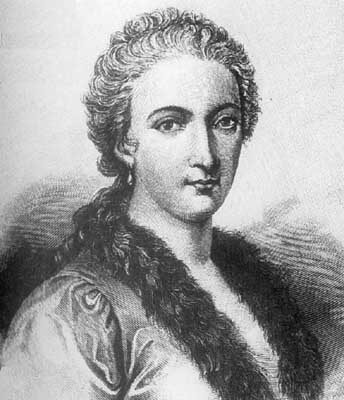 Maria Gaetana AgnesiItalian mathematician and philanthropist (1718–1799)
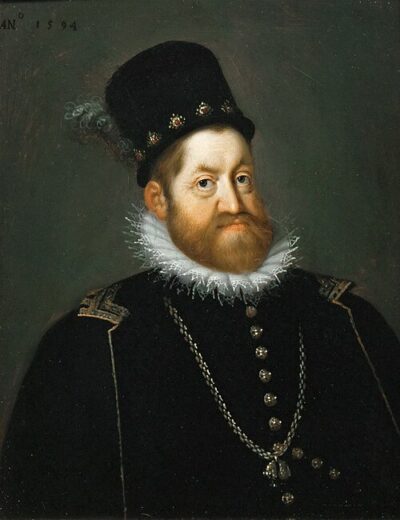 Emperor Rudolf IIHoly Roman Emperor, King of Hungary and Croatia, King of Bohemia and Archduke of Austria (1552-1612)
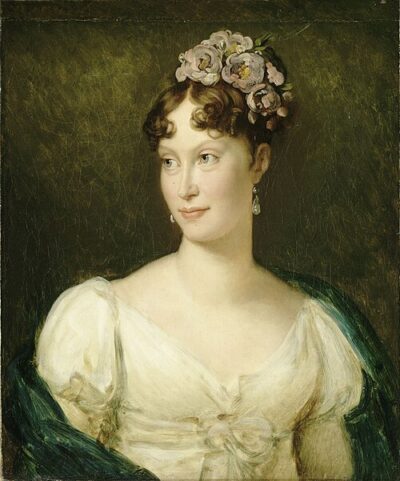 Marie Louise, Duchess of ParmaEmpress Consort of the French from 1810 to 1814 and Monarch of Parma, Piacenza and Guastalla from 1814 to 1847
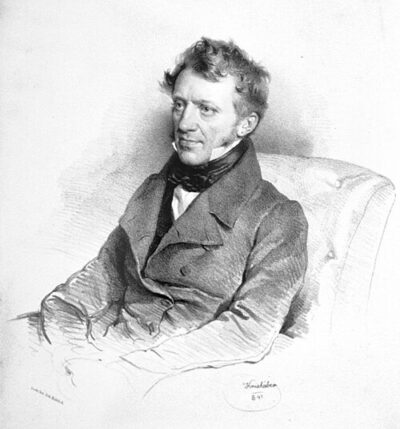 Franz GrillparzerAustrian dramatist and poet (1791-1872)
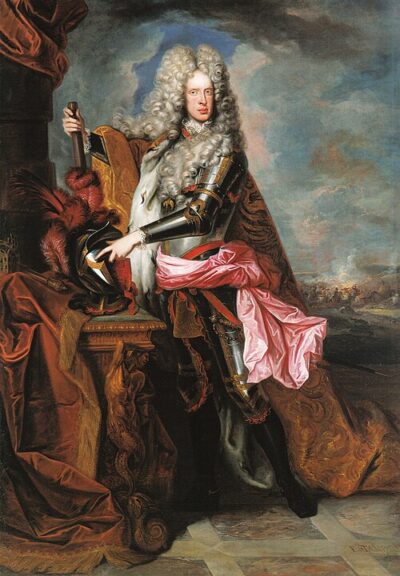 Joseph I, Holy Roman EmperorEmperor from 1705 till his death in 1711
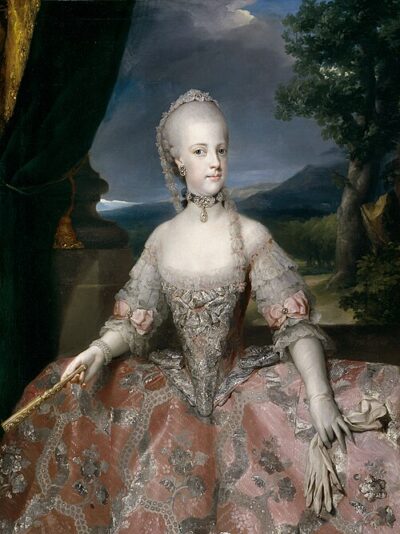 Maria Carolina of AustriaQueen of Naples and Sicily from 1768 to 1814 (1752–1814)
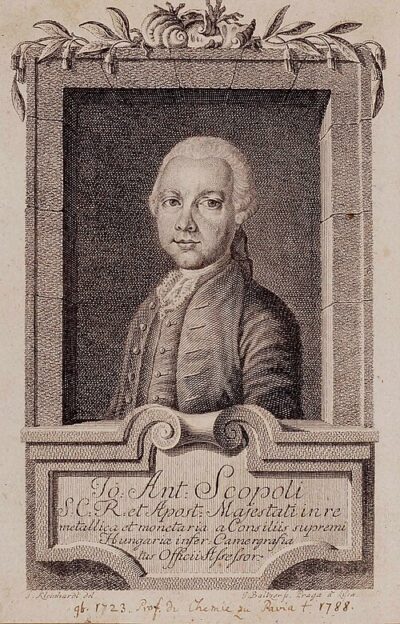 Giovanni Antonio ScopoliTyrolean physician and naturalist (1723-1788)
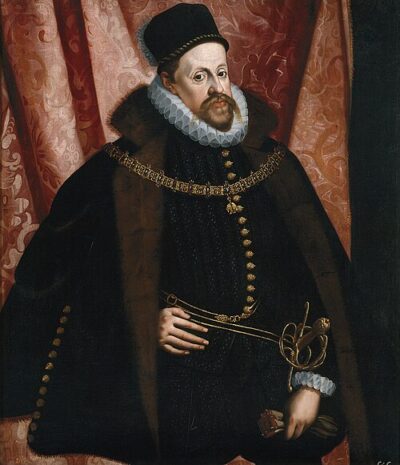 Charles II, Archduke of AustriaArchduke of Austria and ruler of Inner Austria (1540-1590)
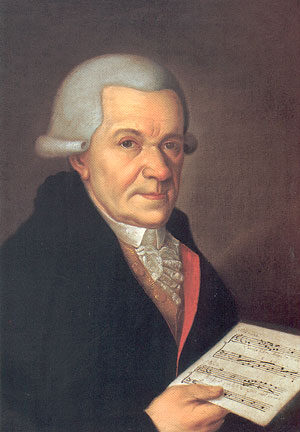 Michael HaydnAustrian composer, brother of Joseph Haydn, (1737-1806)
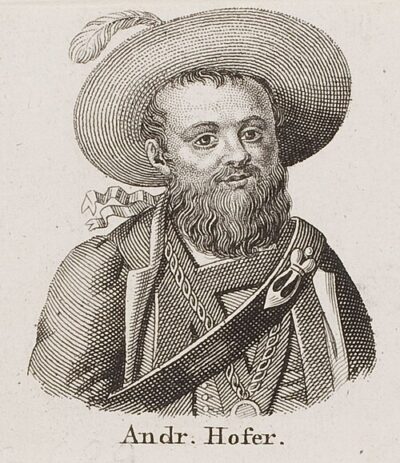 Andreas HoferLeader of armed resistance by the people of Tirol against Napoleonic and Bavarian invasion (1767-1810)
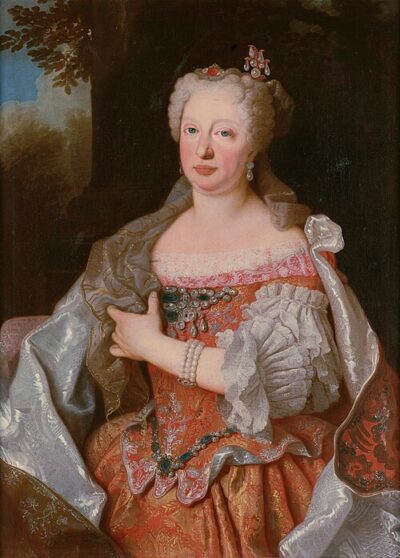 Maria Anna of AustriaPortuguese queen
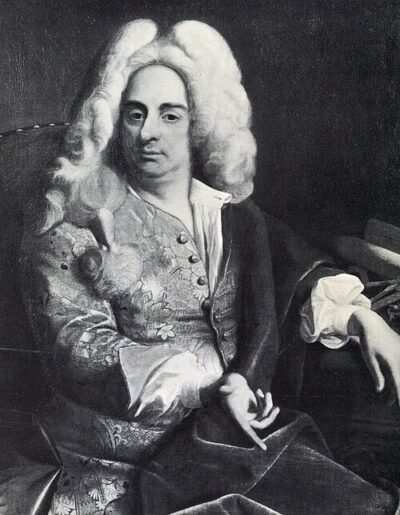 Johann Bernhard Fischer von Erlachsculptor and architect from Austria (1656-1723)
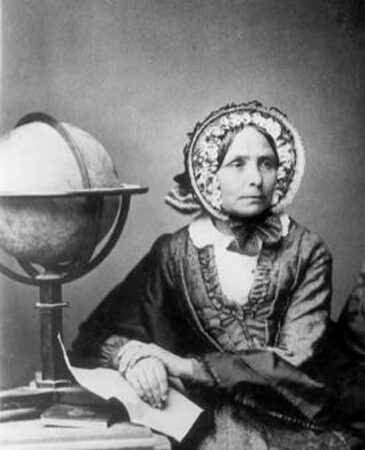 Ida Laura PfeifferAustrian explorer and writer, editor (1797-1858)
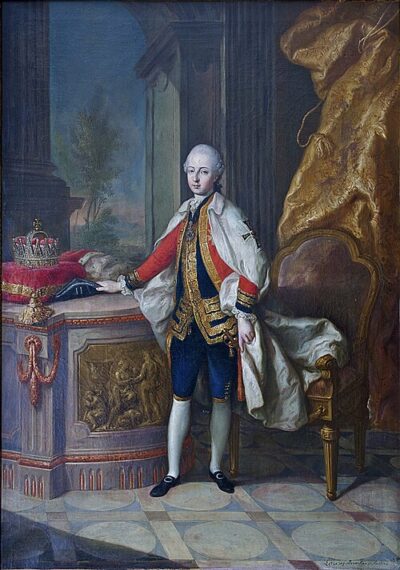 Archduke Maximilian Francis of AustriaAustrian archduke, archbishop of Cologne
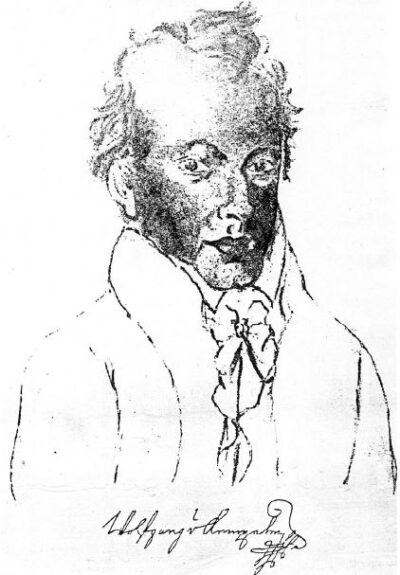 Wolfgang von KempelenAustrian dramatic, graphic, constructer, linguist, painter, writer, inventor and nobleman (1734-1804)
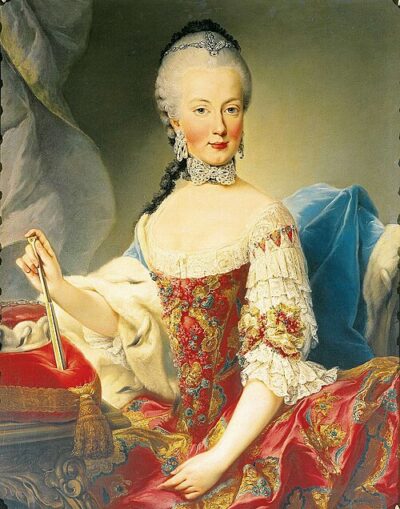 Archduchess Maria Amalia of AustriaAustrian archduchess
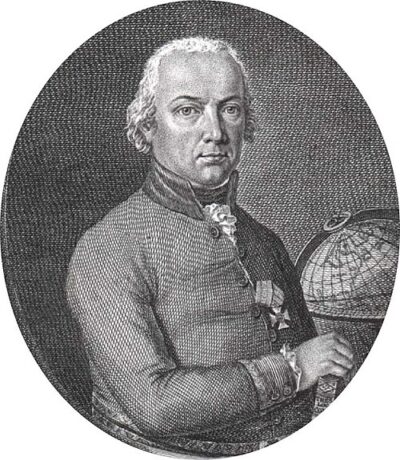 Jurij VegaSlovene mathematician, physicist and artillery officer (1754-1802)
- FFranz Xaver SüssmayrAustrian composer and conductor
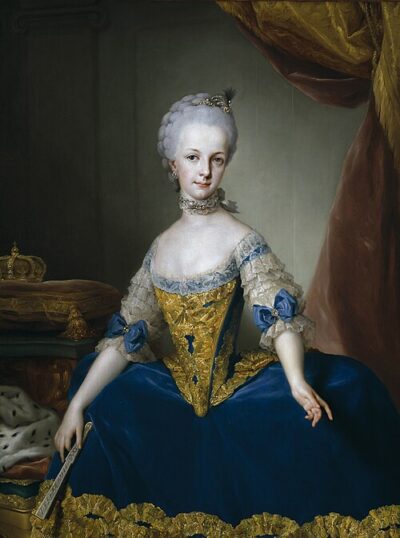 Archduchess Maria Josepha of AustriaAustrian archduchess (1751-1767)
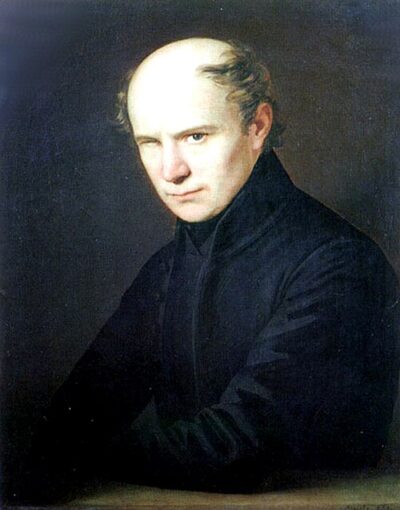 Ferenc KölcseyHungarian politician and writer (1790-1838)
and 14 more

