
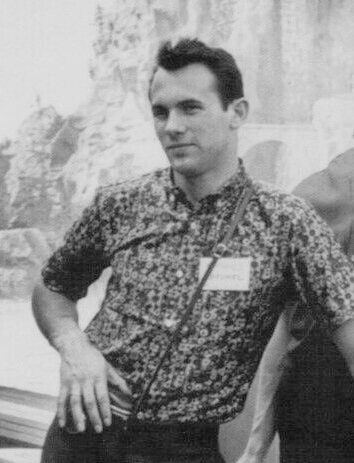
Valeriy Brumel was a Soviet high jumper. Born April 14, 1942, in Tolbuzino. Died January 26, 2003, in Moscow. Awards include Order of the Red Banner of Labour, Medal "For Labour Valour" and Honoured Master of Sports of the USSR.
Facts
16 facts · 2 confirmed by two sources · 4 cited · 10 from one source
Where this comes from
Papalocal keeps its own record. It started from these sources; what each one said is kept here as it was copied, so a change on their side never changes this page by itself. Tap one to read its version.
What Wikidata says · copied November 16, 2026 · revision 2558268321
- Described as
- Soviet high jumper
- Other names
- Valeriy Nikolayevich Brumel
- Born
- April 14, 1942 · 5 references
- Died
- January 26, 2003 · 5 references
- Born in
- Tolbuzino
- Died in
- Moscow · 1 reference
- Buried in
- Novodevichy Cemetery · 1 reference
- Citizen of
- Russia; Soviet Union
- Occupation
- athletics competitor; athlete · 1 reference; dramaturge · 1 reference
- Political party
- Communist Party of the Soviet Union
- Sport
- athletics
- Awards
- Order of the Red Banner of Labour; Medal "For Labour Valour"; Honoured Master of Sports of the USSR
- Height
- 1.85 m (6 ft 1 in) · 1 reference
- Wikipedias with a page
- 32
Wikidata item Q319789 (wikidata.org/wiki/Q319789), public domain (CC0). Copied November 16, 2026.
What Wikipedia says · copied November 16, 2026 · revision 1364217027
Valeriy Nikolayevich Brumel (Russian: Валерий Николаевич Брумель; 14 April 1942 – 26 January 2003) was a Soviet-Russian high jumper. The 1964 Olympic champion and multiple world record holder, he is regarded as one of the greatest athletes ever to compete in the high jump. His international career was ended by a motorcycle crash in 1965.
- Born, in its opening lines
- April 14, 1942
- Died, in its opening lines
- January 26, 2003
From the Wikipedia article “Valeriy Brumel” (en.wikipedia.org/wiki/Valeriy_Brumel), by its contributors, under CC BY-SA 4.0 (creativecommons.org/licenses/by-sa/4.0/). Copied November 16, 2026; not changed.
Confirmed Two sources agree. Cited One source, and it names where it got it. One source One source, without a reference of its own. Sources disagree The sources disagree. We show the best-supported value and keep theirs below.
