
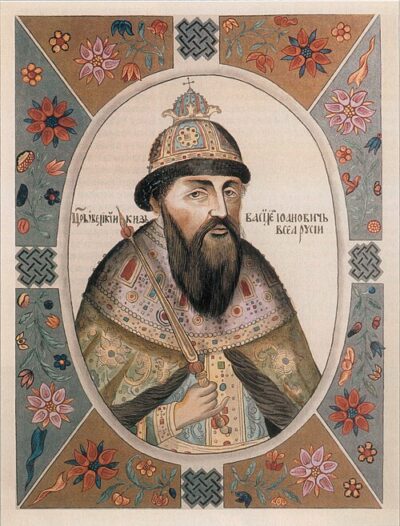
Vasili IV of Russia was a Tsar of Russia. Born 1552, in Nizhny Novgorod. Died September 12, 1612, in Gostynin. Positions held include Tsar of All Russia (1606–1610).
Facts
15 facts · 2 confirmed by two sources · 0 cited · 13 from one source
Where this comes from
Papalocal keeps its own record. It started from these sources; what each one said is kept here as it was copied, so a change on their side never changes this page by itself. Tap one to read its version.
What Wikidata says · copied November 16, 2026 · revision 2564390051
- Described as
- Tsar of Russia (1606–1610)
- Other names
- Vasili IV Shuisky
- Born
- 1552 · 2 references
- Died
- September 12, 1612 · 2 references
- Born in
- Nizhny Novgorod
- Died in
- Gostynin
- Buried in
- Cathedral of the Archangel
- Citizen of
- Tsardom of Russia
- Occupation
- monarch
- Positions held
- Tsar of All Russia (1606–1610)
- Spouse
- Maria Buynosova-Rostovskaya · 1 reference; Yelena Repnina
- Children
- Anastasiya Vasilyevna
- Father
- Ivan Shuysky
- Mother
- Anna Fedorovna
- Siblings
- Dmitry Shuisky
- Religion
- Eastern Orthodox Church
- Wikipedias with a page
- 57
Wikidata item Q193232 (wikidata.org/wiki/Q193232), public domain (CC0). Copied November 16, 2026.
What Wikipedia says · copied November 16, 2026 · revision 1358737903
Vasili IV Ivanovich Shuisky (Russian: Василий IV Иванович Шуйский, romanized: Vasiliy IV Ivanovich Shuyskiy, c. 1552 – 12 September 1612) was Tsar of all Russia from 1606 to 1610, after the murder of False Dmitri I. His rule coincided with the Time of Troubles. He was the only member of House of Shuisky to become tsar and the last member of the Rurikid dynasty (Yurievichi branch) to rule as tsar.
- Born, in its opening lines
- c. 1552
- Died, in its opening lines
- September 12, 1612
From the Wikipedia article “Vasili IV of Russia” (en.wikipedia.org/wiki/Vasili_IV_of_Russia), by its contributors, under CC BY-SA 4.0 (creativecommons.org/licenses/by-sa/4.0/). Copied November 16, 2026; not changed.
Confirmed Two sources agree. Cited One source, and it names where it got it. One source One source, without a reference of its own. Sources disagree The sources disagree. We show the best-supported value and keep theirs below.
