
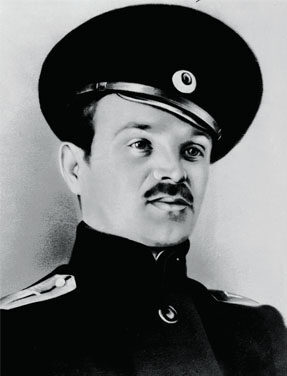
Vasily Agapkin
Vasily Agapkin was a Russian author, composer, and conductor. Born January 22, 1884, in Shancherovo. Died October 29, 1964, in Moscow. Awards include Medal "For the Victory over Germany in the Great Patriotic War 1941–1945", Order of the Red Banner and Order of Lenin.
Facts
16 facts · 1 confirmed by two sources · 2 cited · 12 from one source · 1 where the sources disagree
What’s different
- Born: we show January 22, 1884 (Sources disagree). Wikipedia says February 3, 1884
Where this comes from
Papalocal keeps its own record. It started from these sources; what each one said is kept here as it was copied, so a change on their side never changes this page by itself. Tap one to read its version.
What Wikidata says · copied November 18, 2026 · revision 2533925394
- Described as
- Russian author, composer, and conductor (1884–1964)
- Other names
- Vasily Ivanovich Agapkin
- Born
- January 22, 1884
- Died
- October 29, 1964
- Born in
- Shancherovo
- Died in
- Moscow
- Buried in
- Vagankovo Cemetery
- Citizen of
- Russian Empire; Russian Socialist Federative Soviet Republic; Soviet Union
- Occupation
- composer · 1 reference; trumpeter; conductor · 1 reference
- Instrument
- trumpet
- Awards
- Medal "For the Victory over Germany in the Great Patriotic War 1941–1945"; Order of the Red Banner; Order of Lenin; Jubilee Medal "XX Years of the Workers' and Peasants' Red Army"
- Wikipedias with a page
- 21
Wikidata item Q2585526 (wikidata.org/wiki/Q2585526), public domain (CC0). Copied November 18, 2026.
What Wikipedia says · copied November 18, 2026 · revision 1379083801
Vasily Ivanovich Agapkin (Russian: Васи́лий Ива́нович Ага́пкин; 3 February 1884 – 29 October 1964) was a Russian and Soviet military orchestra conductor, composer, and author of the well-known march "Farewell of Slavianka" (composed in 1912).
Agapkin was born in Ryazan Governorate in 1884. From 1912 to 1915, he studied at the Tambov musical school, where he composed the popular Russian patriotic march "Farewell of Slavianka"; he later served in the army.
After the October Revolution, Vasily Agapkin voluntarily joined the Red Army in 1918 and organized a brass band in the 1st Red Hussar Regiment.
In 1920, Agapkin returned to Tambov, directing the music studio and the orchestra of the GPU troops. On August 5, 1922, Agapkin and his orchestra gave a farewell concert in Tambov, after which they moved to Moscow.
In January 1924, the Agapkin Orchestra took part in the ceremony during the state funeral of Vladimir Lenin. In 1928, Agapkin organized a brass band of street children, which for many of them was the beginning of a professional career as a musician. In the 1930s, he headed the orchestra of the Higher School of the NKVD of the USSR, with which he made a number of recordings.
He was notably the bandmaster for the Band of the Dzerzhinsky Division of the NKVD. Agapkin led the combined Russian military bands during the famous Red Square October Revolution Parade in Moscow on 7 November 1941. "Farewell of Slavianka" was one of the four marches that were played in that Parade, and in honor of his role there it has been played as the final march in Victory Day Parades all over Russia.
His music has appeared in many films including The Cranes Are Flying (1957) and 72 Meters (2004).
- Born, in its opening lines
- February 3, 1884
- Died, in its opening lines
- October 29, 1964
From the Wikipedia article “Vasily Agapkin” (en.wikipedia.org/wiki/Vasily_Agapkin), by its contributors, under CC BY-SA 4.0 (creativecommons.org/licenses/by-sa/4.0/). Copied November 18, 2026; not changed.
Confirmed Two sources agree. Cited One source, and it names where it got it. One source One source, without a reference of its own. Sources disagree The sources disagree. We show the best-supported value and keep theirs below.
