
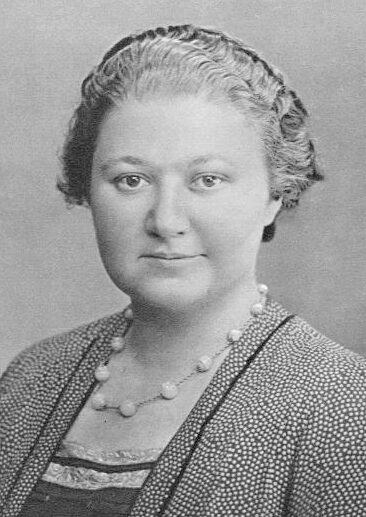
Vera Menchik
Vera Menchik was a Czech chess player. Born February 16, 1906, in Moscow. Died June 26, 1944, in Clapham. Awards include Women's World Chess Championship.
Facts
11 facts · 2 confirmed by two sources · 5 cited · 4 from one source
Where this comes from
Papalocal keeps its own record. It started from these sources; what each one said is kept here as it was copied, so a change on their side never changes this page by itself. Tap one to read its version.
What Wikidata says · copied November 16, 2026 · revision 2566933199
- Described as
- Czech chess player (1906–1944)
- Other names
- Vera Francevna Menchik-Stevenson, Vera Francevna Menchik, Vera Francevna Mencikova
- Born
- February 16, 1906 · 1 reference
- Died
- June 26, 1944 · 3 references
- Born in
- Moscow · 2 references
- Died in
- Clapham · 1 reference
- Citizen of
- United Kingdom; Czechoslovakia
- Occupation
- chess player · 1 reference
- Sport
- chess
- Awards
- Women's World Chess Championship (1927–1944)
- Spouse
- Rufus Henry Streatfeild Stevenson (1937–1943) · 1 reference
- Siblings
- Olga Menchik · 1 reference
- Wikipedias with a page
- 49
Wikidata item Q157867 (wikidata.org/wiki/Q157867), public domain (CC0). Copied November 16, 2026.
What Wikipedia says · copied November 16, 2026 · revision 1373512437
Vera Francevna Mencikova (Russian: Вера Францевна Менчик, Vera Frantsevna Menchik; Czech: Věra Menčíková; 16 February 1906 – 26 June 1944), was a Russian-born Czechoslovak chess player who primarily resided in England. She was the first and longest-reigning Women's World Chess Champion from 1927 to 1944, winning the championship a record eight times primarily in round-robin tournaments. In an era when women primarily competed against other women, Menchik was the first and only woman competing in master-level tournaments with the world's best players.
Menchik was born in Moscow to a Czech father and English mother. She began playing chess competitively in school at age 14 not long before the Russian Revolution led her family to leave Russia and move to England in 1921. She joined the Hastings Chess Club in 1923, where she began training with James Drewitt and Géza Maróczy. Menchik established herself as the best female player in the country in 1925 by defeating the British women's champion Edith Price in two matches, and then the world by winning the inaugural Women's World Chess Championship in 1927.
Menchik began competing in master-level tournaments in 1928. Following her first big success at Ramsgate in 1929 when she shared second place with Akiba Rubinstein, she was regularly invited to these elite events for the next decade, including the local Hastings Congress. Her best result in the Hastings Premier tournament was in 1931/32 when she defeated future world champion Max Euwe and Mir Sultan Khan. Late in her career, Menchik won a lone Women's World Championship match against Sonja Graf, the next-leading female player of her era. Menchik was active until her death in 1944, when she was killed in a German air raid that destroyed her home during the Second World War.
Menchik was the dominant female chess player before the war, winning at least 59 games in a row at the Women's World Championship tournaments. Highlights of her successes against male players included two victories and a positive score against Euwe and a positive score in 29 known games against George Thomas, who received the International Master (IM) title. Master-level players that Menchik defeated were said to be members of the Vera Menchik Club, which included six players who received the Grandmaster (GM) title or the honorary equivalent. The trophy for the winning team at the Women's Chess Olympiad is named the Vera Menchik Cup in her honour.
- Born, in its opening lines
- February 16, 1906
- Died, in its opening lines
- June 26, 1944
From the Wikipedia article “Vera Menchik” (en.wikipedia.org/wiki/Vera_Menchik), by its contributors, under CC BY-SA 4.0 (creativecommons.org/licenses/by-sa/4.0/). Copied November 16, 2026; not changed.
Confirmed Two sources agree. Cited One source, and it names where it got it. One source One source, without a reference of its own. Sources disagree The sources disagree. We show the best-supported value and keep theirs below.
