
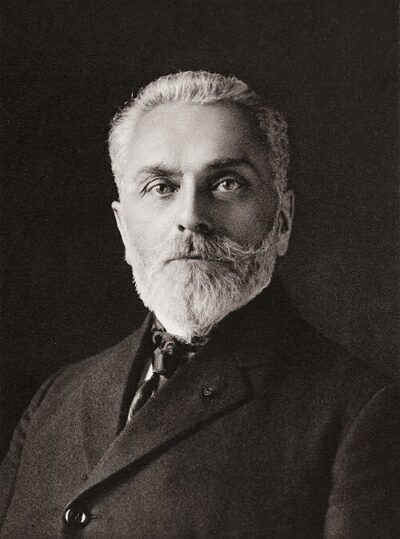
Victor Bérard
Victor Bérard was a French classical scholar, diplomat and politician. Born August 10, 1864, in Morez. Died November 13, 1931, in 14th arrondissement of Paris. Positions held include senator of the French Third Republic (1920–1931), vice president of the Senate (1922–1924) and general secretary (1904–1911). Educated at École Normale Supérieure and French School at Athens. Awards include Prix Thérouanne, Officer of the Legion of Honour and Knight of the Legion of Honour.
Facts
30 facts · 2 confirmed by two sources · 8 cited · 20 from one source
Where this comes from
Papalocal keeps its own record. It started from these sources; what each one said is kept here as it was copied, so a change on their side never changes this page by itself. Tap one to read its version.
What Wikidata says · copied November 18, 2026 · revision 2566769457
- Described as
- French classical scholar, diplomat and politician (1864–1931)
- Other names
- Victor Berard
- Born
- August 10, 1864 · 7 references
- Died
- November 13, 1931 · 6 references
- Born in
- Morez · 1 reference
- Died in
- 14th arrondissement of Paris · 1 reference
- Citizen of
- France
- Occupation
- diplomat; archaeologist; politician · 2 references; classical philologist · 1 reference; university teacher; historian of classical antiquity · 1 reference; translator
- Positions held
- senator of the French Third Republic (1920–1931) · 1 reference; vice president of the Senate (1922–1924); general secretary (1904–1911)
- Worked for
- École pratique des hautes études (1896–1919); Revue de Paris
- Education
- École Normale Supérieure (1884–1887); French School at Athens (1887–1890)
- Member of
- Serbian Academy of Sciences and Arts
- Awards
- Prix Thérouanne (1901); Officer of the Legion of Honour (1905) · 1 reference; Knight of the Legion of Honour (1897) · 1 reference; Montyon Prize (1894)
- Field
- archaeology
- Children
- Jean Bérard; Armand Bérard
- Father
- Jean-Baptiste Bérard
- Mother
- Madame Bérard
- Siblings
- Léon Eugène Bérard
- Wikipedias with a page
- 20
Wikidata item Q2484224 (wikidata.org/wiki/Q2484224), public domain (CC0). Copied November 18, 2026.
What Wikipedia says · copied November 18, 2026 · revision 1372749831
Victor Bérard (French: [beʁaʁ]; Morez, 10 August 1864 – Paris, 13 November 1931) was a French diplomat and politician.
Today, he is still renowned for his works about Hellenistic studies and geography of the Odyssey. Bérard's "L'Angleterre et l'impérialisme" was translated into English and published in 1906 as "British imperialism and commercial supremacy" (Longmans, Green, London, New York).
A former student at the École normale supérieure (Paris), Victor Bérard conducted archeological work as a member of the French School at Athens (1887 to 1890). This would lead him to perform frequent travels across the Ottoman Empire, on which occasions he was distressed by the misery of the Armenians and the Old Christians. His PhD thesis is devoted to the ancient cults in Arcadia and their genesis. Throughout the 1890s, he was a chronicler for Revue de Paris, reporting mostly about the political events in Greece and the Ottoman Empire.
- Born, in its opening lines
- August 10, 1864
- Died, in its opening lines
- November 13, 1931
From the Wikipedia article “Victor Bérard” (en.wikipedia.org/wiki/Victor_Bérard), by its contributors, under CC BY-SA 4.0 (creativecommons.org/licenses/by-sa/4.0/). Copied November 18, 2026; not changed.
Confirmed Two sources agree. Cited One source, and it names where it got it. One source One source, without a reference of its own. Sources disagree The sources disagree. We show the best-supported value and keep theirs below.
