
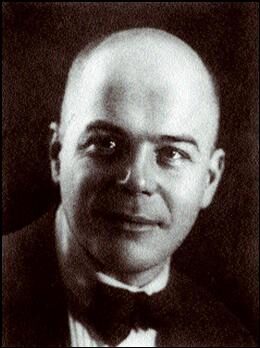
Viktor Shklovsky
Viktor Shklovsky was a Soviet Jewish writer. Born January 12, 1893, in Saint Petersburg. Died December 5, 1984, in Moscow. Known for Lev Tolstoy. Educated at Saint Petersburg State University. Awards include USSR State Prize, Order of Friendship of Peoples and Order of the Red Banner of Labour.
Facts
31 facts · 0 confirmed by two sources · 8 cited · 21 from one source · 2 where the sources disagree
What’s different
- Born: we show January 12, 1893 (Sources disagree). Wikipedia says January 24, 1893
- Died: we show December 5, 1984 (Sources disagree). Wikipedia says December 6, 1984
Where this comes from
Papalocal keeps its own record. It started from these sources; what each one said is kept here as it was copied, so a change on their side never changes this page by itself. Tap one to read its version.
What Wikidata says · copied November 16, 2026 · revision 2565599078
- Described as
- Soviet Jewish writer
- Other names
- Viktor Borisovich Shklovsky
- Born
- January 12, 1893 · 3 references
- Died
- December 5, 1984 · 3 references
- Born in
- Saint Petersburg · 2 references
- Died in
- Moscow · 1 reference
- Buried in
- Kuntsevo Cemetery
- Citizen of
- Russian Empire; Russian Socialist Federative Soviet Republic; Soviet Union
- Occupation
- writer · 3 references; film critic; screenwriter · 2 references; poet; literary critic; science fiction writer; literary historian; film scholar
- Worked for
- Top Courses for Scriptwriters and Film Directors
- Education
- Saint Petersburg State University
- Genre
- screenplay; essay
- Known for
- Lev Tolstoy
- Awards
- USSR State Prize; Order of Friendship of Peoples; Order of the Red Banner of Labour; Cross of St. George; Cross of St. George 4th class · 1 reference
- Field
- creative and professional writing · 1 reference; literary criticism · 1 reference; film criticism · 1 reference; film screenwriting · 1 reference
- Spouse
- Serafima Suok
- Wikipedias with a page
- 51
Wikidata item Q312467 (wikidata.org/wiki/Q312467), public domain (CC0). Copied November 16, 2026.
What Wikipedia says · copied November 16, 2026 · revision 1381155471
Viktor Borisovich Shklovsky (Russian: Ви́ктор Бори́сович Шкло́вский, IPA: [ˈʂklofskʲɪj]; 24 January [O.S. 12 January] 1893 – 6 December 1984) was a Russian and Soviet literary theorist, critic, writer, and pamphleteer. He is one of the major figures associated with Russian formalism.
Shklovsky's Theory of Prose was published in 1925. Shklovsky himself is still praised as "one of the most important literary and cultural theorists of the twentieth century" (Modern Language Association Prize Committee); "one of the most lively and irreverent minds of the last century" (David Bellos); "one of the most fascinating figures of Russian cultural life in the twentieth century" (Tzvetan Todorov)
- Born, in its opening lines
- January 24, 1893
- Died, in its opening lines
- December 6, 1984
From the Wikipedia article “Viktor Shklovsky” (en.wikipedia.org/wiki/Viktor_Shklovsky), by its contributors, under CC BY-SA 4.0 (creativecommons.org/licenses/by-sa/4.0/). Copied November 16, 2026; not changed.
Confirmed Two sources agree. Cited One source, and it names where it got it. One source One source, without a reference of its own. Sources disagree The sources disagree. We show the best-supported value and keep theirs below.
