
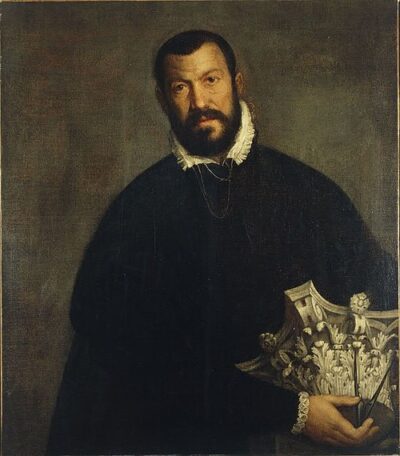
Vincenzo Scamozzi
Vincenzo Scamozzi was the 16th century Italian architect. Born September 2, 1548, in Vicenza. Died August 7, 1616, in Venice. Known for San Gaetano Church.
Facts
11 facts · 2 confirmed by two sources · 4 cited · 5 from one source
Where this comes from
Papalocal keeps its own record. It started from these sources; what each one said is kept here as it was copied, so a change on their side never changes this page by itself. Tap one to read its version.
What Wikidata says · copied November 16, 2026 · revision 2558273893
- Described as
- 16th century Italian architect (1548–1616)
- Other names
- Vinsent Schamozzy
- Born
- September 2, 1548 · 1 reference
- Died
- August 7, 1616 · 8 references
- Born in
- Vicenza · 2 references
- Died in
- Venice · 2 references
- Citizen of
- Republic of Venice
- Occupation
- architect · 5 references; historian; urban planner; writer · 1 reference
- Known for
- San Gaetano Church
- Father
- Giovanni Domenico Scamozzi
- Wikipedias with a page
- 41
Wikidata item Q309733 (wikidata.org/wiki/Q309733), public domain (CC0). Copied November 16, 2026.
What Wikipedia says · copied November 16, 2026 · revision 1344950539
Vincenzo Scamozzi (2 September 1548 – 7 August 1616) was an Italian architect and a writer on architecture, active mainly in Vicenza and Republic of Venice area in the second half of the 16th century. He was perhaps the most important figure there between Andrea Palladio, whose unfinished projects he inherited at Palladio's death in 1580, and Baldassarre Longhena, Scamozzi's only pupil.
The great public project of Palladio's that Scamozzi inherited early in the process of construction was the Teatro Olimpico at Vicenza, which Palladio had designed in the last months of his life.
- Born, in its opening lines
- September 2, 1548
- Died, in its opening lines
- August 7, 1616
From the Wikipedia article “Vincenzo Scamozzi” (en.wikipedia.org/wiki/Vincenzo_Scamozzi), by its contributors, under CC BY-SA 4.0 (creativecommons.org/licenses/by-sa/4.0/). Copied November 16, 2026; not changed.
Confirmed Two sources agree. Cited One source, and it names where it got it. One source One source, without a reference of its own. Sources disagree The sources disagree. We show the best-supported value and keep theirs below.
