
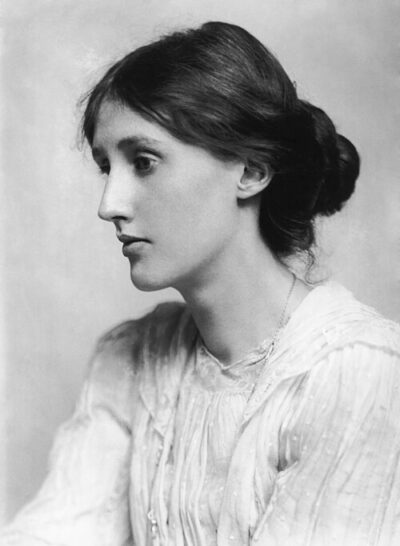
Virginia Woolf
Virginia Woolf was an English modernist writer. Born January 25, 1882, in London. Died March 28, 1941, in Lewes. Known for To the Lighthouse, Mrs Dalloway and Orlando: A Biography. Educated at King's College London.
Facts
40 facts · 2 confirmed by two sources · 25 cited · 13 from one source
Where this comes from
Papalocal keeps its own record. It started from these sources; what each one said is kept here as it was copied, so a change on their side never changes this page by itself. Tap one to read its version.
What Wikidata says · copied November 16, 2026 · revision 2564775541
- Described as
- English modernist writer (1882–1941)
- Other names
- Virginia Adeline Woolf, Adeline Virginia Stephen Woolf, Virginia Stephen Woolf, Virginia Stephen, Adeline Virginia Stephen, Adeline Virginia Alexandra Stephen, Adeline Virginia Woolf, Adeline Virginia Alexandra Woolf
- Born
- January 25, 1882 · 4 references
- Died
- March 28, 1941 · 4 references
- Born in
- London · 1 reference
- Died in
- Lewes · 2 references
- Buried in
- Monk's House
- Name at birth
- Adeline Virginia Alexandra Stephen · 1 reference
- Citizen of
- United Kingdom (1927–); United Kingdom of Great Britain and Ireland (–1927)
- Occupation
- novelist · 1 reference; essayist · 1 reference; autobiographer · 1 reference; short story writer · 1 reference; diarist; literary critic · 1 reference; publisher · 1 reference; writer · 3 references
- Education
- King's College London · 2 references
- Genre
- drama fiction; prose
- Known for
- To the Lighthouse · 2 references; Mrs Dalloway · 2 references; Orlando: A Biography · 1 reference; A Room of One's Own · 2 references; The Waves · 2 references; The Years; The Voyage Out; Flush: A Biography
- Field
- essay · 1 reference
- Spouse
- Leonard Woolf (1912–1941) · 4 references
- Father
- Leslie Stephen · 3 references
- Mother
- Julia Stephen · 2 references
- Siblings
- Vanessa Bell · 3 references; Thoby Stephen · 2 references; Adrian Stephen · 2 references; George Herbert Duckworth · 1 reference; Stella Duckworth · 1 reference; Gerald Duckworth; Laura Stephen
- Religion
- atheism
- Lived in
- Monk's House
- Wikipedias with a page
- 177
Wikidata item Q40909 (wikidata.org/wiki/Q40909), public domain (CC0). Copied November 16, 2026.
What Wikipedia says · copied November 16, 2026 · revision 1384835037
Adeline Virginia Woolf ( "wolf"; née Stephen; 25 January 1882 – 28 March 1941) was an English writer and one of the most influential 20th-century modernist authors. She helped to pioneer the use of stream of consciousness narration as a literary device.
Virginia Woolf was born in South Kensington, London, into an affluent and intellectual family as the seventh child of Julia Prinsep Jackson and Leslie Stephen. She grew up in a blended household of eight children, including her sister, the painter Vanessa Bell. Educated at home in English classics and Victorian literature, Woolf later attended King's College London, where she studied classics and history and encountered early advocates for women's rights and education.
After the death of her father in 1904, Woolf and her siblings moved to the bohemian Bloomsbury district, where she became a founding member of the influential Bloomsbury Group. She married Leonard Woolf in 1912, and together they established the Hogarth Press in 1917, which published much of her work. They split their time between London and Sussex, maintaining their involvement in literary circles throughout their lives.
Woolf began publishing professionally in 1904 and rose to prominence during the interwar period with novels including Mrs Dalloway (1925), To the Lighthouse (1927), and Orlando (1928). She also wrote the influential feminist essay A Room of One's Own (1929), followed by Three Guineas (1938), which explores the roots of fascism in society. Her work became central to 1970s feminist criticism and remains influential worldwide, having been translated into more than 50 languages. Woolf's legacy endures through extensive scholarship, cultural portrayals, and tributes such as memorials, societies, and university buildings bearing her name.
- Born, in its opening lines
- January 25, 1882
- Died, in its opening lines
- March 28, 1941
From the Wikipedia article “Virginia Woolf” (en.wikipedia.org/wiki/Virginia_Woolf), by its contributors, under CC BY-SA 4.0 (creativecommons.org/licenses/by-sa/4.0/). Copied November 16, 2026; not changed.
Confirmed Two sources agree. Cited One source, and it names where it got it. One source One source, without a reference of its own. Sources disagree The sources disagree. We show the best-supported value and keep theirs below.
