
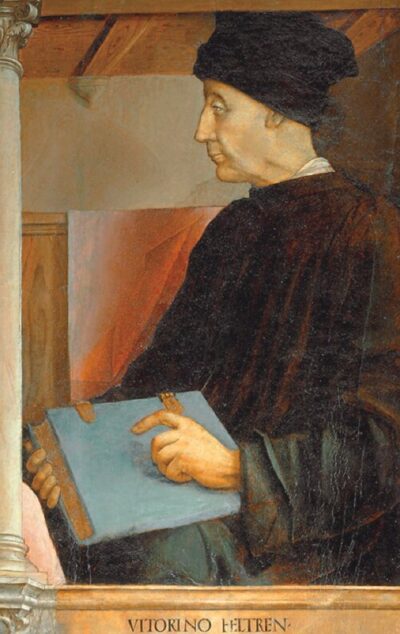
Vittorino da Feltre
Vittorino da Feltre was an Italian Renaissance-Humanist and teacher. Born 1378, in Feltre. Died February 2, 1446, in Mantua. Educated at University of Padua.
Facts
14 facts · 2 confirmed by two sources · 4 cited · 8 from one source
Where this comes from
Papalocal keeps its own record. It started from these sources; what each one said is kept here as it was copied, so a change on their side never changes this page by itself. Tap one to read its version.
What Wikidata says · copied November 16, 2026 · revision 2564369568
- Described as
- Italian Renaissance-Humanist and teacher
- Other names
- Victorino de Feltre, Vittorino Rambaldoni, Vittorino de' Rambaldoni
- Born
- 1378 · 2 references
- Died
- February 2, 1446
- Born in
- Feltre
- Died in
- Mantua
- Occupation
- educator; Renaissance humanist; teacher; philosopher · 1 reference; humanist · 1 reference
- Worked for
- Francesco I Gonzaga, Marquess of Mantua (1423–)
- Education
- University of Padua
- Field
- humanism · 1 reference; humanistic education · 1 reference; pedagogy · 1 reference
- Wikipedias with a page
- 28
Wikidata item Q725843 (wikidata.org/wiki/Q725843), public domain (CC0). Copied November 16, 2026.
What Wikipedia says · copied November 16, 2026 · revision 1219425176
Vittorino da Feltre (1378 – February 2, 1446) was an Italian humanist and teacher. He was born in Feltre, Belluno, Republic of Venice and died in Mantua. His real name was Vittorino Rambaldoni. It was in Vittorino that the Renaissance idea of the complete man, or l'uomo universale — health of body, strength of character, wealth of mind — reached its first formulation.
- Born, in its opening lines
- 1378
- Died, in its opening lines
- February 2, 1446
From the Wikipedia article “Vittorino da Feltre” (en.wikipedia.org/wiki/Vittorino_da_Feltre), by its contributors, under CC BY-SA 4.0 (creativecommons.org/licenses/by-sa/4.0/). Copied November 16, 2026; not changed.
Confirmed Two sources agree. Cited One source, and it names where it got it. One source One source, without a reference of its own. Sources disagree The sources disagree. We show the best-supported value and keep theirs below.
