
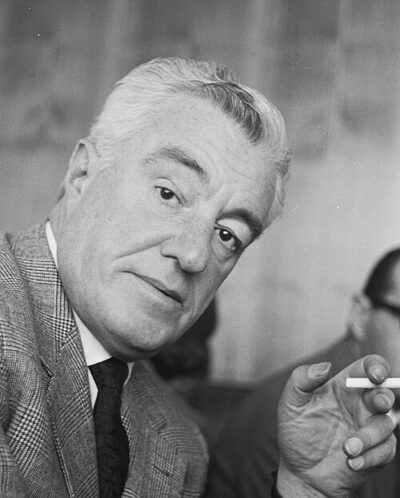
Vittorio De Sica
Vittorio De Sica was an Italian film director. Born July 7, 1901, in Sora. Died November 13, 1974, in Neuilly-sur-Seine. Known for Bicycle Thieves, Umberto D. and The Children Are Watching Us. Awards include Golden Globe Award for Best Non-English Language Film, Golden Bear and Blue Ribbon Awards for Best Foreign Film.
Facts
50 facts · 2 confirmed by two sources · 8 cited · 40 from one source
Where this comes from
Papalocal keeps its own record. It started from these sources; what each one said is kept here as it was copied, so a change on their side never changes this page by itself. Tap one to read its version.
What Wikidata says · copied November 16, 2026 · revision 2558274254
- Described as
- Italian film director (1901-1974)
- Other names
- Vittorio de Sica
- Born
- July 7, 1901 · 6 references
- Died
- November 13, 1974 · 8 references
- Born in
- Sora · 2 references
- Died in
- Neuilly-sur-Seine · 3 references
- Buried in
- Campo Verano
- Cause of death
- lung cancer
- Name at birth
- Vittorio Dominico Stanislo Gaetano Sorano De Sica · 1 reference
- Citizen of
- Italy (1946–) · 1 reference; Kingdom of Italy (–1946); France (1968–)
- Occupation
- film director · 2 references; screenwriter; stage actor; film actor · 1 reference; actor · 2 references; executive producer; film producer · 1 reference; director · 2 references
- Genre
- Italian neorealism · 1 reference
- Known for
- Bicycle Thieves; Umberto D.; The Children Are Watching Us; Miracle in Milan; Two Women; Shoeshine; Marriage Italian-Style; Maddalena, zero in condotta
- Awards
- Golden Globe Award for Best Non-English Language Film (1961); Golden Bear; Blue Ribbon Awards for Best Foreign Film; Bodil Awards; David di Donatello for Best Actor; David di Donatello for Best Director; David di Donatello europeo; Nastro d'Argento for the director of the best film (1946) · 1 reference; Nastro d'Argento for Best Actor (1948) · 1 reference; Nastro d'Argento for Best Screenplay (1949) · 1 reference; Jussi Awards; Kansas City Film Critics Circle Awards 1972; Kinema Junpo; Leopard for Best Direction; National Board of Review Award for Best Director
- Spouse
- Giuditta Rissone (1937–1954); María Mercader (1959–1974)
- Children
- Christian De Sica; Manuel De Sica; Vicky Lagos; Emi De Sica
- Siblings
- Elmo De Sica
- Religion
- Catholic Church
- Wikipedias with a page
- 83
Wikidata item Q53004 (wikidata.org/wiki/Q53004), public domain (CC0). Copied November 16, 2026.
What Wikipedia says · copied November 16, 2026 · revision 1384100357
Vittorio De Sica ( də SEE-kə; Italian: [vitˈtɔːrjo de ˈsiːka]; 7 July 1901 – 13 November 1974) was an Italian film director and actor, a leading figure in the neorealist movement.
Widely considered one of the most influential filmmakers in the history of cinema, four of the films he directed won Academy Awards: Sciuscià and Bicycle Thieves (honorary), while Yesterday, Today and Tomorrow, and Il giardino dei Finzi Contini won the Academy Award for Best Foreign Language Film. Indeed, the great critical success of Sciuscià (the first foreign film to be so recognized by the Academy of Motion Picture Arts and Sciences) and Bicycle Thieves helped establish the permanent Best Foreign Film Award. These two films are considered part of the canon of classic cinema. Bicycle Thieves was deemed the greatest film of all time by Sight & Sound magazine's poll of filmmakers and critics in 1952, and was cited by Turner Classic Movies as one of the 15 most influential films in cinema history.
De Sica was also nominated for the Academy Award for Best Supporting Actor for playing Major Rinaldi in American director Charles Vidor's 1957 adaptation of Ernest Hemingway's A Farewell to Arms, a movie that was panned by critics and proved a box office flop. De Sica's acting was considered the highlight of the film.
- Born, in its opening lines
- July 7, 1901
- Died, in its opening lines
- November 13, 1974
From the Wikipedia article “Vittorio De Sica” (en.wikipedia.org/wiki/Vittorio_De_Sica), by its contributors, under CC BY-SA 4.0 (creativecommons.org/licenses/by-sa/4.0/). Copied November 16, 2026; not changed.
Confirmed Two sources agree. Cited One source, and it names where it got it. One source One source, without a reference of its own. Sources disagree The sources disagree. We show the best-supported value and keep theirs below.
