
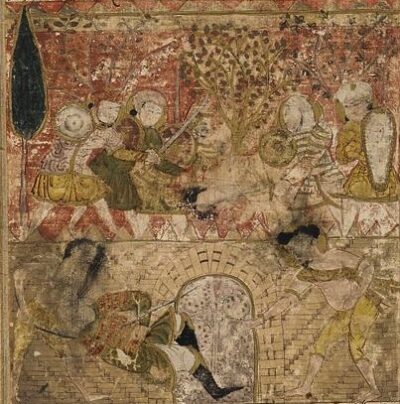
Wahshi ibn Harb
Wahshi ibn Harb was a man who killed Hamza Ibn Abdul-Muttalib, companions of Prophet. Born 7th century, in Arabian Peninsula. Died 645, in Arabian Peninsula.
Facts
7 facts · 0 confirmed by two sources · 1 cited · 5 from one source · 1 where the sources disagree
What’s different
- Died: we show 645 (Sources disagree). Wikidata also lists 660s
Where this comes from
Papalocal keeps its own record. It started from these sources; what each one said is kept here as it was copied, so a change on their side never changes this page by itself. Tap one to read its version.
What Wikidata says · copied November 18, 2026 · revision 2533525331
- Described as
- man who killed Hamza Ibn Abdul-Muttalib, companions of Prophet
- Born
- 7th century
- Died
- 660s; 645 · 1 reference
- Born in
- Arabian Peninsula
- Died in
- Arabian Peninsula
- Occupation
- warrior; companions of the Prophet · 1 reference
- Religion
- Islam
- Wikipedias with a page
- 22
Wikidata item Q2738852 (wikidata.org/wiki/Q2738852), public domain (CC0). Copied November 18, 2026.
What Wikipedia says · copied November 18, 2026 · revision 1352531776
Waḥshī ibn Ḥarb al-Habashi (Arabic: وحشي بن حرب الحبشي, lit. 'The Savage, son of War, the Ethiopian'), also known as Abu Dusmah, was a former slave of Jubayr ibn Mut'im before becoming a freedman and a Sahabi (companion of the Islamic prophet Muhammad). He is best known for killing a leading Muslim fighter, Hamza ibn ‘Abd al-Muttalib, Muhammad's paternal uncle, prior to converting to Islam, and afterwards reportedly killing Musaylimah, the leader of an enemy apostate army waging war against the Muslims. Wahshi's grandson, Wahshi ibn Harb ibn Wahshi ibn Harb, was a Hadith narrator.
From the Wikipedia article “Wahshi ibn Harb” (en.wikipedia.org/wiki/Wahshi_ibn_Harb), by its contributors, under CC BY-SA 4.0 (creativecommons.org/licenses/by-sa/4.0/). Copied November 18, 2026; not changed.
Confirmed Two sources agree. Cited One source, and it names where it got it. One source One source, without a reference of its own. Sources disagree The sources disagree. We show the best-supported value and keep theirs below.
