
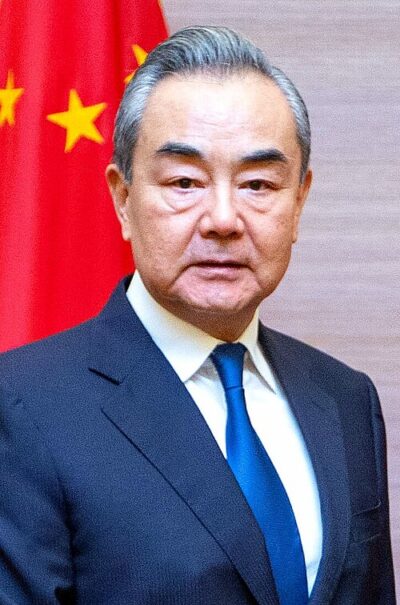
Wang Yi
Wang Yi is a Chinese diplomat leader, Director of the CCP Central Foreign Affairs Commission Office since 2023. Born October 19, 1953, in Beijing. Positions held include Minister of Foreign Affairs of the People's Republic of China (2013–), Director of the Taiwan Affairs Office of the Chinese Conmunist Party (2008–2013) and State councillor (2018–2023). Educated at Beijing International Studies University and Georgetown University. Awards include Order "Danaker", Medal of the Oriental Republic of Uruguay and Nishan-e-Pakistan.
Facts
24 facts · 1 confirmed by two sources · 8 cited · 15 from one source
Where this comes from
Papalocal keeps its own record. It started from these sources; what each one said is kept here as it was copied, so a change on their side never changes this page by itself. Tap one to read its version.
What Wikidata says · copied November 16, 2026 · revision 2567077343
- Described as
- Chinese diplomat leader, Director of the CCP Central Foreign Affairs Commission Office since 2023
- Born
- October 19, 1953 · 1 reference
- Born in
- Beijing · 1 reference
- Citizen of
- People's Republic of China
- Occupation
- politician · 2 references; diplomat · 1 reference
- Positions held
- Minister of Foreign Affairs of the People's Republic of China (2013–) · 2 references; Director of the Taiwan Affairs Office of the Chinese Conmunist Party (2008–2013) · 3 references; State councillor (2018–2023) · 1 reference; Vice-minister of Foreign Affairs of the People's Republic of China (2 times) (2001–2008) · 2 references; ambassador of the People's Republic of China to Japan (2004–2007); Director-General of the Department of Asian Affairs (1995–1998) · 1 reference; member of the Politburo of the Chinese Communist Party (2022–)
- Political party
- Chinese Communist Party
- Education
- Beijing International Studies University; Georgetown University; China Foreign Affairs University
- Member of
- 20th Politburo of the Chinese Communist Party
- Awards
- Order "Danaker"; Medal of the Oriental Republic of Uruguay (2016) · 1 reference; Nishan-e-Pakistan; Commander with Star of the Order of Merit of Hungary; Order of the Polar Star (2004) · 1 reference
- Religion
- atheism
- Website
- http://www.gov.cn/guowuyuan/wangyi/index.htm · 1 reference
- Wikipedias with a page
- 52
Wikidata item Q701801 (wikidata.org/wiki/Q701801), public domain (CC0). Copied November 16, 2026.
What Wikipedia says · copied November 16, 2026 · revision 1385073164
Wang Yi (Chinese: 王毅; pinyin: Wáng Yì; born 19 October 1953) is a Chinese diplomat and politician who is the director of the Central Committee Foreign Affairs Commission Office of the Chinese Communist Party (CCP) and Minister of Foreign Affairs.
Born in Beijing, Wang studied Japanese at Beijing International Studies University. He joined the Asian section of the Ministry of Foreign Affairs after his graduation. In 1989, he was sent to the Chinese embassy in Japan and served there for five years. From 1997 to 1998, Wang was a visiting scholar at the Georgetown University in the United States. After his return, he became assistant minister and the director of the office of policy research. In 2001, Wang was elevated to Vice Minister of Foreign Affairs in charge of Asian affairs. From 2004 to 2007, he served as the Chinese ambassador to Japan.
Wang served as the Director of the State Council Taiwan Affairs Office from 2008 to 2013. In 2013, Wang was appointed as the Minister of Foreign Affairs. From 2018 to 2023, he also served as a State Councilor of China. In 2022, he became a member of the CCP Politburo, and was succeeded by Qin Gang as foreign minister. In 2023, after Qin Gang's removal, Wang Yi was reappointed as foreign minister.
- Born, in its opening lines
- October 19, 1953
From the Wikipedia article “Wang Yi” (en.wikipedia.org/wiki/Wang_Yi), by its contributors, under CC BY-SA 4.0 (creativecommons.org/licenses/by-sa/4.0/). Copied November 16, 2026; not changed.
Confirmed Two sources agree. Cited One source, and it names where it got it. One source One source, without a reference of its own. Sources disagree The sources disagree. We show the best-supported value and keep theirs below.
