
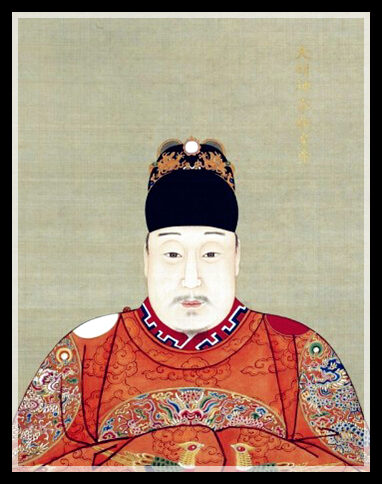
Wanli
Wanli was an emperor of the Ming Dynasty. Born September 4, 1563, in Beijing. Died August 18, 1620, in Beijing. Positions held include Emperor of China (1572–1620).
Facts
37 facts · 2 confirmed by two sources · 4 cited · 30 from one source · 1 where the sources disagree
What’s different
- Buried in: we show Ming tombs (Sources disagree). Wikidata also lists Ding Mausoleum
Where this comes from
Papalocal keeps its own record. It started from these sources; what each one said is kept here as it was copied, so a change on their side never changes this page by itself. Tap one to read its version.
What Wikidata says · copied November 16, 2026 · revision 2569074376
- Described as
- emperor of the Ming Dynasty (1563-1620)
- Other names
- Xian Di, Dingling, Emperor Shenzong of Ming, Shen Zong, Wan Li Di, Fantianhedaozhesudunjianguangwenzhangwuanrenzhixiaoxianhuangdi, Zhu Yijun
- Born
- September 4, 1563
- Died
- August 18, 1620 · 1 reference
- Born in
- Beijing
- Died in
- Beijing
- Buried in
- Ming tombs; Ding Mausoleum
- Citizen of
- Ming dynasty · 1 reference
- Occupation
- poet; sovereign
- Positions held
- Emperor of China (1572–1620)
- Spouse
- Empress Xiaoduanxian; Empress Dowager Xiaojing; Noble Consort Zheng; Grand Empress Dowager Xiaojing, of the Li clan
- Children
- Taichang Emperor · 1 reference; Princess Yunhe · 1 reference; Princess Xianju · 1 reference; Princess Shouning · 1 reference; Princess Tiantai · 1 reference; Princess Yunmeng · 1 reference; Princess Rongchang · 1 reference; Princess Taishun · 1 reference; Princess Jingle · 1 reference; Princess Lingqiu · 1 reference; Princess Xiangshan · 1 reference; Zhu Changxu
- Father
- Longqing Emperor · 1 reference
- Mother
- Empress Dowager Xiaoding · 1 reference
- Siblings
- Princess Yanqing; Princess Qixia; Princess Yongning; Princess Shouyang; Princess Penglai; Princess Taihe; Princess Rui'an; Zhu Yiliu; Zhu Yiling; Zhu Yiyi
- Wikipedias with a page
- 46
Wikidata item Q10061 (wikidata.org/wiki/Q10061), public domain (CC0). Copied November 16, 2026.
What Wikipedia says · copied November 16, 2026 · revision 1383202872
The Wanli Emperor (4 September 1563 – 18 August 1620), personal name Zhu Yijun, was the 14th emperor of the Ming dynasty of China, reigning from 1572 to 1620. He succeeded his father, the Longqing Emperor.
The Wanli Emperor ascended the throne at the age of nine. During the first ten years of his reign, Grand Secretary Zhang Juzheng effectively led the government, while the Emperor's mother, Lady Li, and the eunuch Feng Bao also played significant roles. The country experienced economic and military prosperity, reaching a level of power not seen since the early 15th century. The Emperor held great respect and appreciation for Zhang Juzheng, but as time passed, various factions within the government openly opposed Zhang, and the Emperor started to consider his influential position a burden. After Zhang died in 1582, the Emperor made significant changes to his administrative arrangements.
Ming China saw three major campaigns in the last decade of the 16th century. A Ming force of 40,000 soldiers had quelled a large rebellion in Ningxia by October 1592, allowing the Ming to shift their focus to Korea. Concurrently, Japan invaded Korea, leading to a joint Korean-Chinese force, including 40,000 Ming soldiers, pushing the Japanese out of most of Korea and forcing them to retreat to the southeast coast by 1593. In 1597, a second Japanese invasion was thwarted, and the suppression of the Yang Yinglong rebellion in southwest China concluded in a few months from 1599 due to Ming forces concentrating there amidst the ongoing war with Japan. In the final years of the Wanli era, the Jurchens grew stronger on the northeastern frontiers and posed a significant threat. In 1619, they defeated the Ming armies in the Battle of Sarhu and captured part of Liaodong.
Over time, the Emperor grew increasingly disillusioned with the constant demoralizing attacks and counterattacks from officials, causing him to become increasingly isolated. In the 1580s and 1590s, he attempted to promote his third son, Zhu Changxun, as heir to the throne, but many officials supported his eldest son, Zhu Changluo. This led to ongoing conflicts between the Emperor and his ministers for over fifteen years. Eventually, the Emperor appointed Zhu Changluo as heir in 1601, and Zhu Changluo later succeeded his father as the Taichang Emperor in 1620. In 1596, the Wanli Emperor attempted to establish a parallel administration composed of eunuchs, separate from the officials who had traditionally governed the empire, but this effort was abandoned in 1606. The governance of the country remained in the hands of Confucian intellectuals, who were often embroiled in disputes with each other. The opposition Donglin movement continued to criticize the Emperor and his followers, while pro-government officials were divided based on their regional origins.
- Born, in its opening lines
- September 4, 1563
- Died, in its opening lines
- August 18, 1620
From the Wikipedia article “Wanli Emperor” (en.wikipedia.org/wiki/Wanli_Emperor), by its contributors, under CC BY-SA 4.0 (creativecommons.org/licenses/by-sa/4.0/). Copied November 16, 2026; not changed.
Confirmed Two sources agree. Cited One source, and it names where it got it. One source One source, without a reference of its own. Sources disagree The sources disagree. We show the best-supported value and keep theirs below.
