
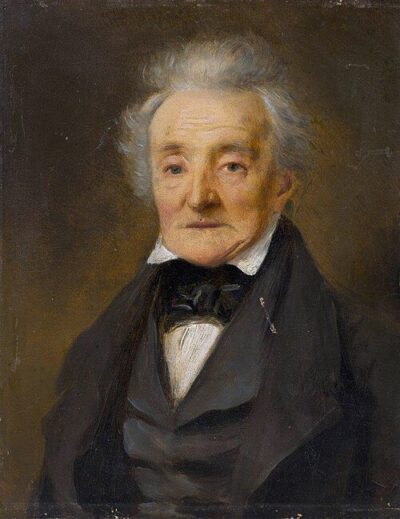
Wilhelm Friedrich Ernst Bach
Wilhelm Friedrich Ernst Bach was a German composer. Born May 24, 1759, in Bückeburg. Died December 25, 1845, in Berlin.
Facts
21 facts · 2 confirmed by two sources · 15 cited · 4 from one source
Where this comes from
Papalocal keeps its own record. It started from these sources; what each one said is kept here as it was copied, so a change on their side never changes this page by itself. Tap one to read its version.
What Wikidata says · copied November 18, 2026 · revision 2519577440
- Described as
- German composer
- Other names
- Wilhelm Bach, William Bach
- Born
- May 24, 1759 · 5 references
- Died
- December 25, 1845 · 7 references
- Born in
- Bückeburg · 1 reference
- Died in
- Berlin · 1 reference
- Buried in
- Friedhof II der Sophiengemeinde Berlin · 1 reference
- Citizen of
- Kingdom of Prussia
- Occupation
- composer · 2 references; pianist · 1 reference; chapelmaster · 1 reference; musician · 1 reference; harpsichordist · 1 reference; organist · 1 reference; music teacher · 1 reference; independent publisher · 1 reference
- Instrument
- harpsichord
- Spouse
- Charlotte Philippine Henriette Bach · 1 reference; Wilhelmine Susanna Bach · 1 reference
- Children
- Caroline Auguste Wilhelmine Bach · 1 reference; Juliane Friderike Ernestine Bach
- Father
- Johann Christoph Friedrich Bach · 1 reference
- Mother
- Lucia Elisabeth Münchhausen
- Wikipedias with a page
- 21
Wikidata item Q505267 (wikidata.org/wiki/Q505267), public domain (CC0). Copied November 18, 2026.
What Wikipedia says · copied November 18, 2026 · revision 1381701713
Wilhelm Friedrich Ernst Bach, also known as William Bach (24 May 1759 – 25 December 1845) was the eldest son of Johann Christoph Friedrich Bach and the only grandson of Johann Sebastian Bach to gain fame as a composer. He was music director to King Frederick William II of Prussia.
Ernst Bach received training in music from his uncle Carl Philipp Emanuel Bach, and from another uncle in England, Johann Christian Bach. He was in London when Johann Christian died there on 1 January 1782. Ernst Bach remained in England until 1784, when he returned to Germany via Holland. He was Kapellmeister of Minden in 1786, and Kapellmeister in Berlin from 1788 to 1811, with Friedrich Wilhelm's blessing. He retired after Prince Heinrich, the brother of King Friedrich Wilhelm III, granted him a pension.
At the unveiling of the Bach Monument in Leipzig on 23 April 1843, Ernst Bach met Felix Mendelssohn and Robert Schumann. Schumann later described Ernst Bach as "a very agile old gentleman of 84 years with snow-white hair and expressive features". Mendelssohn was the one who revived public interest in JS Bach’s music following a 1829 performance of St Matthew Passion. The two would correspond until Ernst Bach’s death.
One of Ernst Bach's most remarkable compositions was Dreyblatt, a concerto for piano involving six hands. It is to be performed by a man with a petite woman on either side of him. Ernst Bach indicated that the man is to stretch his arms around the women to play the outer parts while the women play the middle parts.
Ernst Bach is buried at the Friedhof II der Sophiengemeinde Berlin. He married twice. His only son (by his second wife) died in infancy. The eldest of his three daughters, Caroline Augusta Wilhelmine, lived the longest. She died in 1871—the very last of the Bachs.
- Born, in its opening lines
- May 24, 1759
- Died, in its opening lines
- December 25, 1845
From the Wikipedia article “Wilhelm Friedrich Ernst Bach” (en.wikipedia.org/wiki/Wilhelm_Friedrich_Ernst_Bach), by its contributors, under CC BY-SA 4.0 (creativecommons.org/licenses/by-sa/4.0/). Copied November 18, 2026; not changed.
Confirmed Two sources agree. Cited One source, and it names where it got it. One source One source, without a reference of its own. Sources disagree The sources disagree. We show the best-supported value and keep theirs below.
