
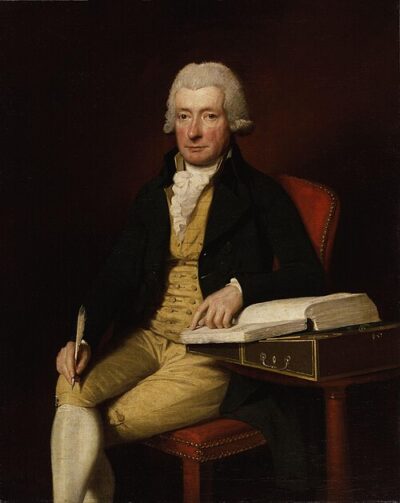
William Cowper
William Cowper was an English poet and hymnodist. Born November 26, 1731, in Berkhamsted. Died April 25, 1800, in Dereham. Educated at Westminster School.
Facts
23 facts · 2 confirmed by two sources · 7 cited · 14 from one source
Where this comes from
Papalocal keeps its own record. It started from these sources; what each one said is kept here as it was copied, so a change on their side never changes this page by itself. Tap one to read its version.
What Wikidata says · copied November 16, 2026 · revision 2558282155
- Described as
- English poet and hymnodist (1731–1800)
- Born
- November 26, 1731 · 7 references
- Died
- April 25, 1800 · 10 references
- Born in
- Berkhamsted
- Died in
- Dereham · 1 reference
- Buried in
- Norfolk
- Cause of death
- edema
- Citizen of
- Kingdom of Great Britain
- Occupation
- poet · 2 references; translator; writer · 2 references; poet lawyer; hymnwriter; abolitionist; lawyer · 1 reference
- Education
- Westminster School
- Father
- John Cowper · 2 references
- Mother
- Anne Don · 2 references
- Siblings
- John Cowper · 1 reference
- Religion
- Anglicanism
- Lived in
- Huntingdon · 1 reference; Olney · 1 reference; Weston Underwood (1786) · 1 reference
- Nickname
- Bard of Olney
- Wikipedias with a page
- 59
Wikidata item Q315537 (wikidata.org/wiki/Q315537), public domain (CC0). Copied November 16, 2026.
What Wikipedia says · copied November 16, 2026 · revision 1384113708
William Cowper (26 November [O.S. 15 November] 1731 – 25 April 1800) was an English poet and Anglican hymnwriter.
One of the most popular poets of his time, Cowper changed the direction of 18th-century nature poetry by writing of everyday life and scenes of the English countryside. In many ways, he was one of the forerunners of Romantic poetry. Samuel Taylor Coleridge called him "the best modern poet", whilst William Wordsworth particularly admired his poem "Yardley-Oak".
After being institutionalised for insanity, Cowper found refuge in a fervent evangelical Christianity. He continued to suffer doubt about his salvation and, after a dream in 1773, believed that he was doomed to eternal damnation. He recovered, and went on to write more religious hymns.
His religious sentiment and association with John Newton (who wrote the hymn "Amazing Grace") led to much of the poetry for which he is best remembered, and to the series of Olney Hymns. His poem "Light Shining out of Darkness" (1773) gave English the phrase: "God moves in a mysterious way/ His wonders to perform."
He also wrote a number of anti-slavery poems, and his friendship with Newton, who was an avid anti-slavery campaigner, resulted in Cowper's being asked to write in support of the Abolitionist campaign. Cowper wrote a poem called "The Negro's Complaint" (1788) which rapidly became very famous, and was often quoted by Martin Luther King Jr. during the 20th-century civil rights movement. He also wrote several other less well-known poems on slavery in the 1780s, many of which attacked the idea that slavery was economically viable.
Cowper also wrote the poems The Diverting History of John Gilpin (1782) and The Task (1785).
- Born, in its opening lines
- November 26, 1731
- Died, in its opening lines
- April 25, 1800
From the Wikipedia article “William Cowper” (en.wikipedia.org/wiki/William_Cowper), by its contributors, under CC BY-SA 4.0 (creativecommons.org/licenses/by-sa/4.0/). Copied November 16, 2026; not changed.
Confirmed Two sources agree. Cited One source, and it names where it got it. One source One source, without a reference of its own. Sources disagree The sources disagree. We show the best-supported value and keep theirs below.
