
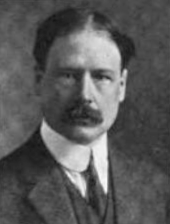
William Ernest Hocking
William Ernest Hocking was an American philosopher. Born August 10, 1873, in Cleveland. Died June 12, 1966, in Madison. Educated at Harvard University. Awards include Honorary doctor of Leiden University.
Facts
17 facts · 2 confirmed by two sources · 9 cited · 6 from one source
Where this comes from
Papalocal keeps its own record. It started from these sources; what each one said is kept here as it was copied, so a change on their side never changes this page by itself. Tap one to read its version.
What Wikidata says · copied November 18, 2026 · revision 2567360800
- Described as
- American philosopher (1873-1966)
- Other names
- W.E. Hocking, William Ernst Hocking, William Hocking
- Born
- August 10, 1873 · 6 references
- Died
- June 12, 1966 · 8 references
- Born in
- Cleveland · 1 reference
- Died in
- Madison · 1 reference
- Buried in
- Mount Auburn Cemetery · 1 reference
- Citizen of
- United States
- Occupation
- philosopher · 1 reference; theologian · 1 reference; university teacher · 1 reference; missionary · 1 reference
- Worked for
- Harvard University; Leiden University (1947–1948) · 1 reference
- Education
- Harvard University · 1 reference
- Member of
- American Academy of Arts and Sciences; American Academy of Arts and Letters
- Awards
- Honorary doctor of Leiden University (1948) · 1 reference
- Children
- Richard Hocking
- Wikipedias with a page
- 16
Wikidata item Q779523 (wikidata.org/wiki/Q779523), public domain (CC0). Copied November 18, 2026.
What Wikipedia says · copied November 18, 2026 · revision 1379804808
William Ernest Hocking (August 10, 1873 – June 12, 1966) was an American idealist philosopher at Harvard University. He continued the work of his philosophical teacher Josiah Royce (the founder of American idealism) in revising idealism to integrate and fit into empiricism, naturalism and pragmatism.
He said that metaphysics has to make inductions from experience: "That which does not work is not true." His major field of study was the philosophy of religion, but his 22 books included discussions of philosophy and human rights, world politics, freedom of the press, the philosophical psychology of human nature; education; and more.
In 1958 he served as president of the Metaphysical Society of America. He led a highly influential study of missions in mainline Protestant churches in 1932. His "Laymen's Inquiry" recommended a greater emphasis on education and social welfare, transfer of power to local groups, less reliance on evangelizing and conversion, and a much more respectful appreciation for local religions.
- Born, in its opening lines
- August 10, 1873
- Died, in its opening lines
- June 12, 1966
From the Wikipedia article “William Ernest Hocking” (en.wikipedia.org/wiki/William_Ernest_Hocking), by its contributors, under CC BY-SA 4.0 (creativecommons.org/licenses/by-sa/4.0/). Copied November 18, 2026; not changed.
Confirmed Two sources agree. Cited One source, and it names where it got it. One source One source, without a reference of its own. Sources disagree The sources disagree. We show the best-supported value and keep theirs below.
