
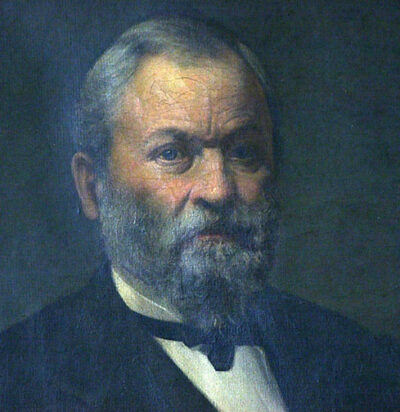
William Fargo
William Fargo was an American businessman and former mayor. Born May 20, 1818, in Pompey. Died August 3, 1881, in Buffalo. Positions held include Mayor of Buffalo, New York.
Facts
14 facts · 2 confirmed by two sources · 2 cited · 10 from one source
Where this comes from
Papalocal keeps its own record. It started from these sources; what each one said is kept here as it was copied, so a change on their side never changes this page by itself. Tap one to read its version.
What Wikidata says · copied November 18, 2026 · revision 2531003424
- Described as
- American businessman and former mayor (1818–1881)
- Other names
- William George Fargo
- Born
- May 20, 1818 · 5 references
- Died
- August 3, 1881 · 5 references
- Born in
- Pompey
- Died in
- Buffalo · 1 reference
- Buried in
- Forest Lawn Cemetery · 1 reference
- Citizen of
- United States
- Occupation
- entrepreneur; politician
- Positions held
- Mayor of Buffalo, New York
- Political party
- Democratic Party
- Children
- Helen Lacy Fargo; Georgia Fargo
- Father
- William C. Fargo
- Religion
- Episcopal Church
- Wikipedias with a page
- 15
Wikidata item Q323682 (wikidata.org/wiki/Q323682), public domain (CC0). Copied November 18, 2026.
What Wikipedia says · copied November 18, 2026 · revision 1381942933
William George Fargo (May 20, 1818 – August 3, 1881) was an American businessman and politician who, along with Henry Wells, co-founded Wells Fargo. Originally a shipping, mail delivery, stagecoach, and banking company, Wells Fargo expanded to become a major financial services corporation, which is now considered one of the Big Four of banks in the United States by assets. Fargo was also a co-founder of American Express, along with Wells and John Butterfield.
- Born, in its opening lines
- May 20, 1818
- Died, in its opening lines
- August 3, 1881
From the Wikipedia article “William Fargo” (en.wikipedia.org/wiki/William_Fargo), by its contributors, under CC BY-SA 4.0 (creativecommons.org/licenses/by-sa/4.0/). Copied November 18, 2026; not changed.
Confirmed Two sources agree. Cited One source, and it names where it got it. One source One source, without a reference of its own. Sources disagree The sources disagree. We show the best-supported value and keep theirs below.
