
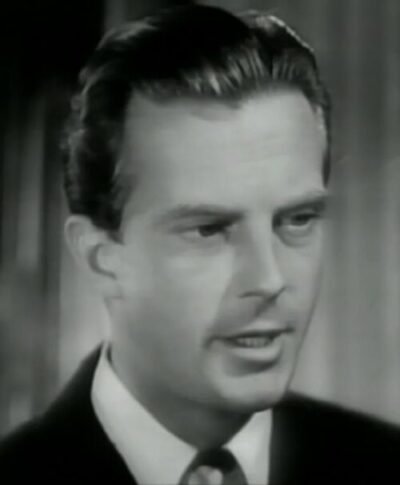
William Lundigan was an actor. Born June 12, 1914, in Syracuse. Died December 20, 1975, in Duarte. Educated at Nottingham High School. Awards include star on Hollywood Walk of Fame.
Facts
14 facts · 2 confirmed by two sources · 3 cited · 9 from one source
Where this comes from
Papalocal keeps its own record. It started from these sources; what each one said is kept here as it was copied, so a change on their side never changes this page by itself. Tap one to read its version.
What Wikidata says · copied November 18, 2026 · revision 2566938912
- Described as
- actor (1914-1975)
- Other names
- William Paul Lundigan
- Born
- June 12, 1914 · 4 references
- Died
- December 20, 1975 · 4 references
- Born in
- Syracuse · 1 reference
- Died in
- Duarte
- Buried in
- Holy Cross Cemetery
- Cause of death
- disease
- Citizen of
- United States
- Occupation
- actor · 1 reference; television actor; film actor · 1 reference
- Political party
- Republican Party
- Education
- Nottingham High School · 1 reference
- Awards
- star on Hollywood Walk of Fame · 1 reference
- Military branch
- United States Marine Corps
- Wikipedias with a page
- 18
Wikidata item Q1982192 (wikidata.org/wiki/Q1982192), public domain (CC0). Copied November 18, 2026.
What Wikipedia says · copied November 18, 2026 · revision 1356153275
William Paul Lundigan (June 12, 1914 – December 20, 1975) was an American film actor. His more than 125 films include Dodge City (1939), The Fighting 69th (1940), The Sea Hawk (1940), Santa Fe Trail (1940), Dishonored Lady (1947), Pinky (1949), Love Nest (1951) with Marilyn Monroe, The House on Telegraph Hill (1951), I'd Climb the Highest Mountain (1951) and Inferno (1953).
- Born, in its opening lines
- June 12, 1914
- Died, in its opening lines
- December 20, 1975
From the Wikipedia article “William Lundigan” (en.wikipedia.org/wiki/William_Lundigan), by its contributors, under CC BY-SA 4.0 (creativecommons.org/licenses/by-sa/4.0/). Copied November 18, 2026; not changed.
Confirmed Two sources agree. Cited One source, and it names where it got it. One source One source, without a reference of its own. Sources disagree The sources disagree. We show the best-supported value and keep theirs below.
