
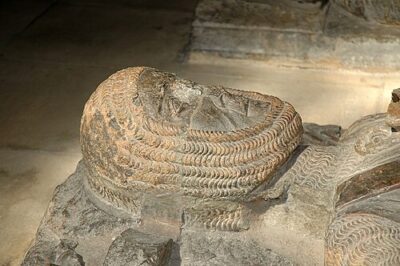
William Marshal, 1st Earl of Pembroke
William Marshal, 1st Earl of Pembroke was an Anglo-Norman soldier and statesman. Born 1146, in Wiltshire. Died May 14, 1219, in Caversham. Positions held include Earl Marshal (1194–1219).
Facts
24 facts · 0 confirmed by two sources · 10 cited · 14 from one source
Where this comes from
Papalocal keeps its own record. It started from these sources; what each one said is kept here as it was copied, so a change on their side never changes this page by itself. Tap one to read its version.
What Wikidata says · copied November 16, 2026 · revision 2563392926
- Described as
- Anglo-Norman soldier and statesman (1146-1219)
- Other names
- William Marshal, Guillaume
- Born
- 1146 · 2 references
- Died
- May 14, 1219 · 1 reference
- Born in
- Wiltshire
- Died in
- Caversham
- Buried in
- Temple Church, London
- Citizen of
- Kingdom of England
- Occupation
- knight; politician · 1 reference
- Positions held
- Earl Marshal (1194–1219)
- Spouse
- Isabel de Clare, 4th Countess of Pembroke (1189–) · 2 references
- Children
- Isabel Marshal · 1 reference; Richard Marshal, 3rd Earl of Pembroke; William Marshal, 2nd Earl of Pembroke · 1 reference; Maud Marshal · 1 reference; Eva Marshal; Gilbert Marshal, 4th Earl of Pembroke · 1 reference; Walter Marshal, 5th Earl of Pembroke; Anselm Marshal, 6th Earl of Pembroke · 1 reference; Joan Marshal · 1 reference; Sibyl Marshal · 2 references
- Father
- John Marshall
- Mother
- Sibyl of Salisbury
- Siblings
- Henry Marshal
- Military rank
- knight
- Wikipedias with a page
- 31
Wikidata item Q348911 (wikidata.org/wiki/Q348911), public domain (CC0). Copied November 16, 2026.
What Wikipedia says · copied November 16, 2026 · revision 1384464082
William Marshal, 1st Earl of Pembroke (1146 or 1147 – 14 May 1219), also called William the Marshal (Norman French: Williame li Mareschal, French: Guillaume le Maréchal), was an Anglo-Norman soldier and statesman during High Medieval England who served five English kings—Henry II and his son and co-ruler Young Henry, Richard I, John, and Henry III—as a royal adviser and agent, and as a warrior of outstanding prowess.
Knighted in 1166, William spent his younger years as a successful competitor in military tournaments; 13th-century chronicler Stephen Langton eulogises him as the "best knight that ever lived." In 1189, he became earl of Pembroke through his marriage to Isabel de Clare, whose parents were Aoife MacMurrough and Richard de Clare, 2nd Earl of Pembroke. The title of earl was not officially granted until 1199 and is considered to be the second creation of the Pembroke earldom. In 1216 upon the death of King John, William was appointed protector for John's nine-year-old son Henry III and rector regis et regni (Latin for "governor of the king and of the kingdom"). Just before his death, William fulfilled a promise he said he made in his youth while on crusade by taking vows as a Knight Templar, and was buried in the Temple Church in London.
Before William, his father's family held a hereditary title of Marshal to the King, which by his father's time had become recognised as a chief or master marshalcy, involving management over other marshals and functionaries. William became known as "the Marshal", although by his time much of the function was delegated to more specialised representatives (as happened with other functions in the king's household). Because he was an earl, and also known as the marshal, the term "earl marshal" was commonly used, and this later became an established hereditary title in the English peerage.
From the Wikipedia article “William Marshal, 1st Earl of Pembroke” (en.wikipedia.org/wiki/William_Marshal,_1st_Earl_of_Pembroke), by its contributors, under CC BY-SA 4.0 (creativecommons.org/licenses/by-sa/4.0/). Copied November 16, 2026; not changed.
Confirmed Two sources agree. Cited One source, and it names where it got it. One source One source, without a reference of its own. Sources disagree The sources disagree. We show the best-supported value and keep theirs below.
