
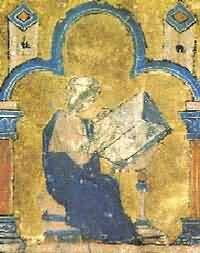
William of Tyre
William of Tyre was a medieval prelate and chronicler, archbishop of Tyre. Born 1130, in Jerusalem. Died 1186, in Jerusalem. Positions held include chancelor of kingdom of Jerusalem (1174–1183) and archbishop of Tyr (1175–1184). Known for Historia rerum in partibus transmarinis gestarum, Report of the Lateran Council and Gesta orientalium principum.
Facts
22 facts · 2 confirmed by two sources · 10 cited · 10 from one source
Where this comes from
Papalocal keeps its own record. It started from these sources; what each one said is kept here as it was copied, so a change on their side never changes this page by itself. Tap one to read its version.
What Wikidata says · copied November 16, 2026 · revision 2567488454
- Described as
- medieval prelate and chronicler, archbishop of Tyre
- Born
- 1130 · 3 references
- Died
- 1186
- Born in
- Jerusalem · 1 reference
- Died in
- Jerusalem · 1 reference
- Citizen of
- Kingdom of France; Kingdom of Jerusalem
- Occupation
- historian · 1 reference; writer · 2 references; archbishop · 2 references; Catholic priest
- Positions held
- chancelor of kingdom of Jerusalem (1174–1183); archbishop of Tyr (1175–1184)
- Known for
- Historia rerum in partibus transmarinis gestarum; Report of the Lateran Council; Gesta orientalium principum
- Field
- history · 1 reference; politics · 1 reference; diplomacy · 1 reference; Crusades · 1 reference; chronicle · 1 reference; theology · 1 reference
- Religion
- Catholic Church
- Wikipedias with a page
- 50
Wikidata item Q311822 (wikidata.org/wiki/Q311822), public domain (CC0). Copied November 16, 2026.
What Wikipedia says · copied November 16, 2026 · revision 1385561259
William of Tyre (Latin: Willelmus Tyrensis; c. 1130 – 29 September 1186) was a medieval prelate and chronicler. As archbishop of Tyre, he is sometimes known as William II to distinguish him from his predecessor, William I, the Englishman, a former prior of the Church of the Holy Sepulchre, who was Archbishop of Tyre from 1127 to 1135. He grew up in Jerusalem at the height of the Kingdom of Jerusalem, which had been established in 1099 after the First Crusade, and he spent twenty years studying the liberal arts and canon law in the universities of Europe.
Following William's return to Jerusalem in 1165, King Amalric made him an ambassador to the Byzantine Empire. William became tutor to the king's son, the future King Baldwin IV, whom William discovered to be a leper. After Amalric's death, William became chancellor and archbishop of Tyre, two of the highest offices in the kingdom, and in 1179 William led the eastern delegation to the Third Council of the Lateran. As he was involved in the dynastic struggle that developed during Baldwin IV's reign, his importance waned when a rival faction gained control of royal affairs. He was passed over for the prestigious Patriarchate of Jerusalem, and died in obscurity, probably in 1186.
William wrote an account of the Lateran Council and a history of the Islamic states from the time of Muhammad, neither of which survives. He is famous today as the author of a historical chronicle of the Kingdom of Jerusalem. William composed his chronicle in excellent Latin for his time, with numerous quotations from classical literature. The chronicle is sometimes given the title Historia rerum in partibus transmarinis gestarum ("History of Deeds Done Beyond the Sea") or Historia Ierosolimitana ("History of Jerusalem"), or the Historia for short. It was translated into French soon after his death, and thereafter into numerous other languages. Because it is the only source for the history of twelfth-century Jerusalem written by a native, historians have often assumed that William's statements could be taken at face value. However, more recent historians have shown that William's involvement in the kingdom's political disputes resulted in detectable biases in his account. Despite this, he is considered the greatest chronicler of the crusades, and one of the best authors of the Middle Ages.
- Born, in its opening lines
- c. 1130
- Died, in its opening lines
- September 29, 1186
From the Wikipedia article “William of Tyre” (en.wikipedia.org/wiki/William_of_Tyre), by its contributors, under CC BY-SA 4.0 (creativecommons.org/licenses/by-sa/4.0/). Copied November 16, 2026; not changed.
Confirmed Two sources agree. Cited One source, and it names where it got it. One source One source, without a reference of its own. Sources disagree The sources disagree. We show the best-supported value and keep theirs below.
