
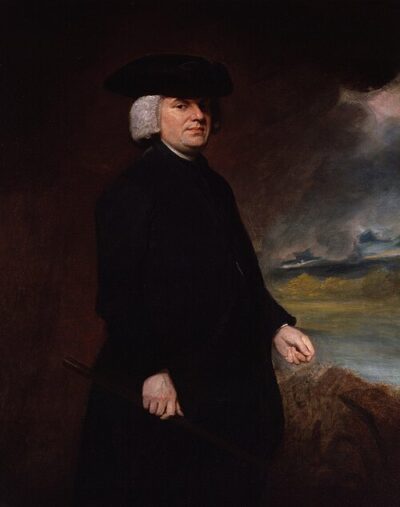
William Paley
William Paley was a Christian apologist, natural theologian, utilitarian;. Born July 14, 1743, in Peterborough. Died May 25, 1805, in Bishopwearmouth. Educated at Christ's College and Giggleswick School.
Facts
15 facts · 2 confirmed by two sources · 7 cited · 6 from one source
Where this comes from
Papalocal keeps its own record. It started from these sources; what each one said is kept here as it was copied, so a change on their side never changes this page by itself. Tap one to read its version.
What Wikidata says · copied November 16, 2026 · revision 2567362039
- Described as
- Christian apologist, natural theologian, utilitarian; (1743-1805)
- Other names
- Archdeacon Paley
- Born
- July 14, 1743 · 1 reference
- Died
- May 25, 1805 · 4 references
- Born in
- Peterborough · 1 reference
- Died in
- Bishopwearmouth · 1 reference
- Citizen of
- United Kingdom of Great Britain and Ireland
- Occupation
- philosopher; theologian · 1 reference; university teacher; writer · 1 reference
- Worked for
- University of Cambridge · 1 reference
- Education
- Christ's College; Giggleswick School; University of Cambridge · 1 reference
- Field
- natural theology
- Religion
- Anglicanism · 1 reference
- Wikipedias with a page
- 34
Wikidata item Q433739 (wikidata.org/wiki/Q433739), public domain (CC0). Copied November 16, 2026.
What Wikipedia says · copied November 16, 2026 · revision 1382868652
William Paley (July 1743 – 25 May 1805) was an English Anglican clergyman, philosopher, abolitionist and utilitarian. He was at times referred to as a Christian apologist by his critics. He is best known for his natural theology exposition of the teleological argument for the existence of God in his 1802 work Natural Theology or Evidences of the Existence and Attributes of the Deity, which made use of the watchmaker analogy.
- Born, in its opening lines
- July 1743
- Died, in its opening lines
- May 25, 1805
From the Wikipedia article “William Paley” (en.wikipedia.org/wiki/William_Paley), by its contributors, under CC BY-SA 4.0 (creativecommons.org/licenses/by-sa/4.0/). Copied November 16, 2026; not changed.
Confirmed Two sources agree. Cited One source, and it names where it got it. One source One source, without a reference of its own. Sources disagree The sources disagree. We show the best-supported value and keep theirs below.
