
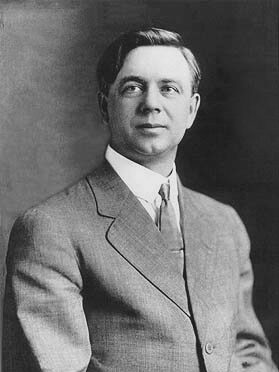
William S. Sadler
William S. Sadler was a Psychiatrist and author. Born June 24, 1875, in Spencer. Died April 26, 1969, in Chicago. Known for The Urantia Book. Educated at Illinois State University.
Facts
15 facts · 2 confirmed by two sources · 2 cited · 11 from one source
Where this comes from
Papalocal keeps its own record. It started from these sources; what each one said is kept here as it was copied, so a change on their side never changes this page by itself. Tap one to read its version.
What Wikidata says · copied November 18, 2026 · revision 2569026952
- Described as
- Psychiatrist and author (1875–1969)
- Other names
- William Samuel Sadler
- Born
- June 24, 1875 · 2 references
- Died
- April 26, 1969 · 2 references
- Born in
- Spencer
- Died in
- Chicago
- Buried in
- Graceland Cemetery · 1 reference
- Citizen of
- United States
- Occupation
- psychologist · 1 reference; psychiatrist; surgeon; writer · 1 reference
- Worked for
- University of Chicago
- Education
- Illinois State University
- Known for
- The Urantia Book · 1 reference
- Field
- psychiatry
- Spouse
- Lena Sadler (–1939)
- Wikipedias with a page
- 15
Wikidata item Q2079664 (wikidata.org/wiki/Q2079664), public domain (CC0). Copied November 18, 2026.
What Wikipedia says · copied November 18, 2026 · revision 1379490854
William Samuel Sadler (June 24, 1875 – April 26, 1969) was an American surgeon, self-trained psychiatrist, and author who helped publish The Urantia Book. The book is said to have resulted from Sadler's relationship with a man through whom he believed celestial beings spoke at night. It drew a following of people who studied its teachings.
A native of Indiana, Sadler moved to Michigan as a teenager to work at the Battle Creek Sanitarium. There he met the physician and health-food promoter John Harvey Kellogg, co-inventor of corn flakes breakfast cereal, who became his mentor. Sadler married Kellogg's niece, Lena Celestia Kellogg, in 1897. He worked for several Christian organizations and attended medical school, graduating in 1906. Sadler practiced medicine in Chicago with his wife, who was also a physician. He joined several medical associations and taught at the McCormick Theological Seminary. Although he was a committed member of the Seventh-day Adventist Church for almost twenty years, he left the denomination after it disfellowshipped his wife's uncle, John Harvey Kellogg, in 1907. Sadler and his wife became speakers on the Chautauqua adult education circuit in 1907, and he became a highly paid, popular orator. He eventually wrote over 40 books on a variety of medical and spiritual topics advocating a holistic approach to health. Sadler extolled the value of prayer and religion but was skeptical of mediums, assisting debunker Howard Thurston, and embraced the scientific consensus on evolution.
In 1910, Sadler went to Europe and studied psychiatry for a year under Sigmund Freud. Sometime between 1906 and 1911, Sadler attempted to treat a patient with an unusual sleep condition. While the patient was sleeping he spoke to Sadler and claimed to be an extraterrestrial. Sadler spent years observing the sleeping man in an effort to explain the phenomenon, and eventually decided the man had no mental illness and that his words were genuine. The man's identity was never publicized, but speculation has focused on Sadler's brother-in-law, Wilfred Kellogg. Over the course of several years, Sadler and his assistants visited the man while he slept, conversing with him about spirituality, history, and cosmology, and asking him questions. A larger number of interested people met at Sadler's home to discuss the man's responses and to suggest additional questions. The man's words were eventually published in The Urantia Book, and the Urantia Foundation was created to assist Sadler in spreading the book's message. It is not known who wrote and edited the book, but several commentators have speculated that Sadler played a guiding role in its publication. Although it never became the basis of an organized religion, the book attracted followers who devoted themselves to its study, and the movement continued after Sadler's death.
- Born, in its opening lines
- June 24, 1875
- Died, in its opening lines
- April 26, 1969
From the Wikipedia article “William S. Sadler” (en.wikipedia.org/wiki/William_S._Sadler), by its contributors, under CC BY-SA 4.0 (creativecommons.org/licenses/by-sa/4.0/). Copied November 18, 2026; not changed.
Confirmed Two sources agree. Cited One source, and it names where it got it. One source One source, without a reference of its own. Sources disagree The sources disagree. We show the best-supported value and keep theirs below.
