
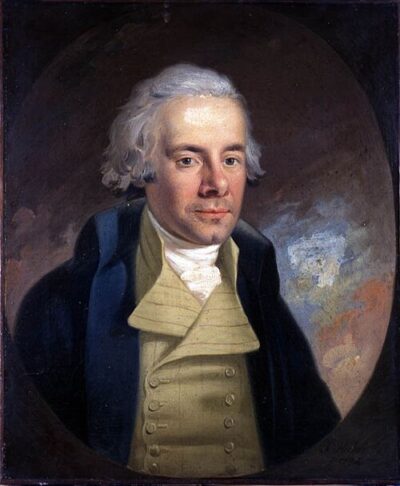
William Wilberforce
William Wilberforce was an English politician and abolitionist. Born August 24, 1759, in Wilberforce House. Died July 29, 1833, in London. Positions held include member of the 1st Parliament of the United Kingdom (1801–1802), member of the 2nd Parliament of the United Kingdom (1802–1806) and member of the 3rd Parliament of the United Kingdom (1806–1807). Educated at St John's College and Pocklington School.
Facts
36 facts · 2 confirmed by two sources · 26 cited · 8 from one source
Where this comes from
Papalocal keeps its own record. It started from these sources; what each one said is kept here as it was copied, so a change on their side never changes this page by itself. Tap one to read its version.
What Wikidata says · copied November 16, 2026 · revision 2568364739
- Described as
- English politician and abolitionist (1759–1833)
- Born
- August 24, 1759 · 8 references
- Died
- July 29, 1833 · 8 references
- Born in
- Wilberforce House
- Died in
- London · 1 reference
- Buried in
- Westminster Abbey
- Citizen of
- United Kingdom of Great Britain and Ireland · 1 reference; Kingdom of Great Britain (–1801) · 1 reference
- Occupation
- politician · 2 references; philanthropist · 1 reference; abolitionist · 1 reference; writer · 1 reference
- Positions held
- member of the 1st Parliament of the United Kingdom (1801–1802) · 1 reference; member of the 2nd Parliament of the United Kingdom (1802–1806) · 1 reference; member of the 3rd Parliament of the United Kingdom (1806–1807) · 1 reference; member of the 4th Parliament of the United Kingdom (1807–1812) · 1 reference; member of the 5th Parliament of the United Kingdom (1812–1818) · 1 reference; member of the 6th Parliament of the United Kingdom (1818–1820) · 1 reference; member of the 7th Parliament of the United Kingdom (1820–1825) · 1 reference; member of the 15th Parliament of Great Britain (1780–1784) · 1 reference; member of the 16th Parliament of Great Britain (1784–1790) · 1 reference; member of the 17th Parliament of Great Britain (1790–1796) · 1 reference; member of the 18th Parliament of Great Britain (1796–1801) · 1 reference
- Education
- St John's College; Pocklington School; Hull Grammar School
- Spouse
- Barbara Spooner Wilberforce (1797–) · 2 references
- Children
- Samuel Wilberforce · 1 reference; Robert Isaac Wilberforce · 1 reference; Henry William Wilberforce · 1 reference; William Wilberforce · 1 reference; Elizabeth Wilberforce · 2 references; Barbara Wilberforce · 2 references
- Father
- Robert Wilberforce · 2 references
- Mother
- Elizabeth Bird · 2 references
- Siblings
- Sarah Wilberforce · 1 reference
- Religion
- Anglicanism
- Wikipedias with a page
- 58
Wikidata item Q207672 (wikidata.org/wiki/Q207672), public domain (CC0). Copied November 16, 2026.
What Wikipedia says · copied November 16, 2026 · revision 1384921609
William Wilberforce (24 August 1759 – 29 July 1833) was an English politician, philanthropist, and a leader of the movement to abolish the Atlantic slave trade. A native of Kingston upon Hull, Yorkshire, he began his political career in 1780, and became an independent Member of Parliament (MP) for Yorkshire (1784–1812). In 1785, he underwent a conversion experience and became an evangelical Anglican, which resulted in major changes to his lifestyle and a lifelong concern for reform.
In 1787, Wilberforce came into contact with Thomas Clarkson and a group of activists against the transatlantic slave trade, including Granville Sharp, Hannah More and Charles Middleton. They persuaded Wilberforce to take on the cause of abolition, and he became a leading English abolitionist. He headed the parliamentary campaign against the British slave trade for 20 years until the passage of the Slave Trade Act 1807.
Wilberforce was convinced of the importance of religion, morality and education. He championed causes and campaigns such as the Society for the Suppression of Vice, British missionary work in India, the creation of a free colony in Sierra Leone, the foundation of the Church Mission Society and the Society for the Prevention of Cruelty to Animals. His underlying conservatism led him to support politically and socially repressive legislation, and resulted in criticism that he was ignoring injustices at home while campaigning for the enslaved abroad.
In later years, Wilberforce supported the campaign for the complete abolition of slavery and continued his involvement after 1826, when he resigned from Parliament because of his failing health. That campaign led to the Slavery Abolition Act 1833, which abolished slavery in most of the British Empire. Wilberforce died three days after hearing that the passage of the act through Parliament was assured. He was buried in Westminster Abbey.
- Born, in its opening lines
- August 24, 1759
- Died, in its opening lines
- July 29, 1833
From the Wikipedia article “William Wilberforce” (en.wikipedia.org/wiki/William_Wilberforce), by its contributors, under CC BY-SA 4.0 (creativecommons.org/licenses/by-sa/4.0/). Copied November 16, 2026; not changed.
Confirmed Two sources agree. Cited One source, and it names where it got it. One source One source, without a reference of its own. Sources disagree The sources disagree. We show the best-supported value and keep theirs below.
