
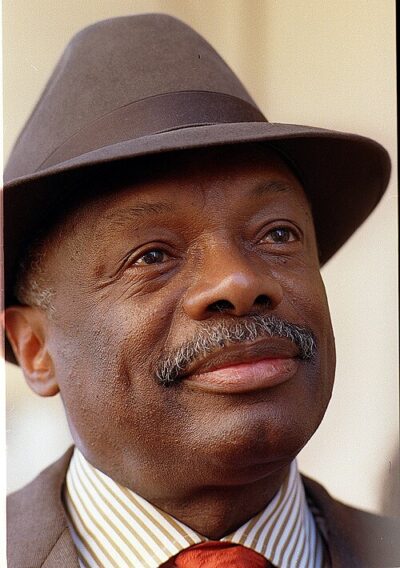
Willie Brown Jr. is the 41st Mayor of San Francisco. Born March 20, 1934, in Mineola. Positions held include mayor of San Francisco (1996–2004), Speaker of the California State Assembly (1980–1995) and member of the California State Assembly (1965–1995). Educated at Addie E. McFarland High School and San Francisco State University.
Facts
18 facts · 1 confirmed by two sources · 1 cited · 16 from one source
Where this comes from
Papalocal keeps its own record. It started from these sources; what each one said is kept here as it was copied, so a change on their side never changes this page by itself. Tap one to read its version.
What Wikidata says · copied November 18, 2026 · revision 2554551245
- Described as
- 41st Mayor of San Francisco
- Other names
- Willie Brown, Willie Lewis Brown Jr.
- Born
- March 20, 1934 · 2 references
- Born in
- Mineola · 1 reference
- Name at birth
- Willie Lewis Brown Jr.
- Citizen of
- United States
- Occupation
- politician; podcaster; dental hygienist; lawyer
- Positions held
- mayor of San Francisco (1996–2004); Speaker of the California State Assembly (1980–1995); member of the California State Assembly (1965–1995)
- Political party
- Democratic Party
- Education
- Addie E. McFarland High School (–1951) · 1 reference; San Francisco State University (–1955); University of California College of the Law, San Francisco
- Member of
- Alpha Phi Alpha
- Military branch
- United States Army
- Lived in
- San Francisco
- Wikipedias with a page
- 16
Wikidata item Q5365075 (wikidata.org/wiki/Q5365075), public domain (CC0). Copied November 18, 2026.
What Wikipedia says · copied November 18, 2026 · revision 1386169741
Willie Lewis Brown Jr. (born March 20, 1934) is an American politician and attorney. A member of the Democratic Party, he served as mayor of San Francisco from 1996 to 2004, the first African American to hold the office.
Born in Mineola, Texas, where he graduated from high school, Brown moved to San Francisco in 1951. He graduated from San Francisco State University in 1955 and earned a J.D. from the University of California, Hastings College of the Law in 1958, after which he began his career as an attorney and was involved in the civil rights movement. He was elected to the California Assembly in 1964, gaining popularity in San Francisco as one of the country's most powerful state legislators. As a legislator, Brown earned a reputation as a supporter of civil rights of gays and lesbians, and was able to manage colleagues and maintain party discipline. He served as the speaker of the California State Assembly from 1980 to 1995. His long tenure and powerful position was a focal point of the California ballot proposition limiting the terms of state legislators that passed in 1990. During the last of his three allowed post-initiative terms, Brown maintained control of the Assembly despite a slim Republican majority. Near the end of his final term, he decided to run for mayor of San Francisco.
During Brown's tenure as mayor of San Francisco, the city's budget was expanded, and real estate development, public works, city beautification, and other city projects saw a significant increase. Brown presided over the "dot-com" era at a time when San Francisco's economy was rapidly expanding. His administration included more Asian-Americans, women, Latinos, gays and African Americans than the administrations of his predecessors. Brown was reelected in 1999. Term limits prevented him from running for a third term, and he was succeeded by his political protégé Gavin Newsom. San Francisco Chronicle called Brown "one of San Francisco's most notable mayors", adding that he had "celebrity beyond the city's boundaries." He retired from politics after leaving the office in 2004, published an autobiography, and continued to fundraise and advise politicians.
- Born, in its opening lines
- March 20, 1934
From the Wikipedia article “Willie Brown (politician)” (en.wikipedia.org/wiki/Willie_Brown_(politician)), by its contributors, under CC BY-SA 4.0 (creativecommons.org/licenses/by-sa/4.0/). Copied November 18, 2026; not changed.
Confirmed Two sources agree. Cited One source, and it names where it got it. One source One source, without a reference of its own. Sources disagree The sources disagree. We show the best-supported value and keep theirs below.
