
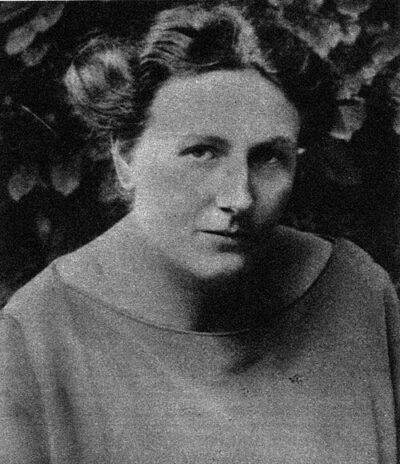
Winifred Wagner
Winifred Wagner was a Wife of Siegfried Wagner. Born June 23, 1897, in Hastings. Died March 5, 1980, in Überlingen.
Facts
16 facts · 2 confirmed by two sources · 8 cited · 6 from one source
Where this comes from
Papalocal keeps its own record. It started from these sources; what each one said is kept here as it was copied, so a change on their side never changes this page by itself. Tap one to read its version.
What Wikidata says · copied November 16, 2026 · revision 2568970250
- Described as
- Wife of Siegfried Wagner (1897–1980)
- Other names
- Winifred Marjorie Williams, Winifred Marjorie Wagner
- Born
- June 23, 1897 · 8 references
- Died
- March 5, 1980 · 8 references
- Born in
- Hastings · 1 reference
- Died in
- Überlingen · 1 reference
- Citizen of
- Germany; United Kingdom
- Occupation
- composer; writer; theatre manager · 1 reference
- Political party
- Nazi Party
- Member of
- Militant League for German Culture
- Spouse
- Siegfried Wagner · 1 reference
- Children
- Wolfgang Wagner · 1 reference; Wieland Wagner · 1 reference; Friedelind Wagner · 1 reference; Verena Wagner Lafferentz · 1 reference
- Wikipedias with a page
- 28
Wikidata item Q57713 (wikidata.org/wiki/Q57713), public domain (CC0). Copied November 16, 2026.
What Wikipedia says · copied November 16, 2026 · revision 1385949573
Winifred Marjorie Wagner (née Williams; 23 June 1897 – 5 March 1980) was the English-born wife of Siegfried Wagner, the son of Richard Wagner. She ran the Bayreuth Festival after her husband's death in 1930 until the end of World War II in 1945. She was a friend and supporter of Adolf Hitler, himself a Wagner enthusiast, and she and Hitler maintained a regular correspondence.
- Born, in its opening lines
- June 23, 1897
- Died, in its opening lines
- March 5, 1980
From the Wikipedia article “Winifred Wagner” (en.wikipedia.org/wiki/Winifred_Wagner), by its contributors, under CC BY-SA 4.0 (creativecommons.org/licenses/by-sa/4.0/). Copied November 16, 2026; not changed.
Confirmed Two sources agree. Cited One source, and it names where it got it. One source One source, without a reference of its own. Sources disagree The sources disagree. We show the best-supported value and keep theirs below.
